












![5'-Fluoro-[2,3'-biindolinylidene]-2',3-dione structure](https://static.chemtradehub.com/structs/251/251903-00-1-9cb1.webp "5'-Fluoro-[2,3'-biindolinylidene]-2',3-dione structure")
Effects of kinetic and transport phenomena on thermal explosion and oscillatory behaviour in a spherical reactor with mixed convection
Literature Information
Publication Date
2014-09-19
DOI
10.1039/C4CP02990A
Impact Factor
3.676
Authors
Filipa Gonçalves de Azevedo, John F. Griffiths, Silvana S. S. Cardoso
View Original
Abstract
Thermal explosions are often influenced by the complex interaction between transport and reaction phenomena. In particular, reactant consumption can promote safer, non-explosive operation conditions of combustion systems. However, in liquids or gases, the presence of forced convection can affect the behaviour of a system, instigating oscillations in the temperature, reactant concentration and velocity fields. This work describes the effect of reactant consumption on a simple, one-step, exothermic reaction occurring in a spherical reactor with both forced and natural convection, by means of numerical simulations. Regime diagrams characterised by ratios of timescales for each transport and reaction phenomena are presented and the explosion boundary is represented for several forced convection and reaction consumption intensities. Special attention is given to the oscillatory behaviour observed for moderate forced convection and oscillatory regions are represented on the regime diagrams. Parametric conditions for this new oscillatory regime are identified by extending the criticality condition developed by Frank-Kamenetskii for the effect of reactant consumption in diffusive systems to include the effects of both natural and forced convection.
Related Literature
Water-in-water mesophases for templating inorganics
Andreas Taubert, Ernst Furrer, Wolfgang Meier
2004-09-02
Communication
DOI: 10.1039/B405610H
Assembly of large simple 1D and rare polycatenated 3D molecular ladders from T-shaped building blocks containing a new, long N,N′-bidentate ligand
Cheng-Yong Su, Andrea M. Goforth, Mark D. Smith, Hans-Conrad zur Loye
2004-08-20
Communication
DOI: 10.1039/B406126H
The mechanism of the oxidative addition of aryl halides to Pd-catalysts: a DFT investigation
Lukas J. Gooßen, Debasis Koley, Holger Hermann, Walter Thiel
2004-08-20
Communication
DOI: 10.1039/B409144B
Oligomer preparation from hexane by radical polyaddition with bis(α-trifluoromethyl-β,β-difluorovinyl) terephthalate
Tadashi Narita, Hiroshi Hamana, Satoshi Hattori
2004-09-07
Communication
DOI: 10.1039/B406116K
A new packing motif for para-sulfonatocalix[4]arene: the solid state structure of the para-sulfonatocalix[4]arene d-arginine complex
Adina Lazar, Eric Da Silva, Alda Navaza, Carole Barbey, Anthony W. Coleman
2004-08-20
Communication
DOI: 10.1039/B408863H
A mixed ladderane/n-alkyl glycerol diether membrane lipid in an anaerobic ammonium-oxidizing bacterium
Jaap S. Sinninghe Damsté, W. Irene C. Rijpstra, Marc Strous, Mike S. M. Jetten, Olivier R. P. David, Jan A. J. Geenevasen, Jan H. van Maarseveen
2004-09-30
Communication
DOI: 10.1039/B409806D
First lanthanide dipolar complexes for second-order nonlinear optics
Katell Sénéchal, Loïc Toupet, Isabelle Ledoux, Joseph Zyss, Hubert Le Bozec, Olivier Maury
2004-09-08
Communication
DOI: 10.1039/B407073A
En route to coordination chemistry under confined conditions in a porous capsule: Pr3+ with different coordination shells
Achim Müller, Yunshan Zhou, Lijuan Zhang, Hartmut Bögge, Marc Schmidtmann, Martin Dressel, Joris van Slageren
2004-08-13
Communication
DOI: 10.1039/B407753A
A new organic superconductor β-(meso-DMBEDT-TTF)2PF6
Tadashi Kawamoto, Takehiko Mori, Hiroshi Moriyama, Yutaka Nishio, Koji Kajita
2004-09-21
Communication
DOI: 10.1039/B409631B
Cyclopeptide alkaloids: chemistry and biology
Madeleine M. Joullié, David J. Richard
2004-08-31
Feature Article
DOI: 10.1039/B400334A
You might also like
Compound Q&A
What is the market or research trend for N-(4-Methoxybenzyl)-2-pyridinamine (CAS: 52818-63-0)?
N-(4-Methoxybenzyl)-2-pyridinamine (CAS: 52818-63-0) is increasingly being used ...
52818-63-0N-(4-Methoxybenzyl)-...
Compound Q&A
What precautions should be taken when handling Ethyl 4-(2-chlorophenyl)-1,3-thiazole-2-carboxylate (CAS: 1050507-06-6)?
When handling Ethyl 4-(2-chlorophenyl)-1,3-thiazole-2-carboxylate, appropriate p...
1050507-06-6Ethyl 4-(2-chlorophe...
Compound Q&A
What regulatory guidelines apply to diethyldiselane (CAS: 628-39-7)?
Diethyldiselane (CAS: 628-39-7) is classified under the Globally Harmonized Syst...
628-39-7Diethyldiselane
Compound Q&A
What is the market or research trend for oxocopper (CAS: 12053-18-8)?
The market for oxocopper (CAS: 12053-18-8) is primarily driven by its use in cat...
12053-18-8oxocopper; oxo-(oxoc...
Compound Q&A
What is the market or research trend for 5-{[(2-Methyl-2-propanyl)oxy]carbonyl}-5-azaspiro[2.4]heptane-7-carboxylic acid?
The market for 5-{[(2-Methyl-2-propanyl)oxy]carbonyl}-5-azaspiro[2.4]heptane-7-c...
1268519-54-55-{[(2-Methyl-2-prop...
Compound Q&A
What is 2-(1-Pyrrolidinyl)-4-pyridinamine (CAS: 35981-63-6)?
2-(1-Pyrrolidinyl)-4-pyridinamine is a chemical compound with the CAS number 359...
35981-63-62-(1-Pyrrolidinyl)-4...
Compound Q&A
What are the physical and chemical properties of 2-(3-Pyridinyl)-1-azabicyclo[2.2.2]octane (CAS: 91556-75-1)?
2-(3-Pyridinyl)-1-azabicyclo[2.2.2]octane (CAS: 91556-75-1) is a crystalline sol...
91556-75-12-(3-Pyridinyl)-1-az...
Compound Q&A
How is (S)-Alpha-allyl-proline hydrochloride (CAS: 129704-91-2) typically synthesized?
(S)-Alpha-allyl-proline hydrochloride is usually synthesized via a Wittig reacti...
129704-91-2(S)-Alpha-allyl-prol...
Compound Q&A
What is 3-Methyl-1,2-oxazole-5-carboxylic acid (CAS: 4857-42-5)?
3-Methyl-1,2-oxazole-5-carboxylic acid (CAS: 4857-42-5) is an organic compound w...
4857-42-53-Methyl-1,2-oxazole...
Compound Q&A
How is Lys-SMCC-DM1 (CAS: 1281816-04-3) typically synthesized?
Lys-SMCC-DM1 is synthesized via a multi-step process involving the coupling of S...
1281816-04-3Lys-SMCC-DM1
Source Journal
Physical Chemistry Chemical Physics

CiteScore:
5.5
Self-citation Rate:
10.3%
Articles per Year:
3036
Physical Chemistry Chemical Physics (PCCP) is an international journal co-owned by 19 physical chemistry and physics societies from around the world. This journal publishes original, cutting-edge research in physical chemistry, chemical physics and biophysical chemistry. To be suitable for publication in PCCP, articles must include significant innovation and/or insight into physical chemistry; this is the most important criterion that reviewers and Editors will judge against when evaluating submissions. The journal has a broad scope and welcomes contributions spanning experiment, theory, computation and data science. Topical coverage includes spectroscopy, dynamics, kinetics, statistical mechanics, thermodynamics, electrochemistry, catalysis, surface science, quantum mechanics, quantum computing and machine learning. Interdisciplinary research areas such as polymers and soft matter, materials, nanoscience, energy, surfaces/interfaces, and biophysical chemistry are welcomed if they demonstrate significant innovation and/or insight into physical chemistry. Joined experimental/theoretical studies are particularly appreciated when complementary and based on up-to-date approaches.
Recommended Compounds
![1,10-bis(3,5-dimethylphenyl)-12-hydroxy-4,5,6,7-tetrahydroiindeno[7,1-de:1',7'-fg][1,3,2]dioxaphosphocine 12-oxide structure](https://static.chemtradehub.com/structs/141/1412439-82-7-b9a9.webp "1,10-bis(3,5-dimethylphenyl)-12-hydroxy-4,5,6,7-tetrahydroiindeno[7,1-de:1',7'-fg][1,3,2]dioxaphosphocine 12-oxide structure")
1,10-bis(3,5-dimethylphenyl)-12-hydroxy-4,5,6,7-tetrahydroiindeno[7,1-de:1',7'-fg][1,3,2]dioxaphosphocine 12-oxide
CAS Number:
1412439-82-7
Molecular Formula:
C33H31O4P
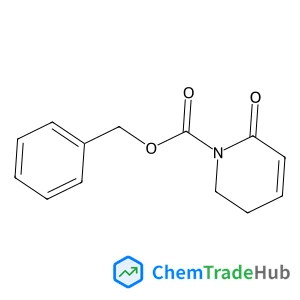
Benzyl 6-oxo-3,6-dihydro-1(2H)-pyridinecarboxylate
CAS Number:
725746-35-0
Molecular Formula:
C13H13NO3
![N-{[(2-Methyl-2-propanyl)oxy]carbonyl}-L-methionylglycine structure](https://static.chemtradehub.com/structs/234/23446-03-9-e1e5.webp "N-{[(2-Methyl-2-propanyl)oxy]carbonyl}-L-methionylglycine structure")
N-{[(2-Methyl-2-propanyl)oxy]carbonyl}-L-methionylglycine
CAS Number:
23446-03-9
Molecular Formula:
C12H22N2O5S
Recommended Suppliers





Disclaimer
This page provides academic journal information for reference and research purposes only. We are not affiliated with any journal publishers and do not handle publication submissions. For publication-related inquiries, please contact the respective journal publishers directly.
If you notice any inaccuracies in the information displayed, please contact us at support@chemtradehub.com. We will promptly review and address your concerns.