












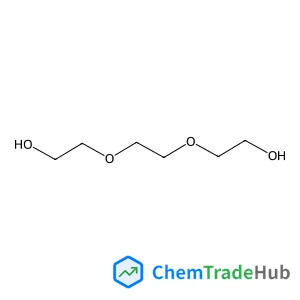
A new packing motif for para-sulfonatocalix[4]arene: the solid state structure of the para-sulfonatocalix[4]arene d-arginine complex
Literature Information
Publication Date
2004-08-20
DOI
10.1039/B408863H
Impact Factor
6.222
Authors
Adina Lazar, Eric Da Silva, Alda Navaza, Carole Barbey, Anthony W. Coleman
View Original
Abstract
The solid-state structure of the complex of para-sulfonatocalix[4]arene with D-arginine, contains a water channel diagonal to a zigzag bilayer of the host, within the bilayer six crystallographically independent molecules of arginine are present, four being included in the calix cavities.
Related Literature
Cu(0)-mediated living radical polymerisation in dimethyl lactamide (DML); an unusual green solvent with limited environmental impact
Olivier Bertrand, Paul Wilson, James A. Burns, Gordon A. Bell, David M. Haddleton
2015-10-08
Paper
DOI: 10.1039/C5PY01420D
Synthesis and ring-opening polymerization of 2-substituted 1,3-benzoxazine: the first observation of the polymerization of oxazine ring-substituted benzoxazines
Seishi Ohashi, Francis Cassidy, Stephanie Huang, Kevin Chiou, Hatsuo Ishida
2016-11-02
Paper
DOI: 10.1039/C6PY01686C
Regioselective cross metathesis for block and heterotelechelic polymer synthesis
Madalyn R. Radlauer, Megan E. Matta, Marc A. Hillmyer
2016-09-27
Paper
DOI: 10.1039/C6PY01231K
Synthesis and thermal properties of vinyl copolymers with phenyl vinylethylene carbonate and N-substituted maleimides undergoing color change with acid–base switching
Yoshiaki Yoshida, Takeshi Endo
2016-10-05
Paper
DOI: 10.1039/C6PY01510G
Transition-metal-free controlled polymerization of 2-polyfluorophenyl-5-trimethylsilylthiophenes: the substituent impact of fluorine
Takanobu Sanji, Keiji Nose, Junko Kakinuma, Tomokazu Iyoda
2016-11-08
Paper
DOI: 10.1039/C6PY01831A
Titin-mimicking polycyclic polymers with shape regeneration and healing properties
Jan-Hendrik Schuetz, Peng Wentao, Philipp Vana
2014-11-25
Paper
DOI: 10.1039/C4PY01458H
POSS semitelechelic Aβ17–19 peptide initiated helical polypeptides and their structural diversity in aqueous medium
Ujjal Haldar, Abhishek Pan, Ishita Mukherjee, Priyadarsi De
2016-09-16
Paper
DOI: 10.1039/C6PY01399F
Effective in situ repair and bacteriostatic material of tooth enamel based on salivary acquired pellicle inspired oligomeric procyanidins
Shuhui Zhang, Libang He, Yinxin Yang, Bo Yang, Yixue Liao, Xinyuan Xu, Jiyao Li, Xiao Yang, Jianshu Li
2016-10-20
Paper
DOI: 10.1039/C6PY01362G
Supramolecular engineering polyesters: endgroup functionalization of glycol modified PET with ureidopyrimidinone
Katelyn R. Houston, Anne-Martine S. Jackson, Ross W. Yost, Howard S. Carman
2016-10-10
Paper
DOI: 10.1039/C6PY01421F
You might also like
Compound Q&A
What is 1-(2,4,6-Trifluorophenyl)ethanol (CAS: 1250113-83-7)?
1-(2,4,6-Trifluorophenyl)ethanol is an organic compound with the CAS number 1250...
1250113-83-71-(2,4,6-Trifluoroph...
Compound Q&A
Is 1-(2,4-Dimethoxybenzyl)-4-(hydroxymethyl)-2-pyrrolidinone (CAS: 919111-34-5) safe?
1-(2,4-Dimethoxybenzyl)-4-(hydroxymethyl)-2-pyrrolidinone (CAS: 919111-34-5) is ...
919111-34-51-(2,4-Dimethoxybenz...
Compound Q&A
What are the physical and chemical properties of (7S,15R)-6β,15-Diacetoxy-7α,20-epoxy-7-hydroxykaura-2,16-dien-1-one (CAS: 51419-51-3)?
(7S,15R)-6β,15-Diacetoxy-7α,20-epoxy-7-hydroxykaura-2,16-dien-1-one is a crystal...
51419-51-3(7S,15R)-6β,15-Diace...
Compound Q&A
What regulatory guidelines apply to rac-ethyl (1r,4r)-4-hydroxycyclohexane-1-carboxylate, trans (CAS: 3618-04-0)?
The compound rac-ethyl (1r,4r)-4-hydroxycyclohexane-1-carboxylate, trans (CAS: 3...
3618-04-0rac-ethyl (1r,4r)-4-...
Compound Q&A
What is the market or research trend for 2-(2,4-Difluorophenoxy)-3-nitropyridine (CAS: 175135-62-3)?
The market for 2-(2,4-Difluorophenoxy)-3-nitropyridine (CAS: 175135-62-3) is cur...
175135-62-32-(2,4-Difluoropheno...
Compound Q&A
What are the main uses of 6-Diazo-5-oxo-L-norleucine (CAS: 157-03-9)?
The main uses of 6-Diazo-5-oxo-L-norleucine (CAS: 157-03-9) include research in ...
157-03-96-Diazo-5-oxo-L-norl...
Compound Q&A
What precautions should be taken when handling 2-Aminoethyl-mono-amide-DOTA-tris(tBu ester) (CAS: 173308-19-5)?
When handling 2-Aminoethyl-mono-amide-DOTA-tris(tBu ester) (CAS: 173308-19-5), i...
173308-19-52-Aminoethyl-mono-am...
Compound Q&A
How is 5-Methylimidazo[1,2-a]pyridine-3-carbaldehyde (CAS: 178488-37-4) typically synthesized?
5-Methylimidazo[1,2-a]pyridine-3-carbaldehyde (CAS: 178488-37-4) can be synthesi...
178488-37-45-Methylimidazo[1,2-...
Compound Q&A
Are there alternatives to 2,4,6-Trihydroxyisophthalaldehyde (CAS: 4396-13-8) in synthesis?
There are alternative reagents that can be used in the synthesis of 2,4,6-Trihyd...
4396-13-82,4,6-Trihydroxyisop...
Compound Q&A
What is (2Z)-3-(5-Fluoro-1H-indol-3-yl)-2-sulfanylacrylic acid (CAS: 179461-52-0)?
(2Z)-3-(5-Fluoro-1H-indol-3-yl)-2-sulfanylacrylic acid is a chemical compound wi...
179461-52-0(2Z)-3-(5-Fluoro-1H-...
Source Journal
Chemical Communications

CiteScore:
8.6
Self-citation Rate:
4.7%
Articles per Year:
2458
ChemComm publishes urgent research which is of outstanding significance and interest to experts in the field, while also appealing to the journal’s broad chemistry readership. Our communication format is ideally suited to short, urgent studies that are of such importance that they require accelerated publication. Our scope covers all topics in chemistry, and research at the interface of chemistry and other disciplines (such as materials science, nanoscience, physics, engineering and biology) where there is a significant novelty in the chemistry aspects. Major topic areas covered include: Analytical Chemistry Catalysis Chemical Biology and medicinal chemistry Computational Chemistry and Machine Learning Energy and sustainable chemistry Environmental Chemistry Green Chemistry Inorganic Chemistry Materials Chemistry Nanoscience Organic Chemistry Physical Chemistry Polymer Chemistry Supramolecular Chemistry
Recommended Compounds

Recommended Suppliers





Disclaimer
This page provides academic journal information for reference and research purposes only. We are not affiliated with any journal publishers and do not handle publication submissions. For publication-related inquiries, please contact the respective journal publishers directly.
If you notice any inaccuracies in the information displayed, please contact us at support@chemtradehub.com. We will promptly review and address your concerns.