












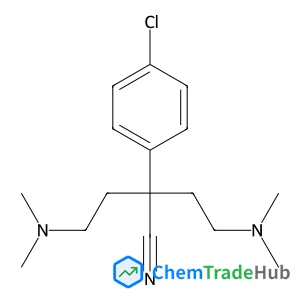
2-(4-Chlorophenyl)-4-(dimethylamino)-2-(2-(dimethylamino)ethyl)butanenitrile
CAS Number:
1246816-57-8
Molecular Formula:
C16H24ClN3
V. N. Kuzovkov, E. A. Kotomin
In the description of charge screening in the electrostatic self-assembly of nanoparticles (molecules) embedded into a polar solvent, the static screening effects (a contribution associated with the rapid spatial redistribution of small and highly mobile ions of a solvent) are traditionally treated phenomenologically, using the Yukawa short-range potential for describing the interaction between these particles. However, this model has a limited range of applicability being valid only for infinitely diluted systems and high salt concentrations. During a slow self-assembling process with nanoparticle formation, very dense structural elements (aggregates) are formed, in which the distances between the nanoparticles could become comparable to the Debye radius in the Yukawa potential. For such structural elements dynamic screening effects (the contribution of nanoparticles themselves to the screening potential) become important. In this paper, using a novel integrated approach (nonlinear integro-differential kinetic equations for the correlation functions of particles), we have obtained the self-consistent solution in the 3d case and compared roles of both static (equilibrium) and dynamic (nonequilibrium) charge screening effects in different situations. This paper is a continuation of our recent study [Phys. Chem. Chem. Phys., 2014, 16, 13974], where the polar solvent effects were now taken into account.
Carlos-A Polanco-Ramírez, Paul W. Ayers, José L. Gázquez, Alberto Vela
DOI: 10.1039/C7CP02613G
Maurício J. Piotrowski, Juarez L. F. Da Silva
DOI: 10.1039/C7CP02240A
Weijia Huang, Danxing Zheng, Changxing Xia, Lejun Feng, Li Dong, Peixue Jiang
DOI: 10.1039/C7CP01757J
Gang Liu, Jian Zhou, Hui Wang
DOI: 10.1039/C7CP00815E
Benjamin W. Toulson, Kara M. Kapnas, Dmitry A. Fishman, Craig Murray
DOI: 10.1039/C7CP02573D
F. Bianchini, H. Fjellvåg, P. Vajeeston
DOI: 10.1039/C7CP01395G
Chenxu Li, Jianqiang Wang, Jun Wang, Yanping Zhai
DOI: 10.1039/C7CP02324C
Ulrich Tallarek
DOI: 10.1039/C7CP01846K
Shigeki Yamamoto, Petr Bouř
DOI: 10.1039/C7CP01556A
Donglin Li, Yonggang Yang, Chaozheng Li, Yufang Liu
DOI: 10.1039/C7CP02268A
This compound is mainly used as an intermediate in the synthesis of antipsychoti...
Waste containing 1-(D-Ribofuranosyl)-1,4-dihydro-3-pyridinecarboxamide (CAS: 191...
2-Methyl-2-propanyl 3-bromo-3-(hydroxymethyl)-1-azetidinecarboxylate (CAS: 20079...
N-(4-Chloro-2-pyridinyl)acetamide (CAS: 245056-66-0) is a chemical compound with...
5-Chloro-2-hydroxybenzoic acid, also known as 5-chlorosalicylic acid, is an arom...
When handling 1,1-Dichloro-1-fluoroethane (CAS: 1717-00-6), it is important to u...
Fmoc-(2S,3R)-3-phenylpyrrolidine-2-carboxylic acid is a white crystalline solid ...
4-Amino-5-bromo-2-pyridinecarboxylic acid is primarily used as a precursor in th...
Handling this compound should be done with personal protective equipment (PPE) i...
When handling 8-bromo-2,2-dimethyl-3,4-dihydro-2H-1,4-benzoxazin-3-one, use prop...

Physical Chemistry Chemical Physics (PCCP) is an international journal co-owned by 19 physical chemistry and physics societies from around the world. This journal publishes original, cutting-edge research in physical chemistry, chemical physics and biophysical chemistry. To be suitable for publication in PCCP, articles must include significant innovation and/or insight into physical chemistry; this is the most important criterion that reviewers and Editors will judge against when evaluating submissions. The journal has a broad scope and welcomes contributions spanning experiment, theory, computation and data science. Topical coverage includes spectroscopy, dynamics, kinetics, statistical mechanics, thermodynamics, electrochemistry, catalysis, surface science, quantum mechanics, quantum computing and machine learning. Interdisciplinary research areas such as polymers and soft matter, materials, nanoscience, energy, surfaces/interfaces, and biophysical chemistry are welcomed if they demonstrate significant innovation and/or insight into physical chemistry. Joined experimental/theoretical studies are particularly appreciated when complementary and based on up-to-date approaches.
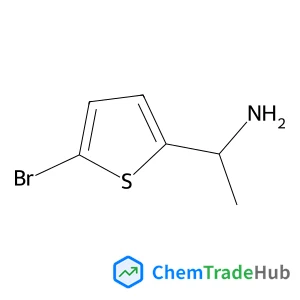
![6-Benzyl-4,5,6,7-tetrahydro-1H-pyrazolo[3,4-c]pyridin-3(2H)-one structure](https://static.chemtradehub.com/structs/909/909187-64-0-f54f.webp "6-Benzyl-4,5,6,7-tetrahydro-1H-pyrazolo[3,4-c]pyridin-3(2H)-one structure")




