












Competing pathways in the near-UV photochemistry of acetaldehyde
Literature Information
Publication Date
2017-05-24
DOI
10.1039/C7CP02573D
Impact Factor
3.676
Authors
Benjamin W. Toulson, Kara M. Kapnas, Dmitry A. Fishman, Craig Murray
View Original
Abstract
Time-resolved ion imaging measurements have been performed to explore the photochemistry of acetaldehyde at photolysis wavelengths spanning the range 265–328 nm. Ion images recorded probing CH3 radicals with single-photon VUV ionization show different dissociation dynamics in three distinct wavelength regions. At the longest photolysis wavelengths, λ > 318 nm, CH3 radicals are formed over tens of nanoseconds with a speed distribution that is consistent with statistical unimolecular dissociation on the S0 surface following internal conversion. In the range 292 nm ≤ λ ≤ 318 nm, dissociation occurs almost exclusively on the T1 surface following intersystem crossing and passage over a barrier, leading to the available energy being partitioned primarily into photofragment recoil. The CH3 speed distributions become bimodal at λ < 292 nm. In addition to the translationally fast T1 products, a new translationally slow, but non-statistical, component appears and grows in importance as the photolysis wavelength is decreased. Photofragment excitation (PHOFEX) spectra of CH3CHO obtained probing CH3 and HCO products are identical across the absorption band, indicating that three-body fragmentation is not responsible for the non-statistical slow component. Rather, translationally slow products are attributed to dissociation on S0, accessed via a conical intersection between the S1 and S0 surfaces at extended C–C distances. Time-resolved ion images of CH3 radicals measured using a picosecond laser operating at a photolysis wavelength of 266 nm show that product formation on T1 and S0via the conical intersection occurs with time constants of 240 ps and 560 ps, respectively.
Related Literature
Construction of spirooxindole-fused spiropyrazolones containing contiguous three stereogenic centres via [3 + 2] annulation utilizing a ferrocene derived bifunctional phosphine catalyst
Wenjun Luo, Bingxuan Shao, Jingyi Li, Xiao Xiao, Dingguo Song, Fei Ling, Weihui Zhong
2020-03-19
Research Article
DOI: 10.1039/D0QO00140F
Synthesis of diphenylamine macrocycles and their anti-inflammatory effects
Alejandra Chávez-Riveros, Eduardo Hernández-Vázquez, Antonio Nieto-Camacho, Teresa Ramírez-Apan, Luis D. Miranda
2019-01-16
Paper
DOI: 10.1039/C8OB03121E
Chiral strong Brønsted acid-catalyzed enantioselective addition reaction of simple olefins with ethyl glyoxylate
Jun Kikuchi, Yuki Aizawa, Masahiro Terada
2020-04-28
Research Article
DOI: 10.1039/D0QO00448K
Chelation-assisted transition metal-catalysed C–H chalcogenylations
Wenbo Ma, Nikolaos Kaplaneris, Xinyue Fang, Linghui Gu, Ruhuai Mei, Lutz Ackermann
2020-03-11
Review Article
DOI: 10.1039/C9QO01497G
An endoplasmic reticulum-targetable fluorescent probe for highly selective detection of hydrogen sulfide
Jiali Chen, Haiqing Xiong, Yun Zhang, Wenqiang Chen, Jiarong Sheng
2019-01-16
Paper
DOI: 10.1039/C8OB02998A
Ag2O-catalysed nucleophilic isocyanation: selective formation of less-stable benzylic isonitriles
Taiga Yurino, Yuji Tange, Ryutaro Tani, Takeshi Ohkuma
2020-04-27
Research Article
DOI: 10.1039/D0QO00336K
Transition metal-catalyzed coupling of heterocyclic alkenes via C–H functionalization: recent trends and applications
Sundaravel Vivek Kumar, Sonbidya Banerjee, Tharmalingam Punniyamurthy
2020-04-29
Review Article
DOI: 10.1039/D0QO00279H
Chemiluminescence molecular probe with a linear chain reaction amplification mechanism
Samer Gnaim, Doron Shabat
2019-01-21
Communication
DOI: 10.1039/C8OB03042A
Posttranscriptional spin labeling of RNA by tetrazine-based cycloaddition
Christof Domnick, Gregor Hagelueken, Frank Eggert, Olav Schiemann, Stephanie Kath-Schorr
2018-11-28
Communication
DOI: 10.1039/C8OB02597E
You might also like
Compound Q&A
What industries use (1R,3S)-1,3-Cyclopentanediol (CAS: 16326-97-9)?
(1R,3S)-1,3-Cyclopentanediol finds applications in various industries. In the ph...
16326-97-9(1R,3S)-1,3-Cyclopen...
Compound Q&A
What precautions should be taken when handling N'-[4-(Dimethylamino)phenyl]-N,N-dimethyl-1,4-benzenediamine (CAS: 637-31-0)?
When handling N'-[4-(Dimethylamino)phenyl]-N,N-dimethyl-1,4-benzenediamine, it i...
637-31-0N'-[4-(Dimethylamino...
Compound Q&A
Are there alternatives to 5-(2,4-Difluorophenyl)-2-methoxypyrimidine (CAS: 1352318-16-1) in synthesis?
There are several alternatives to 5-(2,4-Difluorophenyl)-2-methoxypyrimidine in ...
1352318-16-15-(2,4-Difluoropheny...
Compound Q&A
What regulatory guidelines apply to 1-(3-Methoxyphenoxy)propan-2-ol (CAS: 382141-68-6)?
1-(3-Methoxyphenoxy)propan-2-ol (CAS: 382141-68-6) must comply with the Globally...
382141-68-61-(3-Methoxyphenoxy)...
Compound Q&A
Is Tetrodotoxin Citrate (CAS: 18660-81-6) safe?
Tetrodotoxin Citrate is extremely dangerous and should be handled with extreme c...
18660-81-6Tetrodotoxin Citrate
Compound Q&A
What are the main uses of 2-Methyl-2-propanyl [(1R,3S)-3-hydroxycyclopentyl]carbamate (CAS: 225641-84-9)?
2-Methyl-2-propanyl [(1R,3S)-3-hydroxycyclopentyl]carbamate (CAS: 225641-84-9) i...
225641-84-92-Methyl-2-propanyl ...
Compound Q&A
How should waste containing 4-(2-Hydroxyhexafluoroisopropyl)Benzoic Acid (CAS: 16261-80-6) be handled?
Waste containing 4-(2-Hydroxyhexafluoroisopropyl)Benzoic Acid (CAS: 16261-80-6) ...
16261-80-64-(2-Hydroxyhexafluo...
Compound Q&A
How is 2-Methyl-2-proanyl {(2S)-1-[(benzyloxy)amino]-3-hydroxy-3-methyl-1-oxo-2-butanyl}carbamate (CAS: 102507-19-7) typically synthesized?
2-Methyl-2-proanyl {(2S)-1-[(benzyloxy)amino]-3-hydroxy-3-methyl-1-oxo-2-butanyl...
102507-19-72-Methyl-2-propanyl ...
Compound Q&A
What is Benzeneethanamine, α-ethyl-, hydrochloride (1:1) (CAS: 20735-15-3)?
Benzeneethanamine, α-ethyl-, hydrochloride (1:1) is an organic compound with the...
20735-15-3Benzeneethanamine, α...
Compound Q&A
Are there alternatives to 3-{(E)-[4-(Dimethylamino)phenyl]diazenyl}benzoic acid (CAS: 20691-84-3) in synthesis?
In the synthesis of compounds similar to 3-{(E)-[4-(Dimethylamino)phenyl]diazeny...
20691-84-33-{(E)-[4-(Dimethyla...
Source Journal
Physical Chemistry Chemical Physics

CiteScore:
5.5
Self-citation Rate:
10.3%
Articles per Year:
3036
Physical Chemistry Chemical Physics (PCCP) is an international journal co-owned by 19 physical chemistry and physics societies from around the world. This journal publishes original, cutting-edge research in physical chemistry, chemical physics and biophysical chemistry. To be suitable for publication in PCCP, articles must include significant innovation and/or insight into physical chemistry; this is the most important criterion that reviewers and Editors will judge against when evaluating submissions. The journal has a broad scope and welcomes contributions spanning experiment, theory, computation and data science. Topical coverage includes spectroscopy, dynamics, kinetics, statistical mechanics, thermodynamics, electrochemistry, catalysis, surface science, quantum mechanics, quantum computing and machine learning. Interdisciplinary research areas such as polymers and soft matter, materials, nanoscience, energy, surfaces/interfaces, and biophysical chemistry are welcomed if they demonstrate significant innovation and/or insight into physical chemistry. Joined experimental/theoretical studies are particularly appreciated when complementary and based on up-to-date approaches.
Recommended Compounds
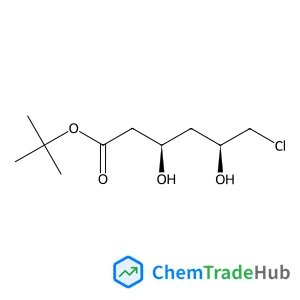
2-Methyl-2-propanyl (3R,5S)-6-chloro-3,5-dihydroxyhexanoate
CAS Number:
154026-93-4
Molecular Formula:
C10H19ClO4
Recommended Suppliers




Disclaimer
This page provides academic journal information for reference and research purposes only. We are not affiliated with any journal publishers and do not handle publication submissions. For publication-related inquiries, please contact the respective journal publishers directly.
If you notice any inaccuracies in the information displayed, please contact us at support@chemtradehub.com. We will promptly review and address your concerns.