












Anisotropic thermal expansion of SnSe from first-principles calculations based on Grüneisen's theory
Literature Information
Publication Date
2017-05-15
DOI
10.1039/C7CP00815E
Impact Factor
3.676
Authors
Gang Liu, Jian Zhou, Hui Wang
View Original
Abstract
Based on Grüneisen's theory, the elastic properties and thermal expansion of bulk SnSe with the Pnma phase are investigated by using first-principles calculations. Our numerical results indicate that the linear thermal expansion coefficient along the a direction is smaller than the one along the b direction, while the one along the c direction shows a significant negative value, even at high temperature. The numerical results are in good accordance with experimental results. In addition, generalized and macroscopic Grüneisen parameters are also presented. It is also found that SnSe possesses negative Possion's ratio. The contributions of different phonon modes to NTE along the c direction are investigated, and it is found that the two modes which make the most important contributions to NTE are transverse vibrations perpendicular to the c direction. Finally, we analyze the relation of elastic constants to negative thermal expansion, and demonstrate that negative thermal expansion can also occur even with all positive macroscopic Grüneisen parameters.
Related Literature
The role of ceria/precious metal interfaces in catalysis
Michele Melchionna
2023-11-29
Perspective
DOI: 10.1039/D3LF00202K
Effect of temperature and packaging materials on the shelf-life stability and in vitro properties of microencapsulated and spray-dried synbiotic legume-based instant beverage powder
Smriti Chaturvedi, Snehasis Chakraborty
2023-10-27
Paper
DOI: 10.1039/D3FB00094J
Chemical composition and bioactivity of hemp, reed canary grass and common reed grown on boreal marginal lands
Jenni Tienaho, Hanna Brännström, Risto Korpinen, Juha-Matti Pihlava, Jarkko Hellström, Paula Jylhä, Jaana Liimatainen, Veikko Möttönen, Jyri Maunuksela, Petri Kilpeläinen
2023-10-06
Paper
DOI: 10.1039/D3SU00255A
Moringa pod derived antioxidant dietary fibre as a quality enhancer in goat meat nuggets
Annada Das, S. Biswas, P. K. Nanda, Niloy Chatterjee, Srija Pal, Pubali Dhar, Arun K. Verma, Dipanwita Bhattacharya, Rojison Koshy, Arun K. Das
2024-01-03
Paper
DOI: 10.1039/D3FB00177F
Biological and postharvest interventions to manage the ethylene in fruit: a review
Ram Asrey, Swati Sharma, Kalyan Barman, Uma Prajapati, Narender Negi
2023-06-29
Review Article
DOI: 10.1039/D3FB00037K
Nanoporous oxide electrodes for energy conversion and storage devices
Jin Wook Yang, Hee Ryeong Kwon, Jin Ho Seo, Sangwoo Ryu
2023-10-09
Review Article
DOI: 10.1039/D3LF00094J
Exploring the potential of mosambi peel and sago powder in developing edible spoons
Bareera Siddiqui, Alisha Ahmad, Owais Yousuf, Kaiser Younis
2023-09-27
Paper
DOI: 10.1039/D3FB00111C
The critical role of H2 reduction roasting for enhancing the recycling of spent Li-ion battery cathodes in the subsequent neutral water electrolysis
Jiayin Zhou, Jihong Ni, Xiaofei Guan
2023-09-26
Paper
DOI: 10.1039/D3SU00201B
You might also like
Compound Q&A
What industries use (1R,3S)-1,3-Cyclopentanediol (CAS: 16326-97-9)?
(1R,3S)-1,3-Cyclopentanediol finds applications in various industries. In the ph...
16326-97-9(1R,3S)-1,3-Cyclopen...
Compound Q&A
What precautions should be taken when handling N'-[4-(Dimethylamino)phenyl]-N,N-dimethyl-1,4-benzenediamine (CAS: 637-31-0)?
When handling N'-[4-(Dimethylamino)phenyl]-N,N-dimethyl-1,4-benzenediamine, it i...
637-31-0N'-[4-(Dimethylamino...
Compound Q&A
Are there alternatives to 5-(2,4-Difluorophenyl)-2-methoxypyrimidine (CAS: 1352318-16-1) in synthesis?
There are several alternatives to 5-(2,4-Difluorophenyl)-2-methoxypyrimidine in ...
1352318-16-15-(2,4-Difluoropheny...
Compound Q&A
What regulatory guidelines apply to 1-(3-Methoxyphenoxy)propan-2-ol (CAS: 382141-68-6)?
1-(3-Methoxyphenoxy)propan-2-ol (CAS: 382141-68-6) must comply with the Globally...
382141-68-61-(3-Methoxyphenoxy)...
Compound Q&A
Is Tetrodotoxin Citrate (CAS: 18660-81-6) safe?
Tetrodotoxin Citrate is extremely dangerous and should be handled with extreme c...
18660-81-6Tetrodotoxin Citrate
Compound Q&A
What are the main uses of 2-Methyl-2-propanyl [(1R,3S)-3-hydroxycyclopentyl]carbamate (CAS: 225641-84-9)?
2-Methyl-2-propanyl [(1R,3S)-3-hydroxycyclopentyl]carbamate (CAS: 225641-84-9) i...
225641-84-92-Methyl-2-propanyl ...
Compound Q&A
How should waste containing 4-(2-Hydroxyhexafluoroisopropyl)Benzoic Acid (CAS: 16261-80-6) be handled?
Waste containing 4-(2-Hydroxyhexafluoroisopropyl)Benzoic Acid (CAS: 16261-80-6) ...
16261-80-64-(2-Hydroxyhexafluo...
Compound Q&A
How is 2-Methyl-2-proanyl {(2S)-1-[(benzyloxy)amino]-3-hydroxy-3-methyl-1-oxo-2-butanyl}carbamate (CAS: 102507-19-7) typically synthesized?
2-Methyl-2-proanyl {(2S)-1-[(benzyloxy)amino]-3-hydroxy-3-methyl-1-oxo-2-butanyl...
102507-19-72-Methyl-2-propanyl ...
Compound Q&A
What is Benzeneethanamine, α-ethyl-, hydrochloride (1:1) (CAS: 20735-15-3)?
Benzeneethanamine, α-ethyl-, hydrochloride (1:1) is an organic compound with the...
20735-15-3Benzeneethanamine, α...
Compound Q&A
Are there alternatives to 3-{(E)-[4-(Dimethylamino)phenyl]diazenyl}benzoic acid (CAS: 20691-84-3) in synthesis?
In the synthesis of compounds similar to 3-{(E)-[4-(Dimethylamino)phenyl]diazeny...
20691-84-33-{(E)-[4-(Dimethyla...
Source Journal
Physical Chemistry Chemical Physics

CiteScore:
5.5
Self-citation Rate:
10.3%
Articles per Year:
3036
Physical Chemistry Chemical Physics (PCCP) is an international journal co-owned by 19 physical chemistry and physics societies from around the world. This journal publishes original, cutting-edge research in physical chemistry, chemical physics and biophysical chemistry. To be suitable for publication in PCCP, articles must include significant innovation and/or insight into physical chemistry; this is the most important criterion that reviewers and Editors will judge against when evaluating submissions. The journal has a broad scope and welcomes contributions spanning experiment, theory, computation and data science. Topical coverage includes spectroscopy, dynamics, kinetics, statistical mechanics, thermodynamics, electrochemistry, catalysis, surface science, quantum mechanics, quantum computing and machine learning. Interdisciplinary research areas such as polymers and soft matter, materials, nanoscience, energy, surfaces/interfaces, and biophysical chemistry are welcomed if they demonstrate significant innovation and/or insight into physical chemistry. Joined experimental/theoretical studies are particularly appreciated when complementary and based on up-to-date approaches.
Recommended Compounds

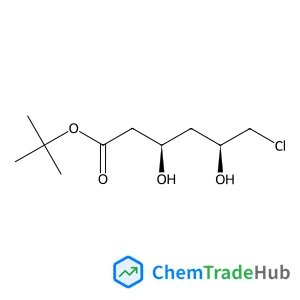
2-Methyl-2-propanyl (3R,5S)-6-chloro-3,5-dihydroxyhexanoate
CAS Number:
154026-93-4
Molecular Formula:
C10H19ClO4
Recommended Suppliers






Disclaimer
This page provides academic journal information for reference and research purposes only. We are not affiliated with any journal publishers and do not handle publication submissions. For publication-related inquiries, please contact the respective journal publishers directly.
If you notice any inaccuracies in the information displayed, please contact us at support@chemtradehub.com. We will promptly review and address your concerns.