












Establishing the link between fibril formation and Raman optical activity spectra of insulin
Literature Information
Publication Date
2017-05-11
DOI
10.1039/C7CP01556A
Impact Factor
3.676
Authors
Shigeki Yamamoto, Petr Bouř
View Original
Abstract
Folding of proteins into insoluble amyloidal fibrils is implicated in a number of biological processes. Optical spectroscopy represents a convenient tool to monitor such structural variations. Recently, characteristic changes in Raman optical activity (ROA) spectra of insulin during a pre-fibrillar stage were reported but not supported by a theoretical model. In the present study, molecular dynamics and the density functional theory are used to simulate the spectra and understand the connection between the structure, and ROA and Raman spectral intensities. Theoretical results are consistent with the observations and only confirm exceptional ROA sensitivity to the protein tertiary structure. Surprisingly, this sensitivity reflects local conformational changes in the peptide main and side chains, rather than a direct through-space interaction of the protein components. Side chains providing strong ROA signals, such as tyrosine, can additionally report on local conformational features. Theoretical modeling helps in explaining the observed spectral changes and is likely to enable future applications of ROA spectroscopy in protein structural studies.
Recommended Journals
Related Literature
Palladium mediated deallylation in fully aqueous conditions for native chemical ligation at aspartic and glutamic acid sites
Muhammad Jbara, Emad Eid, Ashraf Brik
2018-05-07
Communication
DOI: 10.1039/C8OB00890F
Multifunctional P-ligand-controlled “silicon-centered” selectivity in Rh/Cu-catalyzed Si–C bond cleavage of silacyclobutanes
Xu Wang, Shuai-Shuai Huang, Feng-Jiao Zhang, Jia-Le Xie, Zhao Li, Zheng Xu, Fei Ye
2021-10-05
Research Article
DOI: 10.1039/D1QO01386F
Facile synthesis of 2,3-benzodiazepines using one-pot two-step phosphate-assisted acylation–hydrazine cyclization reactions
Akinari Sumita, Yuko Otani, Tomohiko Ohwada
2018-05-09
Paper
DOI: 10.1039/C8OB00708J
Cascade double isocyanide insertion and C–N coupling of 2-iodo-2′-isocyano-1,1′-biphenyls
2018-05-02
Communication
DOI: 10.1039/C8OB00956B
Electrophilic N-trifluoromethylthiophthalimide as a fluorinated reagent in the synthesis of acyl fluorides
Chen Zhu, Serik Zhumagazy, Huifeng Yue, Magnus Rueping
2021-11-25
Research Article
DOI: 10.1039/D1QO01633D
Mild and efficient synthesis of indoles and isoquinolones via a nickel-catalyzed Larock-type heteroannulation reaction
Wei-Zhi Weng, Jian Xie, Bo Zhang
2018-05-04
Paper
DOI: 10.1039/C8OB00795K
Figure-eight arylene ethynylene macrocycles: facile synthesis and specific binding behavior toward Hg2+
Hui Nie, Qian-Hui Li, Siqi Zhang, Chuan-Ming Wang, Wen-Hui Lin, Ke Deng, Li-Jin Shu, Qing-Dao Zeng, Jun-Hua Wan
2021-09-29
Research Article
DOI: 10.1039/D1QO00812A
Efficient enantioselective synthesis of CF2H-containing dispiro[benzo[b]thiophene-oxindole-pyrrolidine]s via organocatalytic cycloaddition
Yabo Deng, Yongzhen Li, Yalan Wang, Shuo Sun, Sichao Ma, Pengfei Jia, Wenguang Li, Kairong Wang, Wenjin Yan
2021-11-24
Research Article
DOI: 10.1039/D1QO01392K
Donor–acceptor cyclopropanes as ortho-quinone methide equivalents in formal (4 + 2)-cycloaddition to alkenes
Konstantin L. Ivanov, Stanislav I. Bezzubov, Mikhail Ya. Melnikov, Ekaterina M. Budynina
2018-03-13
Paper
DOI: 10.1039/C8OB00377G
Asymmetric cycloisomerization/[3 + 2] cycloaddition for the synthesis of chiral spiroisobenzofuran-1,3′-pyrrolidine derivatives
Pei Dong, Long Chen, Zhendong Yang, Shunxi Dong, Xiaoming Feng
2021-10-08
Research Article
DOI: 10.1039/D1QO01194D
You might also like
Compound Q&A
What industries use (1R,3S)-1,3-Cyclopentanediol (CAS: 16326-97-9)?
(1R,3S)-1,3-Cyclopentanediol finds applications in various industries. In the ph...
16326-97-9(1R,3S)-1,3-Cyclopen...
Compound Q&A
What precautions should be taken when handling N'-[4-(Dimethylamino)phenyl]-N,N-dimethyl-1,4-benzenediamine (CAS: 637-31-0)?
When handling N'-[4-(Dimethylamino)phenyl]-N,N-dimethyl-1,4-benzenediamine, it i...
637-31-0N'-[4-(Dimethylamino...
Compound Q&A
Are there alternatives to 5-(2,4-Difluorophenyl)-2-methoxypyrimidine (CAS: 1352318-16-1) in synthesis?
There are several alternatives to 5-(2,4-Difluorophenyl)-2-methoxypyrimidine in ...
1352318-16-15-(2,4-Difluoropheny...
Compound Q&A
What regulatory guidelines apply to 1-(3-Methoxyphenoxy)propan-2-ol (CAS: 382141-68-6)?
1-(3-Methoxyphenoxy)propan-2-ol (CAS: 382141-68-6) must comply with the Globally...
382141-68-61-(3-Methoxyphenoxy)...
Compound Q&A
Is Tetrodotoxin Citrate (CAS: 18660-81-6) safe?
Tetrodotoxin Citrate is extremely dangerous and should be handled with extreme c...
18660-81-6Tetrodotoxin Citrate
Compound Q&A
What are the main uses of 2-Methyl-2-propanyl [(1R,3S)-3-hydroxycyclopentyl]carbamate (CAS: 225641-84-9)?
2-Methyl-2-propanyl [(1R,3S)-3-hydroxycyclopentyl]carbamate (CAS: 225641-84-9) i...
225641-84-92-Methyl-2-propanyl ...
Compound Q&A
How should waste containing 4-(2-Hydroxyhexafluoroisopropyl)Benzoic Acid (CAS: 16261-80-6) be handled?
Waste containing 4-(2-Hydroxyhexafluoroisopropyl)Benzoic Acid (CAS: 16261-80-6) ...
16261-80-64-(2-Hydroxyhexafluo...
Compound Q&A
How is 2-Methyl-2-proanyl {(2S)-1-[(benzyloxy)amino]-3-hydroxy-3-methyl-1-oxo-2-butanyl}carbamate (CAS: 102507-19-7) typically synthesized?
2-Methyl-2-proanyl {(2S)-1-[(benzyloxy)amino]-3-hydroxy-3-methyl-1-oxo-2-butanyl...
102507-19-72-Methyl-2-propanyl ...
Compound Q&A
What is Benzeneethanamine, α-ethyl-, hydrochloride (1:1) (CAS: 20735-15-3)?
Benzeneethanamine, α-ethyl-, hydrochloride (1:1) is an organic compound with the...
20735-15-3Benzeneethanamine, α...
Compound Q&A
Are there alternatives to 3-{(E)-[4-(Dimethylamino)phenyl]diazenyl}benzoic acid (CAS: 20691-84-3) in synthesis?
In the synthesis of compounds similar to 3-{(E)-[4-(Dimethylamino)phenyl]diazeny...
20691-84-33-{(E)-[4-(Dimethyla...
Source Journal
Physical Chemistry Chemical Physics

CiteScore:
5.5
Self-citation Rate:
10.3%
Articles per Year:
3036
Physical Chemistry Chemical Physics (PCCP) is an international journal co-owned by 19 physical chemistry and physics societies from around the world. This journal publishes original, cutting-edge research in physical chemistry, chemical physics and biophysical chemistry. To be suitable for publication in PCCP, articles must include significant innovation and/or insight into physical chemistry; this is the most important criterion that reviewers and Editors will judge against when evaluating submissions. The journal has a broad scope and welcomes contributions spanning experiment, theory, computation and data science. Topical coverage includes spectroscopy, dynamics, kinetics, statistical mechanics, thermodynamics, electrochemistry, catalysis, surface science, quantum mechanics, quantum computing and machine learning. Interdisciplinary research areas such as polymers and soft matter, materials, nanoscience, energy, surfaces/interfaces, and biophysical chemistry are welcomed if they demonstrate significant innovation and/or insight into physical chemistry. Joined experimental/theoretical studies are particularly appreciated when complementary and based on up-to-date approaches.
Recommended Compounds
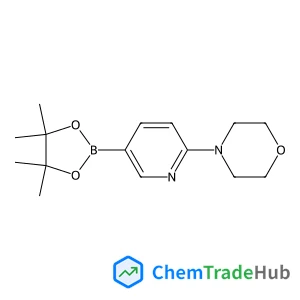
4-(5-(4,4,5,5-tetramethyl-1,3,2-dioxaborolan-2-yl)pyridin-2-yl)morpholine
CAS Number:
485799-04-0
Molecular Formula:
C15H23BN2O3
![Ethyl 3-((6-(4,5-dihydro-1H-benzo[d]azepin-3(2H)-yl)-2-(pyridin-2-yl)pyrimidin-4-yl)amino)propanoate structure](https://static.chemtradehub.com/structs/137/1373423-53-0-496a.webp "Ethyl 3-((6-(4,5-dihydro-1H-benzo[d]azepin-3(2H)-yl)-2-(pyridin-2-yl)pyrimidin-4-yl)amino)propanoate structure")
Ethyl 3-((6-(4,5-dihydro-1H-benzo[d]azepin-3(2H)-yl)-2-(pyridin-2-yl)pyrimidin-4-yl)amino)propanoate
CAS Number:
1373423-53-0
Molecular Formula:
C24H27N5O2
Recommended Suppliers





Disclaimer
This page provides academic journal information for reference and research purposes only. We are not affiliated with any journal publishers and do not handle publication submissions. For publication-related inquiries, please contact the respective journal publishers directly.
If you notice any inaccuracies in the information displayed, please contact us at support@chemtradehub.com. We will promptly review and address your concerns.