












The mechanism of ammonium bisulfate formation and decomposition over V/WTi catalysts for NH3-selective catalytic reduction at various temperatures
Literature Information
Publication Date
2017-05-05
DOI
10.1039/C7CP02324C
Impact Factor
3.676
Authors
Chenxu Li, Jianqiang Wang, Jun Wang, Yanping Zhai
View Original
Abstract
In this study, the mechanism of ammonium bisulfate (ABS) formation and decomposition over V/WTi for the NH3-selective catalytic reduction (SCR) at various temperatures was deeply investigated. Bridged bidentate, chelating bidentate, and tridentate sulfates bound to TiO2 were formed as dominant intermediates at 200, 250, and 300 °C, respectively. These sulfates reacted with affinitive ammonium species to form ammonium (bi)sulfate species and also covered the active sites and embedded the VOSO4 intermediates, which resulted in an inferior intrinsic NH3-SCR conversion rate at 200 °C and 250 °C. At 300 °C, trace amounts of ABS on TiO2 presented no influence on the NH3-SCR performance. The electrons deviating towards sulfates through the bond between ABS and metal oxides (WO3 and TiO2) weakened the stability of ABS and lowered its decomposition temperature, whereas the vanadia species played the opposite role due to the sulfur species existing in an electron saturation state with the formation of the VOSO4 intermediate. The presence of NO + O2 could break the bonds inside ABS and it could react with the ammonium species originating from ABS, which pulls NH3 out of the ABS formation equilibrium and accelerates its decomposition and competitively inhibits its formation. Correspondingly, the faster NH3-SCR conversion rate and higher N2 selectivity improve the ABS poisoning resistance of the V/WTi catalyst at low temperatures.
Related Literature
Rhodium-catalyzed regioselective C8-H amination of quinoline N-oxides with trifluoroacetamide at room temperature
Chang You, Tingting Yuan, Yanzhen Huang, Chao Pi, Yangjie Wu, Xiuling Cui
2018-06-04
Paper
DOI: 10.1039/C8OB01108G
Thermally-induced intramolecular [2 + 2] cycloaddition of acrylamide-tethered alkylidenecyclopropanes
Xiao-Yu Zhang, Song Yang, Yin Wei
2018-08-22
Communication
DOI: 10.1039/C8OB01765D
Copper-catalyzed regio- and stereoselective fluorocarboalkynylation of alkynes
Binlin Zhao, Yukun Zheng, Tianxiang Zhu, Mengning Wang, Minyan Wang, Mengtao Ma
2021-10-06
Research Article
DOI: 10.1039/D1QO01201K
Mixed carboxylic–sulfonic anhydride in reaction with imines: a straightforward route to water-soluble β-lactams via a Staudinger-type reaction
Olga Bakulina, Dmitry Dar'in, Mikhail Krasavin
2018-05-08
Paper
DOI: 10.1039/C8OB00768C
Synthesis of amidines via iron-catalyzed dearomative amination of β-naphthols with oxadiazolones
Yan-Hui Fan, Xiao-Yu Guan, Wen-Pei Li, Cheng-Zhou Lin, De-Xian Bing, Mei-Zhi Sun, Guo Cheng, Jing Cao, Jun-Jie Chen, Qing-Hai Deng
2021-11-30
Research Article
DOI: 10.1039/D1QO01687C
A mechanistic study on the regioselective Ni-catalyzed methylation–alkenylation of alkyne with AlMe3 and allylic alcohol
Jiao Liu, Deguang Liu, Wan Nie, Haizhu Yu, Jing Shi
2021-11-17
Research Article
DOI: 10.1039/D1QO01580J
Transition-metal-free hydroamination/defluorination/cyclization of perfluoroalkyl alkynes with amidines
Li-Wen Sun, Zi-Lun Yu, Xin-Long Luo, Mengtao Ma, Zhi-Liang Shen, Xue-Qiang Chu
2021-11-16
Research Article
DOI: 10.1039/D1QO01439K
Water-promoted regio-selective trifluoromethylation of vinyl conjugated diazoacetates
Xinxin Han, Xin Liu, Yueyun Bao, Hunahuan Song, Yu-Rou Zhao, Xiaoying Wang, Junjie Zhang, Le Liu, Xin-Hua Duan, Jinbo Hu, Mingyou Hu
2021-12-01
Research Article
DOI: 10.1039/D1QO01654G
Electrophilic N-trifluoromethylthiophthalimide as a fluorinated reagent in the synthesis of acyl fluorides
Chen Zhu, Serik Zhumagazy, Huifeng Yue, Magnus Rueping
2021-11-25
Research Article
DOI: 10.1039/D1QO01633D
2-Pyridinylmethyl borrowing: base-promoted C-alkylation of (pyridin-2-yl)-methyl alcohols with ketones via cleavage of unstrained C(sp3)–C(sp3) bonds
Chuan-Ming Hong, Fei-Fei Zou, Xin Zhuang, Zhen Luo, Zheng-Qiang Liu, Li-Qing Ren, Qing-Hua Li, Tang-Lin Liu
2021-11-23
Research Article
DOI: 10.1039/D1QO01446C
You might also like
Compound Q&A
What industries use (1R,3S)-1,3-Cyclopentanediol (CAS: 16326-97-9)?
(1R,3S)-1,3-Cyclopentanediol finds applications in various industries. In the ph...
16326-97-9(1R,3S)-1,3-Cyclopen...
Compound Q&A
What precautions should be taken when handling N'-[4-(Dimethylamino)phenyl]-N,N-dimethyl-1,4-benzenediamine (CAS: 637-31-0)?
When handling N'-[4-(Dimethylamino)phenyl]-N,N-dimethyl-1,4-benzenediamine, it i...
637-31-0N'-[4-(Dimethylamino...
Compound Q&A
Are there alternatives to 5-(2,4-Difluorophenyl)-2-methoxypyrimidine (CAS: 1352318-16-1) in synthesis?
There are several alternatives to 5-(2,4-Difluorophenyl)-2-methoxypyrimidine in ...
1352318-16-15-(2,4-Difluoropheny...
Compound Q&A
What regulatory guidelines apply to 1-(3-Methoxyphenoxy)propan-2-ol (CAS: 382141-68-6)?
1-(3-Methoxyphenoxy)propan-2-ol (CAS: 382141-68-6) must comply with the Globally...
382141-68-61-(3-Methoxyphenoxy)...
Compound Q&A
Is Tetrodotoxin Citrate (CAS: 18660-81-6) safe?
Tetrodotoxin Citrate is extremely dangerous and should be handled with extreme c...
18660-81-6Tetrodotoxin Citrate
Compound Q&A
What are the main uses of 2-Methyl-2-propanyl [(1R,3S)-3-hydroxycyclopentyl]carbamate (CAS: 225641-84-9)?
2-Methyl-2-propanyl [(1R,3S)-3-hydroxycyclopentyl]carbamate (CAS: 225641-84-9) i...
225641-84-92-Methyl-2-propanyl ...
Compound Q&A
How should waste containing 4-(2-Hydroxyhexafluoroisopropyl)Benzoic Acid (CAS: 16261-80-6) be handled?
Waste containing 4-(2-Hydroxyhexafluoroisopropyl)Benzoic Acid (CAS: 16261-80-6) ...
16261-80-64-(2-Hydroxyhexafluo...
Compound Q&A
How is 2-Methyl-2-proanyl {(2S)-1-[(benzyloxy)amino]-3-hydroxy-3-methyl-1-oxo-2-butanyl}carbamate (CAS: 102507-19-7) typically synthesized?
2-Methyl-2-proanyl {(2S)-1-[(benzyloxy)amino]-3-hydroxy-3-methyl-1-oxo-2-butanyl...
102507-19-72-Methyl-2-propanyl ...
Compound Q&A
What is Benzeneethanamine, α-ethyl-, hydrochloride (1:1) (CAS: 20735-15-3)?
Benzeneethanamine, α-ethyl-, hydrochloride (1:1) is an organic compound with the...
20735-15-3Benzeneethanamine, α...
Compound Q&A
Are there alternatives to 3-{(E)-[4-(Dimethylamino)phenyl]diazenyl}benzoic acid (CAS: 20691-84-3) in synthesis?
In the synthesis of compounds similar to 3-{(E)-[4-(Dimethylamino)phenyl]diazeny...
20691-84-33-{(E)-[4-(Dimethyla...
Source Journal
Physical Chemistry Chemical Physics

CiteScore:
5.5
Self-citation Rate:
10.3%
Articles per Year:
3036
Physical Chemistry Chemical Physics (PCCP) is an international journal co-owned by 19 physical chemistry and physics societies from around the world. This journal publishes original, cutting-edge research in physical chemistry, chemical physics and biophysical chemistry. To be suitable for publication in PCCP, articles must include significant innovation and/or insight into physical chemistry; this is the most important criterion that reviewers and Editors will judge against when evaluating submissions. The journal has a broad scope and welcomes contributions spanning experiment, theory, computation and data science. Topical coverage includes spectroscopy, dynamics, kinetics, statistical mechanics, thermodynamics, electrochemistry, catalysis, surface science, quantum mechanics, quantum computing and machine learning. Interdisciplinary research areas such as polymers and soft matter, materials, nanoscience, energy, surfaces/interfaces, and biophysical chemistry are welcomed if they demonstrate significant innovation and/or insight into physical chemistry. Joined experimental/theoretical studies are particularly appreciated when complementary and based on up-to-date approaches.
Recommended Compounds
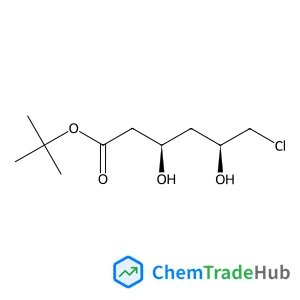
2-Methyl-2-propanyl (3R,5S)-6-chloro-3,5-dihydroxyhexanoate
CAS Number:
154026-93-4
Molecular Formula:
C10H19ClO4

Recommended Suppliers







Disclaimer
This page provides academic journal information for reference and research purposes only. We are not affiliated with any journal publishers and do not handle publication submissions. For publication-related inquiries, please contact the respective journal publishers directly.
If you notice any inaccuracies in the information displayed, please contact us at support@chemtradehub.com. We will promptly review and address your concerns.