












Tilt boundary induced heteroepitaxy in chemically grown dendritic silver nanostructures on germanium and their optical properties
Literature Information
Publication Date
2014-06-02
DOI
10.1039/C4CP01711K
Impact Factor
3.676
Authors
Tanmay Ghosh, Pabitra Das, Tapas Kumar Chini, Tapas Ghosh, Biswarup Satpati
View Original
Abstract
Dendritic silver nanostructures were prepared by a simple dip-and-rinse galvanic displacement reaction directly on germanium surfaces. The formation and evolution of these dendrites were investigated using scanning electron microscopy (SEM), high-resolution transmission electron microscopy (HRTEM) and energy-dispersive X-ray spectroscopy (EDX). The present results clearly show a new type of heteroepitaxy, where the large lattice mismatch between silver and germanium is accommodated at the interface by the formation of low-energy asymmetric tilt boundaries. The overgrown samples reduce the strain by introducing crystal defects. Additionally, by employing cathodoluminescence (CL) spectroscopy and imaging with a field emission gun scanning electron microscope (FEG-SEM), we provide information on the surface plasmon assisted photon emission of a stack of Ag hexagonal nanostructures. Surface enhanced Raman scattering (SERS) studies show the suitability of such Ag nanodendritic structures as SERS active substrates.
Related Literature
Adsorption of PAHs on interstellar ice viewed by classical molecular dynamics
Eric Michoulier, Aude Simon, Joëlle Mascetti, Céline Toubin
2018-03-06
Paper
DOI: 10.1039/C8CP00593A
Electronic structure, optical and photocatalytic performance of SiC–MX2 (M = Mo, W and X = S, Se) van der Waals heterostructures
H. U. Din, M. Idrees, Chuong V. Nguyen, Li-Yong Gan, M. Maqbool, B. Amin
2018-08-29
Paper
DOI: 10.1039/C8CP03933J
Photochemistry of glyoxylate embedded in sodium chloride clusters, a laboratory model for tropospheric sea-salt aerosols
Nina K. Bersenkowitsch, Milan Ončák, Christian van der Linde, Andreas Herburger, Martin K. Beyer
2018-02-28
Paper
DOI: 10.1039/C8CP00399H
Influence of conjugation length on ultrafast electronic tunneling in organic semiconductor thin films
Vincent V. Duong, Alexander L. Ayzner
2018-09-19
Paper
DOI: 10.1039/C8CP04746D
The direct observation of electron backflow in an organic heterojunction formed by two n-type materials
Bo Wu, Hai Shen Huang
2018-02-12
Paper
DOI: 10.1039/C7CP07817J
Magnesium bis(trifluoromethanesulfonyl)amide complexes with triglyme and asymmetric homologues: phase behavior, coordination structures and melting point reduction
Kei Hashimoto, Soma Suzuki, Morgan L. Thomas, Toshihiko Mandai, Seiji Tsuzuki, Masayoshi Watanabe
2018-02-13
Paper
DOI: 10.1039/C7CP08367J
A theoretical study on the mechanism of hydrogen evolution on non-precious partially oxidized nickel-based heterostructures for fuel cells
Xinju Pan, Gang Zhou
2018-02-21
Paper
DOI: 10.1039/C7CP08112J
Pseudorotaxanes in the gas phase: structure and energetics of protonated dibenzylamine–crown ether complexes
Motoki Kida, Daisuke Shimoyama, Toshiaki Ikeda, Ryo Sekiya, Takeharu Haino, Takayuki Ebata, Christophe Jouvet, Yoshiya Inokuchi
2018-06-22
Paper
DOI: 10.1039/C8CP02707B
Competition between salt bridge and non-zwitterionic structures in deprotonated amino acid dimers
Giel Berden, Evan R. Williams
2018-05-18
Paper
DOI: 10.1039/C8CP01458B
Thermodynamic versus non-equilibrium stability of palmitic acid monolayers in calcium-enriched sea spray aerosol proxy systems
Bethany A. Wellen Rudd, Andrew S. Vidalis, Heather C. Allen
2018-04-05
Paper
DOI: 10.1039/C8CP01188E
You might also like
Compound Q&A
Is 2-(2-chloroacetamido)-3-phenylpropanoic acid (CAS: 7765-11-9) safe?
2-(2-Chloroacetamido)-3-phenylpropanoic acid (CAS: 7765-11-9) is generally consi...
7765-11-92-(2-chloroacetamido...
Compound Q&A
Is 2-(Benzyloxy)-5-bromobenzoic acid (CAS: 62176-31-2) safe?
2-(Benzyloxy)-5-bromobenzoic acid can be handled safely if appropriate precautio...
62176-31-22-(Benzyloxy)-5-brom...
Compound Q&A
What is (4-Methyl-1,2,5-oxadiazol-3-yl)methanamine hydrochloride (CAS: 1159825-48-5)?
(4-Methyl-1,2,5-oxadiazol-3-yl)methanamine hydrochloride is a chemical compound ...
1159825-48-5(4-Methyl-1,2,5-oxad...
Compound Q&A
What is 2-(5-Hexylthiophen-2-yl)-4,4,5,5-tetramethyl-1,3,2-dioxaborolane (CAS: 917985-54-7)?
2-(5-Hexylthiophen-2-yl)-4,4,5,5-tetramethyl-1,3,2-dioxaborolane (CAS: 917985-54...
917985-54-72-(5-Hexylthiophen-2...
Compound Q&A
Are there alternatives to 4-(8-Methyl-9H-1,3-dioxolo[4,5-h][2,3]benzodiazepin-5-yl)benzenamine (CAS: 102771-26-6) in synthesis?
While 4-(8-Methyl-9H-1,3-dioxolo[4,5-h][2,3]benzodiazepin-5-yl)benzenamine (CAS:...
102771-26-64-(8-Methyl-9H-1,3-d...
Compound Q&A
What is the market or research trend for tert-butyl 3-hydroxy-4,5,7,8-tetrahydro-2H-pyrazolo[3,4-d]azepine-6-carboxylate (CAS: 851376-80-2)?
The market for tert-butyl 3-hydroxy-4,5,7,8-tetrahydro-2H-pyrazolo[3,4-d]azepine...
851376-80-2tert-butyl 3-hydroxy...
Compound Q&A
How should waste containing 3,5-Diamino-1H-pyrazole-4-carbonitrile (CAS: 6844-58-2) be handled?
Waste containing 3,5-Diamino-1H-pyrazole-4-carbonitrile (CAS: 6844-58-2) should ...
6844-58-23,5-Diamino-1H-pyraz...
Compound Q&A
How is (6-Fluoro-3-pyridinyl)boronic acid (CAS: 351019-18-6) typically synthesized?
(6-Fluoro-3-pyridinyl)boronic acid can be synthesized through the reaction of 6-...
351019-18-6(6-Fluoro-3-pyridiny...
Compound Q&A
What industries use Dibenzyl carbonimidoylbiscarbamate (CAS: 10065-79-9)?
Dibenzyl carbonimidoylbiscarbamate (CAS: 10065-79-9) finds applications in vario...
10065-79-9Dibenzyl carbonimido...
Compound Q&A
What is the market or research trend for (beta,beta,2,3,4,5,6-~2~H_7_)Phenylalanine (CAS: 74228-83-4)?
The market for (beta,beta,2,3,4,5,6-~2~H_7_)Phenylalanine (CAS: 74228-83-4) is g...
74228-83-4(beta,beta,2,3,4,5,6...
Source Journal
Physical Chemistry Chemical Physics

CiteScore:
5.5
Self-citation Rate:
10.3%
Articles per Year:
3036
Physical Chemistry Chemical Physics (PCCP) is an international journal co-owned by 19 physical chemistry and physics societies from around the world. This journal publishes original, cutting-edge research in physical chemistry, chemical physics and biophysical chemistry. To be suitable for publication in PCCP, articles must include significant innovation and/or insight into physical chemistry; this is the most important criterion that reviewers and Editors will judge against when evaluating submissions. The journal has a broad scope and welcomes contributions spanning experiment, theory, computation and data science. Topical coverage includes spectroscopy, dynamics, kinetics, statistical mechanics, thermodynamics, electrochemistry, catalysis, surface science, quantum mechanics, quantum computing and machine learning. Interdisciplinary research areas such as polymers and soft matter, materials, nanoscience, energy, surfaces/interfaces, and biophysical chemistry are welcomed if they demonstrate significant innovation and/or insight into physical chemistry. Joined experimental/theoretical studies are particularly appreciated when complementary and based on up-to-date approaches.
Recommended Compounds
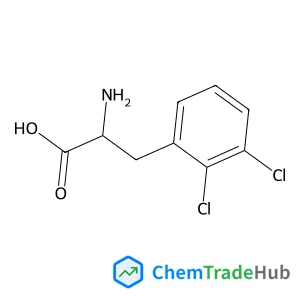


(2S,4R)-4-(3-Bromobenzyl)pyrrolidine-2-carboxylic acid hydrochloride
CAS Number:
1049734-10-2
Molecular Formula:
C12H15BrClNO2
![Ethyl ({[(2-methyl-2-propanyl)oxy]carbonyl}amino)(2-pyridinyl)acetate structure](https://static.chemtradehub.com/structs/313/313490-90-3-dd15.webp "Ethyl ({[(2-methyl-2-propanyl)oxy]carbonyl}amino)(2-pyridinyl)acetate structure")
Ethyl ({[(2-methyl-2-propanyl)oxy]carbonyl}amino)(2-pyridinyl)acetate
CAS Number:
313490-90-3
Molecular Formula:
C14H20N2O4
Recommended Suppliers





Disclaimer
This page provides academic journal information for reference and research purposes only. We are not affiliated with any journal publishers and do not handle publication submissions. For publication-related inquiries, please contact the respective journal publishers directly.
If you notice any inaccuracies in the information displayed, please contact us at support@chemtradehub.com. We will promptly review and address your concerns.