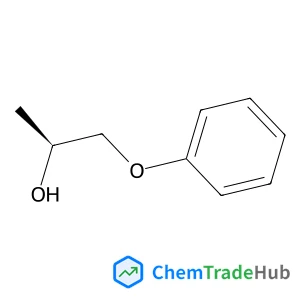
![3,7-Di(1,1':3',1''-terphenyl-5'-yl)-10,11,12,13-tetrahydrodiindeno[7,1-de:1',7'-fg][1,3,2]dioxaphosphocin-5-ol 5-oxide structure](https://static.chemtradehub.com/structs/135/1352810-38-8-3f10.webp "3,7-Di(1,1':3',1''-terphenyl-5'-yl)-10,11,12,13-tetrahydrodiindeno[7,1-de:1',7'-fg][1,3,2]dioxaphosphocin-5-ol 5-oxide structure")
3,7-Di(1,1':3',1''-terphenyl-5'-yl)-10,11,12,13-tetrahydrodiindeno[7,1-de:1',7'-fg][1,3,2]dioxaphosphocin-5-ol 5-oxide
CAS Number:
1352810-38-8
Molecular Formula:
C53H39O4P
Xinju Pan, Gang Zhou
It is desirable, yet challenging, to utilize non-precious metals instead of noble-metals as efficient catalysts in the renewable energy manufacturing industry. Using first principles calculations, we study the structural characteristics of partially oxidized nickel-based nanoheterostructures (NiO/Ni NHSs), and the interfacial effects on hydrogen evolution. The origin of the enhanced hydrogen evolution performance is discussed at the microscopic level. This study identifies two types of active sites of the exposed Ni surface available for the hydrogen evolution reaction (HER). One is the hcp-hollow sites near the perimeter boundary that exhibit a more excellent HER performance than platinum (Pt), and the other the second nearest neighbor fcc-hollow sites away from the boundary that exhibit a similar performance to Pt. The interfacial effects result from the competitive charge transfer between NiO and Ni surfaces in NHSs, and enhance the reactivity of NiO/Ni NHSs by shifting the d-states of surface atoms down in energy. The illumination of the mechanism would be helpful for the design of more efficient and cheap transition metal-based catalysts.
Hari Datta Khanal, Chayan Dhar Clinton, Sung Hong Kim, Yong Rok Lee
DOI: 10.1039/C8QO01250D
Bing Leng, Xueshun Jia, Xiaodi Yang, Xike Gao
DOI: 10.1039/C4QO00252K
Xuanyi Li, Chunhua Han, Yue Huang, Hequan Yao, Aijun Lin
DOI: 10.1039/C8QO01168K
Shang Wu, Quanlu Yang, Qinzheng Hu, Yanbin Wang, Lihua Chen, Hong Zhang, Lan Wu, Jia Li
DOI: 10.1039/C8QO00674A
Giada Arena, Elena Cini, Elena Petricci, Rosario Randino, Maurizio Taddei
DOI: 10.1039/C5QO00025D
Liu Ye, Zhong-Liang Li, Lei Li, Zhuang Li, Hong-Xia Zhang, Zhen Guo, Qiang-Shuai Gu, Xin-Yuan Liu
DOI: 10.1039/C8QO00734A
Nadezhda V. Palysaeva, Irina A. Vatsadze, Kyrill Yu. Suponitsky, Dmitry E. Dmitriev, Aleksei B. Sheremetev
DOI: 10.1039/C8QO01173G
Katharina Zielke, Andreas Eitzinger, Antonio Massa, Laura Palombi, Kirill Faust, Mario Waser
DOI: 10.1039/C8QO01057A
Sachin Bhausaheb Wagh, Pankaj Sharma, Manoj D. Patil, Rai-Shung Liu
DOI: 10.1039/C8QO01175C
2-(2-Chloroacetamido)-3-phenylpropanoic acid (CAS: 7765-11-9) is generally consi...
2-(Benzyloxy)-5-bromobenzoic acid can be handled safely if appropriate precautio...
(4-Methyl-1,2,5-oxadiazol-3-yl)methanamine hydrochloride is a chemical compound ...
2-(5-Hexylthiophen-2-yl)-4,4,5,5-tetramethyl-1,3,2-dioxaborolane (CAS: 917985-54...
While 4-(8-Methyl-9H-1,3-dioxolo[4,5-h][2,3]benzodiazepin-5-yl)benzenamine (CAS:...
The market for tert-butyl 3-hydroxy-4,5,7,8-tetrahydro-2H-pyrazolo[3,4-d]azepine...
Waste containing 3,5-Diamino-1H-pyrazole-4-carbonitrile (CAS: 6844-58-2) should ...
(6-Fluoro-3-pyridinyl)boronic acid can be synthesized through the reaction of 6-...
Dibenzyl carbonimidoylbiscarbamate (CAS: 10065-79-9) finds applications in vario...
The market for (beta,beta,2,3,4,5,6-~2~H_7_)Phenylalanine (CAS: 74228-83-4) is g...

Physical Chemistry Chemical Physics (PCCP) is an international journal co-owned by 19 physical chemistry and physics societies from around the world. This journal publishes original, cutting-edge research in physical chemistry, chemical physics and biophysical chemistry. To be suitable for publication in PCCP, articles must include significant innovation and/or insight into physical chemistry; this is the most important criterion that reviewers and Editors will judge against when evaluating submissions. The journal has a broad scope and welcomes contributions spanning experiment, theory, computation and data science. Topical coverage includes spectroscopy, dynamics, kinetics, statistical mechanics, thermodynamics, electrochemistry, catalysis, surface science, quantum mechanics, quantum computing and machine learning. Interdisciplinary research areas such as polymers and soft matter, materials, nanoscience, energy, surfaces/interfaces, and biophysical chemistry are welcomed if they demonstrate significant innovation and/or insight into physical chemistry. Joined experimental/theoretical studies are particularly appreciated when complementary and based on up-to-date approaches.
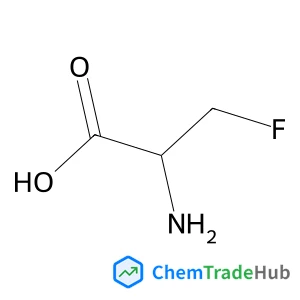
![19-[Chloro(dideuterio)methyl]-19-deuterio-20,20-dideuteriooxyoctatriacontane-18,21-dione structure](https://static.chemtradehub.com/structs/124/1246818-85-8-6244.webp "19-[Chloro(dideuterio)methyl]-19-deuterio-20,20-dideuteriooxyoctatriacontane-18,21-dione structure")