











Competition between salt bridge and non-zwitterionic structures in deprotonated amino acid dimers
Literature Information
Publication Date
2018-05-18
DOI
10.1039/C8CP01458B
Impact Factor
3.676
Authors
Giel Berden, Evan R. Williams
View Original
Abstract
Structures of deprotonated Cys, Asp, Glu, Phe, Pro, His homo dimers as well as [2Cys − 3H]−, [Asp + Glu − H]− and [2Glu − 2H + Na]− are investigated with infrared multiple-photon dissociation (IRMPD) spectroscopy between 650 and 1850 cm−1 and theory. The IRMPD spectra of all investigated complexes but [2His − H]−, [2Phe − H]− and [2Pro − H]− indicate that the structures consist of a neutral non-zwitterionic (NZ) and a deprotonated form of the amino acids. In contrast, the spectrum of [2His − H]− is complex and indicates the presence of multiple isomers and/or interactions between His and [His − H]−, so that its structure differs from that of the other deprotonated amino acid dimers. For [2Phe − H]− and especially for [2Pro − H]−, some IRMPD bands can only be explained by the presence of salt bridge (SB) structures in the dimer in which a deprotonated amino acid interacts with a zwitterionic neutral amino acid. Computational results indicate that SB structures are lower in energy at 298 K than corresponding NZ structures for neutral-anion complexes in which SB formation is not disrupted by amino acid side chains or conformational constraints, such as in [2Glu − H]− and [2Cys − 3H]− for which NZ structures are most consistent with experimental results. For deprotonated amino acid dimers in which these interfering interactions are absent, such as in [2Phe − H]− and [2Pro − H]−, the higher number of hydrogen bonds in SB compared to NZ structures stabilize the formation of zwitterionic neutral amino acids and consequently SB structures in agreement with results from IRMPD spectroscopy. These results suggest that SB structures likely occur in deprotonated peptide or protein ions at hydrophobic sites, such as protein–protein interfaces or in the interior of proteins, where interfering functional groups will not disrupt SB formation.
Recommended Journals
Related Literature
Ni-Catalyzed 1,2-iminoacylation of alkenes via a reductive strategy
Lin Wang, Chuan Wang
2018-10-25
Research Article
DOI: 10.1039/C8QO01044G
Copper-catalyzed decarboxylative and oxidative decarbonylative cross-coupling between cinnamic acids and aliphatic aldehydes
Zaigang Luo, Xinxin Han, Yuyu Fang, Peng Liu, Chengtao Feng, Zhong Li, Xuemei Xu
2018-10-08
Research Article
DOI: 10.1039/C8QO00927A
Cationic iridium-catalyzed C–H alkylation of 2-substituted pyridine N-oxides with acrylates‡
Hideaki Takano
2015-02-11
Research Article
DOI: 10.1039/C4QO00355A
Aryne triggered dearomatization reaction of isoquinolines and quinolines with chloroform‡
Jiajing Tan, Binbin Liu, Shuaisong Su
2018-09-19
Research Article
DOI: 10.1039/C8QO00838H
One-step access to N-enoxyimides by gold-catalysed addition of N-hydroxyimides to terminal alkynes
Coralie Duchemin, Nicolai Cramer
2018-12-06
Research Article
DOI: 10.1039/C8QO01179F
N-Alkyl ammonium resorcinarene salts: multivalent halogen-bonded deep-cavity cavitands
N. Kodiah Beyeh, Sandip Bhowmik, Fangfang Pan, K. Rissanen
2015-01-26
Research Article
DOI: 10.1039/C4QO00326H
Development of a functionally separated D–π-A fluorescent dye with a pyrazyl group as an electron-accepting group for dye-sensitized solar cells
Yousuke Ooyama, Koji Uenaka, Joji Ohshita
2015-03-16
Research Article
DOI: 10.1039/C5QO00050E
Metal catalyzed cross-coupling of aryl and benzyl methyl sulfides: nickel catalyzed Caryl–Csp3 and Csp3–Csp3 bond formations
Matthias Leiendecker, Adisak Chatupheeraphat, Magnus Rueping
2015-02-17
Research Article
DOI: 10.1039/C5QO00001G
You might also like
Compound Q&A
Is 2-(2-chloroacetamido)-3-phenylpropanoic acid (CAS: 7765-11-9) safe?
2-(2-Chloroacetamido)-3-phenylpropanoic acid (CAS: 7765-11-9) is generally consi...
7765-11-92-(2-chloroacetamido...
Compound Q&A
Is 2-(Benzyloxy)-5-bromobenzoic acid (CAS: 62176-31-2) safe?
2-(Benzyloxy)-5-bromobenzoic acid can be handled safely if appropriate precautio...
62176-31-22-(Benzyloxy)-5-brom...
Compound Q&A
What is (4-Methyl-1,2,5-oxadiazol-3-yl)methanamine hydrochloride (CAS: 1159825-48-5)?
(4-Methyl-1,2,5-oxadiazol-3-yl)methanamine hydrochloride is a chemical compound ...
1159825-48-5(4-Methyl-1,2,5-oxad...
Compound Q&A
What is 2-(5-Hexylthiophen-2-yl)-4,4,5,5-tetramethyl-1,3,2-dioxaborolane (CAS: 917985-54-7)?
2-(5-Hexylthiophen-2-yl)-4,4,5,5-tetramethyl-1,3,2-dioxaborolane (CAS: 917985-54...
917985-54-72-(5-Hexylthiophen-2...
Compound Q&A
Are there alternatives to 4-(8-Methyl-9H-1,3-dioxolo[4,5-h][2,3]benzodiazepin-5-yl)benzenamine (CAS: 102771-26-6) in synthesis?
While 4-(8-Methyl-9H-1,3-dioxolo[4,5-h][2,3]benzodiazepin-5-yl)benzenamine (CAS:...
102771-26-64-(8-Methyl-9H-1,3-d...
Compound Q&A
What is the market or research trend for tert-butyl 3-hydroxy-4,5,7,8-tetrahydro-2H-pyrazolo[3,4-d]azepine-6-carboxylate (CAS: 851376-80-2)?
The market for tert-butyl 3-hydroxy-4,5,7,8-tetrahydro-2H-pyrazolo[3,4-d]azepine...
851376-80-2tert-butyl 3-hydroxy...
Compound Q&A
How should waste containing 3,5-Diamino-1H-pyrazole-4-carbonitrile (CAS: 6844-58-2) be handled?
Waste containing 3,5-Diamino-1H-pyrazole-4-carbonitrile (CAS: 6844-58-2) should ...
6844-58-23,5-Diamino-1H-pyraz...
Compound Q&A
How is (6-Fluoro-3-pyridinyl)boronic acid (CAS: 351019-18-6) typically synthesized?
(6-Fluoro-3-pyridinyl)boronic acid can be synthesized through the reaction of 6-...
351019-18-6(6-Fluoro-3-pyridiny...
Compound Q&A
What industries use Dibenzyl carbonimidoylbiscarbamate (CAS: 10065-79-9)?
Dibenzyl carbonimidoylbiscarbamate (CAS: 10065-79-9) finds applications in vario...
10065-79-9Dibenzyl carbonimido...
Compound Q&A
What is the market or research trend for (beta,beta,2,3,4,5,6-~2~H_7_)Phenylalanine (CAS: 74228-83-4)?
The market for (beta,beta,2,3,4,5,6-~2~H_7_)Phenylalanine (CAS: 74228-83-4) is g...
74228-83-4(beta,beta,2,3,4,5,6...
Source Journal
Physical Chemistry Chemical Physics

CiteScore:
5.5
Self-citation Rate:
10.3%
Articles per Year:
3036
Physical Chemistry Chemical Physics (PCCP) is an international journal co-owned by 19 physical chemistry and physics societies from around the world. This journal publishes original, cutting-edge research in physical chemistry, chemical physics and biophysical chemistry. To be suitable for publication in PCCP, articles must include significant innovation and/or insight into physical chemistry; this is the most important criterion that reviewers and Editors will judge against when evaluating submissions. The journal has a broad scope and welcomes contributions spanning experiment, theory, computation and data science. Topical coverage includes spectroscopy, dynamics, kinetics, statistical mechanics, thermodynamics, electrochemistry, catalysis, surface science, quantum mechanics, quantum computing and machine learning. Interdisciplinary research areas such as polymers and soft matter, materials, nanoscience, energy, surfaces/interfaces, and biophysical chemistry are welcomed if they demonstrate significant innovation and/or insight into physical chemistry. Joined experimental/theoretical studies are particularly appreciated when complementary and based on up-to-date approaches.
Recommended Compounds

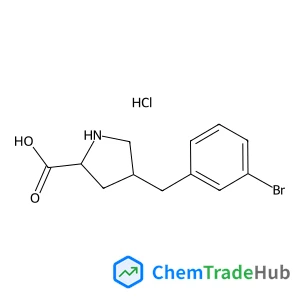
(2S,4R)-4-(3-Bromobenzyl)pyrrolidine-2-carboxylic acid hydrochloride
CAS Number:
1049734-10-2
Molecular Formula:
C12H15BrClNO2
Recommended Suppliers







Disclaimer
This page provides academic journal information for reference and research purposes only. We are not affiliated with any journal publishers and do not handle publication submissions. For publication-related inquiries, please contact the respective journal publishers directly.
If you notice any inaccuracies in the information displayed, please contact us at support@chemtradehub.com. We will promptly review and address your concerns.