











Adsorption of PAHs on interstellar ice viewed by classical molecular dynamics
Literature Information
Publication Date
2018-03-06
DOI
10.1039/C8CP00593A
Impact Factor
3.676
Authors
Eric Michoulier, Aude Simon, Joëlle Mascetti, Céline Toubin
View Original
Abstract
Polycyclic Aromatic Hydrocarbons (PAHs) are a family of molecules which represent the best candidates to explain the observation of one set of features in the Interstellar Medium (ISM): the Aromatic Interstellar Bands (AIBs). They could also contribute to the Diffuse Interstellar Bands (DIBs). In dense molecular clouds, PAHs may condense onto interstellar grains, contributing to the complex chemistry occurring in their icy mantles, composed essentially of water. In this context, the adsorption of various aromatic molecules, from benzene to ovalene, on different ices – both amorphous and crystalline – is investigated by means of classical molecular dynamics simulations. Initially, a systematic parametrization of the electronic charges on the chosen PAHs in these environments is carried out, and benchmarked with reference to free energies of solvation in liquid water. Then we propose a new, rigorous methodology, transferable to any other PAH or molecular species, to evaluate the charges to be applied to the molecule in the gas phase, at interfaces, or in liquid water. Ultimately, the adsorption energies calculated for the various PAHs are used to derive a function predicting the adsorption energy of any PAH on a given ice surface as a function of the number of C and H atoms it contains. For all PAHs studied, the largest adsorption energies are found on the crystalline hexagonal ice surface (Ih). Binding energy maps constructed for each PAH–ice pair give valuable insight into adsorption site densities and the barriers to surface diffusion. One key result is that the amorphous surface offers a smaller number of adsorption sites compared to that of hexagonal ice. A direct correlation between the location of energetically favourable adsorption sites and the presence of dangling H-bonds is also demonstrated using these maps, showing that PAHs adsorb preferentially on sites offering dangling H-bonds. The present work represents a complete description of PAH–ice interaction in the ground electronic state and at low temperature, providing the binding energies and barrier heights necessary to the ongoing improvement of astrochemical models.
Recommended Journals
Related Literature
Alkynyl trifluoromethyl selenide synthesis via oxidative trifluoromethylselenolation of terminal alkynes
Yuguang Wang, Yi You, Zhiqiang Weng
2015-03-30
Research Article
DOI: 10.1039/C5QO00045A
N-(2-Fluoro-2,2-dinitroethyl)azoles: a novel assembly of diverse explosophoric building blocks for energetic compound design
Nadezhda V. Palysaeva, Irina A. Vatsadze, Kyrill Yu. Suponitsky, Dmitry E. Dmitriev, Aleksei B. Sheremetev
2018-12-05
Research Article
DOI: 10.1039/C8QO01173G
Rhodium(iii)/amine synergistically catalyzed enantioselective Michael addition of cyclic ketones with α,β-unsaturated 2-acyl imidazoles
Yu Du, Qiang Kang
2018-09-03
Research Article
DOI: 10.1039/C8QO00809D
Cleavage of the C–C triple bond of ketoalkynes: synthesis of 4(3H)-quinazolinones
Xifa Yang, Guolin Cheng, Jinhai Shen, Changsheng Kuai, Xiuling Cui
2015-02-11
Research Article
DOI: 10.1039/C4QO00260A
Conductive fullerene surfactants via anion doping as cathode interlayers for efficient organic and perovskite solar cells
Kangrong Yan, Zhi-Xi Liu, Xue Li, Jiehuan Chen, Hongzheng Chen, Chang-Zhi Li
2018-08-24
Research Article
DOI: 10.1039/C8QO00788H
Solvent-tuned chemoselective carboazidation and diazidation of alkenes via iron catalysis
Lei Xu, Jian Chen, Lingling Chu
2018-12-27
Research Article
DOI: 10.1039/C8QO01142G
Nickel catalyzed synthesis of 4,4′-bichromenes/4,4′-bithiochromenes and their Atropisomerism
Somasundaram Muthuramalingam, Jai Anand Garg, R. Karthick, Thomas Fox, Olivier Blacque, Saiganesh Ramanathan, Senthamaraikannan Kabilan, K. K. Balasubramanian
2018-11-22
Research Article
DOI: 10.1039/C8QO00820E
Trichalcogenasumanenes containing various chalcogen atoms: synthesis, structure, properties, and chemical reactivity
Shitao Wang, Jihai Shang, Chaoxian Yan, Wenbo Wang, Chengshan Yuan, Hao-Li Zhang, Xiangfeng Shao
2018-12-05
Research Article
DOI: 10.1039/C8QO01220B
CO-enabled rhenium hydride catalyst for directed C(sp2)–H bond alkylation with olefins‡
Hongming Jin, Zhengbo Zhu, Ning Jin, Jin Xie, Yixiang Cheng
2015-02-03
Research Article
DOI: 10.1039/C4QO00329B
You might also like
Compound Q&A
Is 2-(2-chloroacetamido)-3-phenylpropanoic acid (CAS: 7765-11-9) safe?
2-(2-Chloroacetamido)-3-phenylpropanoic acid (CAS: 7765-11-9) is generally consi...
7765-11-92-(2-chloroacetamido...
Compound Q&A
Is 2-(Benzyloxy)-5-bromobenzoic acid (CAS: 62176-31-2) safe?
2-(Benzyloxy)-5-bromobenzoic acid can be handled safely if appropriate precautio...
62176-31-22-(Benzyloxy)-5-brom...
Compound Q&A
What is (4-Methyl-1,2,5-oxadiazol-3-yl)methanamine hydrochloride (CAS: 1159825-48-5)?
(4-Methyl-1,2,5-oxadiazol-3-yl)methanamine hydrochloride is a chemical compound ...
1159825-48-5(4-Methyl-1,2,5-oxad...
Compound Q&A
What is 2-(5-Hexylthiophen-2-yl)-4,4,5,5-tetramethyl-1,3,2-dioxaborolane (CAS: 917985-54-7)?
2-(5-Hexylthiophen-2-yl)-4,4,5,5-tetramethyl-1,3,2-dioxaborolane (CAS: 917985-54...
917985-54-72-(5-Hexylthiophen-2...
Compound Q&A
Are there alternatives to 4-(8-Methyl-9H-1,3-dioxolo[4,5-h][2,3]benzodiazepin-5-yl)benzenamine (CAS: 102771-26-6) in synthesis?
While 4-(8-Methyl-9H-1,3-dioxolo[4,5-h][2,3]benzodiazepin-5-yl)benzenamine (CAS:...
102771-26-64-(8-Methyl-9H-1,3-d...
Compound Q&A
What is the market or research trend for tert-butyl 3-hydroxy-4,5,7,8-tetrahydro-2H-pyrazolo[3,4-d]azepine-6-carboxylate (CAS: 851376-80-2)?
The market for tert-butyl 3-hydroxy-4,5,7,8-tetrahydro-2H-pyrazolo[3,4-d]azepine...
851376-80-2tert-butyl 3-hydroxy...
Compound Q&A
How should waste containing 3,5-Diamino-1H-pyrazole-4-carbonitrile (CAS: 6844-58-2) be handled?
Waste containing 3,5-Diamino-1H-pyrazole-4-carbonitrile (CAS: 6844-58-2) should ...
6844-58-23,5-Diamino-1H-pyraz...
Compound Q&A
How is (6-Fluoro-3-pyridinyl)boronic acid (CAS: 351019-18-6) typically synthesized?
(6-Fluoro-3-pyridinyl)boronic acid can be synthesized through the reaction of 6-...
351019-18-6(6-Fluoro-3-pyridiny...
Compound Q&A
What industries use Dibenzyl carbonimidoylbiscarbamate (CAS: 10065-79-9)?
Dibenzyl carbonimidoylbiscarbamate (CAS: 10065-79-9) finds applications in vario...
10065-79-9Dibenzyl carbonimido...
Compound Q&A
What is the market or research trend for (beta,beta,2,3,4,5,6-~2~H_7_)Phenylalanine (CAS: 74228-83-4)?
The market for (beta,beta,2,3,4,5,6-~2~H_7_)Phenylalanine (CAS: 74228-83-4) is g...
74228-83-4(beta,beta,2,3,4,5,6...
Source Journal
Physical Chemistry Chemical Physics

CiteScore:
5.5
Self-citation Rate:
10.3%
Articles per Year:
3036
Physical Chemistry Chemical Physics (PCCP) is an international journal co-owned by 19 physical chemistry and physics societies from around the world. This journal publishes original, cutting-edge research in physical chemistry, chemical physics and biophysical chemistry. To be suitable for publication in PCCP, articles must include significant innovation and/or insight into physical chemistry; this is the most important criterion that reviewers and Editors will judge against when evaluating submissions. The journal has a broad scope and welcomes contributions spanning experiment, theory, computation and data science. Topical coverage includes spectroscopy, dynamics, kinetics, statistical mechanics, thermodynamics, electrochemistry, catalysis, surface science, quantum mechanics, quantum computing and machine learning. Interdisciplinary research areas such as polymers and soft matter, materials, nanoscience, energy, surfaces/interfaces, and biophysical chemistry are welcomed if they demonstrate significant innovation and/or insight into physical chemistry. Joined experimental/theoretical studies are particularly appreciated when complementary and based on up-to-date approaches.
Recommended Compounds
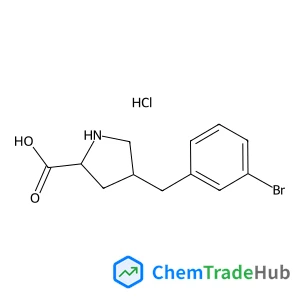
(2S,4R)-4-(3-Bromobenzyl)pyrrolidine-2-carboxylic acid hydrochloride
CAS Number:
1049734-10-2
Molecular Formula:
C12H15BrClNO2
![Ethyl thieno[3,2-f]quinoline-2-carboxylate structure](https://static.chemtradehub.com/structs/299/29948-26-3-f62b.webp "Ethyl thieno[3,2-f]quinoline-2-carboxylate structure")
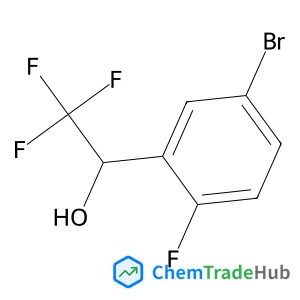
1-(5-Bromo-2-fluorophenyl)-2,2,2-trifluoroethanol
CAS Number:
1039827-16-1
Molecular Formula:
C8H5BrF4O
Recommended Suppliers






Disclaimer
This page provides academic journal information for reference and research purposes only. We are not affiliated with any journal publishers and do not handle publication submissions. For publication-related inquiries, please contact the respective journal publishers directly.
If you notice any inaccuracies in the information displayed, please contact us at support@chemtradehub.com. We will promptly review and address your concerns.