












IR spectroscopy of pyridine–water structures in helium nanodroplets
Literature Information
Publication Date
2014-03-10
DOI
10.1039/C3CP55284E
Impact Factor
3.676
Authors
Melanie Letzner, Torsten Endres, Gerhard Schwaab, Martina Havenith
View Original
Abstract
We present the results of an IR spectroscopic study of pyridine–water heterodimer formation in helium nanodroplets. The experiments were carried out in the frequency range of the pyridine C–H stretch region (3055–3100 cm−1) and upon water deuteration in the D–O stretch region (2740–2800 cm−1). In order to come to an unambiguous assignment we have determined the angle between the permanent dipole and the vibrational transition moment of the aggregates. The experiments have been accompanied by theoretical simulations which yielded two minimum structures with a 16.28 kJ mol−1 energy difference. The experimentally observed bands were assigned to two structures with different H-bonds: an N⋯H bond and a bifurcated O⋯H–C bond.
Recommended Journals
Related Literature
Graphene oxide-circular aptamer based colorimetric protein detection on bioactive paper
Xue Li, Xin He, Qiang Zhang, Yangyang Chang, Meng Liu
2019-07-12
Paper
DOI: 10.1039/C9AY01060B
A highly efficient fluorescent probe based on tetrahydroxanthylium–coumarin for the detection of bisulfite in mitochondria
Meng-Xiang Wu, Xue-Rui Wei, Yu-Fang Wei, Ru Sun, Yu-Jie Xu
2019-07-29
Paper
DOI: 10.1039/C9AY01355E
Facile assembly of bifunctional, magnetically retrievable mesoporous silica for enantioselective cascade reactions
Zhongrui Zhao, Fengwei Chang, Tao Wang, Lijian Wang, Lingbo Zhao, Cheng Peng, Guohua Liu
2019-10-12
Communication
DOI: 10.1039/C9CC07123G
A targetable fluorescent probe for imaging of mitochondrial viscosity in living cells
Lixuan Dai, Mingguang Ren, Zihong Li, Li Wang, Weiying Lin
2019-09-03
Communication
DOI: 10.1039/C9AY01575B
Highly efficient cyclotrimerization of isocyanates using N-heterocyclic olefins under bulk conditions
Chengkai Li, Wuchao Zhao, Jianghua He, Yuetao Zhang
2019-09-23
Communication
DOI: 10.1039/C9CC06402H
Immobilization of Mn(i) and Ru(ii) polypyridyl complexes on TiO2 nanoparticles for selective photoreduction of CO2 to formic acid
Matthew Stanbury, Sylvie Chardon-Noblat, Jean-Marie Mouesca, Vincent Maurel, Jérôme Chauvin
2019-10-22
Communication
DOI: 10.1039/C9CC05129E
Correction: Fluorescence of a chiral pentaphene derivative derived from the hexabenzocoronene Motif
Philipp Rietsch, Jan Soyka, Steffen Brülls, Jasmin Er, Katrin Hoffmann, Julia Beerhues, Biprajit Sarkar, Ute Resch-Genger, Siegfried Eigler
2019-10-14
Correction
DOI: 10.1039/C9CC90456E
A fluorescent molecular probe for the identification of zinc and cadmium salts by excited state charge transfer modulation
Kizhmuri P. Divya, Sivaraman Savithri, Ayyappanpillai Ajayaghosh
2014-04-10
Communication
DOI: 10.1039/C4CC00379A
You might also like
Compound Q&A
What are the main uses of 1H-Indazole-6-carbonitrile (CAS: 141290-59-7)?
1H-Indazole-6-carbonitrile finds applications in pharmaceuticals, where it serve...
141290-59-71H-Indazole-6-carbon...
Compound Q&A
How should waste containing Dioctyl (2E)-2-butenedioate (CAS: 2997-85-5) be handled?
Waste containing Dioctyl (2E)-2-butenedioate (CAS: 2997-85-5) should be collecte...
2997-85-5Dioctyl (2E)-2-buten...
Compound Q&A
What industries use Sodium [(1,2-benzoxazol-3-ylmethyl)sulfonyl]azanide (CAS: 68291-98-5)?
Sodium [(1,2-benzoxazol-3-ylmethyl)sulfonyl]azanide is primarily used in pharmac...
68291-98-5Sodium [(1,2-benzoxa...
Compound Q&A
Are there alternatives to Dimethyl 4-(4,4,5,5-tetramethyl-1,3,2-dioxaborolan-2-yl)-2,6-pyridinedicarboxylate (CAS: 741709-66-0) in synthesis?
Dimethyl 4-(4,4,5,5-tetramethyl-1,3,2-dioxaborolan-2-yl)-2,6-pyridinedicarboxyla...
741709-66-0Dimethyl 4-(4,4,5,5-...
Compound Q&A
How should waste containing 2-Fluoro-6-hydrazinopyridine (CAS: 80714-39-2) be handled?
Waste containing 2-Fluoro-6-hydrazinopyridine (CAS: 80714-39-2) should be manage...
80714-39-22-Fluoro-6-hydrazino...
Compound Q&A
What is 6-Formyl-2-pyridinecarboxylic acid (CAS: 499214-11-8)?
6-Formyl-2-pyridinecarboxylic acid is an organic compound with the molecular for...
499214-11-86-Formyl-2-pyridinec...
Compound Q&A
What is the market or research trend for 3-(3,4-dimethoxyphenyl)-2,5-dimethyl-N-(2-morpholin-4-ylethyl)pyrazolo[1,5-a]pyrimidin-7-amine (CAS: 900874-91-1)?
Research trends for this compound indicate a focus on its potential applications...
900874-91-13-(3,4-dimethoxyphen...
Compound Q&A
How is 9H-Tribenzo[b,d,f]azepine (CAS: 29875-73-8) typically synthesized?
9H-Tribenzo[b,d,f]azepine is typically synthesized via a multi-step process invo...
29875-73-89H-Tribenzo[b,d,f]az...
Compound Q&A
How is 1-Cyclopropyl-7-ethoxy-6-fluoro-8-methoxy-4-oxo-1,4-dihydro-3-quinolinecarboxylic acid (CAS: 1797982-51-4) typically synthesized?
1-Cyclopropyl-7-ethoxy-6-fluoro-8-methoxy-4-oxo-1,4-dihydro-3-quinolinecarboxyli...
1797982-51-41-Cyclopropyl-7-etho...
Compound Q&A
How should waste containing Methyl 3-oxo-1,2,3,4-tetrahydro-6-quinoxalinecarboxylate (CAS: 671820-52-3) be handled?
Waste containing Methyl 3-oxo-1,2,3,4-tetrahydro-6-quinoxalinecarboxylate (CAS: ...
671820-52-3Methyl 3-oxo-1,2,3,4...
Source Journal
Physical Chemistry Chemical Physics

CiteScore:
5.5
Self-citation Rate:
10.3%
Articles per Year:
3036
Physical Chemistry Chemical Physics (PCCP) is an international journal co-owned by 19 physical chemistry and physics societies from around the world. This journal publishes original, cutting-edge research in physical chemistry, chemical physics and biophysical chemistry. To be suitable for publication in PCCP, articles must include significant innovation and/or insight into physical chemistry; this is the most important criterion that reviewers and Editors will judge against when evaluating submissions. The journal has a broad scope and welcomes contributions spanning experiment, theory, computation and data science. Topical coverage includes spectroscopy, dynamics, kinetics, statistical mechanics, thermodynamics, electrochemistry, catalysis, surface science, quantum mechanics, quantum computing and machine learning. Interdisciplinary research areas such as polymers and soft matter, materials, nanoscience, energy, surfaces/interfaces, and biophysical chemistry are welcomed if they demonstrate significant innovation and/or insight into physical chemistry. Joined experimental/theoretical studies are particularly appreciated when complementary and based on up-to-date approaches.
Recommended Compounds
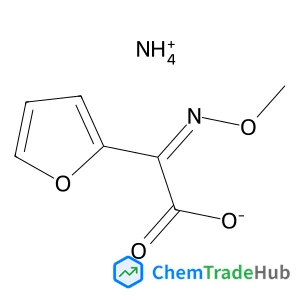
Ammonium (Z)-2-(furan-2-yl)-2-(methoxyimino)acetate
CAS Number:
97148-39-5
Molecular Formula:
C7H10N2O4

Recommended Suppliers





Disclaimer
This page provides academic journal information for reference and research purposes only. We are not affiliated with any journal publishers and do not handle publication submissions. For publication-related inquiries, please contact the respective journal publishers directly.
If you notice any inaccuracies in the information displayed, please contact us at support@chemtradehub.com. We will promptly review and address your concerns.