













A targetable fluorescent probe for imaging of mitochondrial viscosity in living cells
Literature Information
Publication Date
2019-09-03
DOI
10.1039/C9AY01575B
Impact Factor
2.896
Authors
Lixuan Dai, Mingguang Ren, Zihong Li, Li Wang, Weiying Lin
View Original
Abstract
A novel targetable fluorescent probe was developed that could image mitochondrial viscosity in living cells. As the viscosity changes, the fluorescence spectrum of the probe changes significantly with fluorescence signal increases at 575 nm. This probe has good cell membrane permeability as evidenced by confocal fluorescence imaging experiments. Moreover, this probe has been shown to have a high colocalization coefficient through colocalization experiments with MitoTracker Green, indicating that the probe can accurately locate mitochondria.
Related Literature
Nearside-farside analysis of differential cross sections: The reaction I + HI → IH + I
C. Noli, J. N. L. Connor, N. Rougeau, C. Kubach
2001-08-31
Paper
DOI: 10.1039/B104099P
Coadsorption of the complementary base pair adenine–thymine at the mercury/electrolyte interface
S. Kirste, C. Donner
2001-09-05
Paper
DOI: 10.1039/B104007N
Experimental and theoretical CO2–Ar pressure-broadening cross sections and their temperature dependence
F. Thibault, B. Calil, J. Buldyreva, M. Chrysos, J.-M. Hartmann, J.-P. Bouanich
2001-08-31
Paper
DOI: 10.1039/B103625B
Electronic absorption spectral study of the oxidation of uranium dioxide in chloride melts
Vladimir A. Volkovich, Trevor R. Griffiths, Derek J. Fray, Robert C. Thied
2000-08-02
Paper
DOI: 10.1039/B004464O
Separation of linear, mono-methyl and di-methyl alkanes in the 5–7 carbon atom range by exploiting configurational entropy effects during sorption on silicalite-1
S. Calero, B. Smit, R. Krishna
2001-09-12
Paper
DOI: 10.1039/B103118J
Thermal, electrochemical and structural properties of stabilized LiNiyCo1−y−zMzO2 lithium-ion cathode material prepared by a chemical route
A. D'Epifanio, F. Croce, F. Ronci, V. Rossi Albertini, E. Traversa, B. Scrosati
2001-09-11
Paper
DOI: 10.1039/B104615M
Joint experimental and theoretical study of the poly(styryl sodium) and poly(α-methylstyryl sodium) polymerization/depolymerization
2001-09-20
Paper
DOI: 10.1039/B105389M
You might also like
Compound Q&A
What are the main uses of 1H-Indazole-6-carbonitrile (CAS: 141290-59-7)?
1H-Indazole-6-carbonitrile finds applications in pharmaceuticals, where it serve...
141290-59-71H-Indazole-6-carbon...
Compound Q&A
How should waste containing Dioctyl (2E)-2-butenedioate (CAS: 2997-85-5) be handled?
Waste containing Dioctyl (2E)-2-butenedioate (CAS: 2997-85-5) should be collecte...
2997-85-5Dioctyl (2E)-2-buten...
Compound Q&A
What industries use Sodium [(1,2-benzoxazol-3-ylmethyl)sulfonyl]azanide (CAS: 68291-98-5)?
Sodium [(1,2-benzoxazol-3-ylmethyl)sulfonyl]azanide is primarily used in pharmac...
68291-98-5Sodium [(1,2-benzoxa...
Compound Q&A
Are there alternatives to Dimethyl 4-(4,4,5,5-tetramethyl-1,3,2-dioxaborolan-2-yl)-2,6-pyridinedicarboxylate (CAS: 741709-66-0) in synthesis?
Dimethyl 4-(4,4,5,5-tetramethyl-1,3,2-dioxaborolan-2-yl)-2,6-pyridinedicarboxyla...
741709-66-0Dimethyl 4-(4,4,5,5-...
Compound Q&A
How should waste containing 2-Fluoro-6-hydrazinopyridine (CAS: 80714-39-2) be handled?
Waste containing 2-Fluoro-6-hydrazinopyridine (CAS: 80714-39-2) should be manage...
80714-39-22-Fluoro-6-hydrazino...
Compound Q&A
What is 6-Formyl-2-pyridinecarboxylic acid (CAS: 499214-11-8)?
6-Formyl-2-pyridinecarboxylic acid is an organic compound with the molecular for...
499214-11-86-Formyl-2-pyridinec...
Compound Q&A
What is the market or research trend for 3-(3,4-dimethoxyphenyl)-2,5-dimethyl-N-(2-morpholin-4-ylethyl)pyrazolo[1,5-a]pyrimidin-7-amine (CAS: 900874-91-1)?
Research trends for this compound indicate a focus on its potential applications...
900874-91-13-(3,4-dimethoxyphen...
Compound Q&A
How is 9H-Tribenzo[b,d,f]azepine (CAS: 29875-73-8) typically synthesized?
9H-Tribenzo[b,d,f]azepine is typically synthesized via a multi-step process invo...
29875-73-89H-Tribenzo[b,d,f]az...
Compound Q&A
How is 1-Cyclopropyl-7-ethoxy-6-fluoro-8-methoxy-4-oxo-1,4-dihydro-3-quinolinecarboxylic acid (CAS: 1797982-51-4) typically synthesized?
1-Cyclopropyl-7-ethoxy-6-fluoro-8-methoxy-4-oxo-1,4-dihydro-3-quinolinecarboxyli...
1797982-51-41-Cyclopropyl-7-etho...
Compound Q&A
How should waste containing Methyl 3-oxo-1,2,3,4-tetrahydro-6-quinoxalinecarboxylate (CAS: 671820-52-3) be handled?
Waste containing Methyl 3-oxo-1,2,3,4-tetrahydro-6-quinoxalinecarboxylate (CAS: ...
671820-52-3Methyl 3-oxo-1,2,3,4...
Source Journal
Analytical Methods

CiteScore:
5.1
Self-citation Rate:
3.7%
Articles per Year:
655
Analytical Methods welcomes early applications of new analytical and bioanalytical methods and technology demonstrating the potential for societal impact. We require that methods and technology reported in the journal are sufficiently innovative, robust, accurate, and compared to other available methods for the intended application. Developments with interdisciplinary approaches are particularly welcome. Systems should be proven with suitably complex and analytically challenging samples. We encourage developments within, but not limited to, the following technologies and applications: global health, point-of-care and molecular diagnostics biosensors and bioengineering drug development and pharmaceutical analysis applied microfluidics and nanotechnology omics studies, such as proteomics, metabolomics or glycomics environmental, agricultural and food science neuroscience biochemical and clinical analysis forensic analysis industrial process and method development
Recommended Compounds
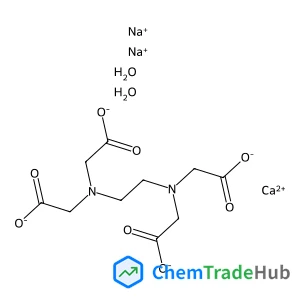
EthylenediaminetetraaceticacidcalciumDisodiumsalthydrate
CAS Number:
23411-34-9
Molecular Formula:
C10H16CaN2Na2O10



Recommended Suppliers




Disclaimer
This page provides academic journal information for reference and research purposes only. We are not affiliated with any journal publishers and do not handle publication submissions. For publication-related inquiries, please contact the respective journal publishers directly.
If you notice any inaccuracies in the information displayed, please contact us at support@chemtradehub.com. We will promptly review and address your concerns.