












Graphene oxide-circular aptamer based colorimetric protein detection on bioactive paper
Literature Information
Publication Date
2019-07-12
DOI
10.1039/C9AY01060B
Impact Factor
2.896
Authors
Xue Li, Xin He, Qiang Zhang, Yangyang Chang, Meng Liu
View Original
Abstract
Paper-based sensor technology represents a new class of point-of-care (POC) diagnostic devices that is affordable, portable, rapid and scalable for manufacturing. One of the goals of developing new paper-based POC diagnostics is the need to recognize targets with high specificity and sensitivity. Herein, a graphene oxide-circular aptamer based assay is described for highly specific and sensitive detection of a target protein on bioactive paper. The circular aptamer was self-assembled onto graphene oxide to generate the biorecognition moieties, followed by the desorption reaction induced by the specific binding of the target. The released circular aptamer then hybridizes to paper-bound DNA primers, thus initiating the rolling circle amplification reaction to produce a long DNA molecule containing multiple horseradish peroxidase-mimicking DNAzyme units, which further catalyze the oxidation of substrates by H2O2 in the presence of hemin to yield a distinct colorimetric signal on paper. Under the optimal conditions, this dual amplification method can achieve detection of platelet-derived growth factor (PDGF) at a concentration as low as 100 pM. Overall, this strategy of paper-based nanobiosensors may hold great potential for rapid, accurate and inexpensive biomarker detection in POC applications.
Recommended Journals
Related Literature
Thermal, electrochemical and structural properties of stabilized LiNiyCo1−y−zMzO2 lithium-ion cathode material prepared by a chemical route
A. D'Epifanio, F. Croce, F. Ronci, V. Rossi Albertini, E. Traversa, B. Scrosati
2001-09-11
Paper
DOI: 10.1039/B104615M
Fast dimerisation of the triparaquat radical dication
M. Vuckovic, S. V. Mentus, E. Janata, B. H. Milosavljevic
2001-09-11
Paper
DOI: 10.1039/B103926C
Adiabatic and diabatic dynamics in the photodissociation of CH2BrCl
Peng Zou, W. Sean McGivern, Simon W. North
2000-08-04
Paper
DOI: 10.1039/B004349O
Comparison of the cross-sections and thermal rate constants for the reactions of C(3PJ) atoms with O2 and NO
Delphine Chastaing, Sébastien D. Le Picard, Ian R. Sims, Ian W. M. Smith
2000-06-16
Paper
DOI: 10.1039/B002583F
Surface characterization of modified aluminas. Part 6. The poisonous effect of lead
Giuliana Magnacca, Claudio Morterra
2000-08-08
Paper
DOI: 10.1039/B004369I
FTIR study of the photo-induced reaction of NO + CO on Rh/TiO2
2001-09-03
Paper
DOI: 10.1039/B103627K
You might also like
Compound Q&A
What are the main uses of 1H-Indazole-6-carbonitrile (CAS: 141290-59-7)?
1H-Indazole-6-carbonitrile finds applications in pharmaceuticals, where it serve...
141290-59-71H-Indazole-6-carbon...
Compound Q&A
How should waste containing Dioctyl (2E)-2-butenedioate (CAS: 2997-85-5) be handled?
Waste containing Dioctyl (2E)-2-butenedioate (CAS: 2997-85-5) should be collecte...
2997-85-5Dioctyl (2E)-2-buten...
Compound Q&A
What industries use Sodium [(1,2-benzoxazol-3-ylmethyl)sulfonyl]azanide (CAS: 68291-98-5)?
Sodium [(1,2-benzoxazol-3-ylmethyl)sulfonyl]azanide is primarily used in pharmac...
68291-98-5Sodium [(1,2-benzoxa...
Compound Q&A
Are there alternatives to Dimethyl 4-(4,4,5,5-tetramethyl-1,3,2-dioxaborolan-2-yl)-2,6-pyridinedicarboxylate (CAS: 741709-66-0) in synthesis?
Dimethyl 4-(4,4,5,5-tetramethyl-1,3,2-dioxaborolan-2-yl)-2,6-pyridinedicarboxyla...
741709-66-0Dimethyl 4-(4,4,5,5-...
Compound Q&A
How should waste containing 2-Fluoro-6-hydrazinopyridine (CAS: 80714-39-2) be handled?
Waste containing 2-Fluoro-6-hydrazinopyridine (CAS: 80714-39-2) should be manage...
80714-39-22-Fluoro-6-hydrazino...
Compound Q&A
What is 6-Formyl-2-pyridinecarboxylic acid (CAS: 499214-11-8)?
6-Formyl-2-pyridinecarboxylic acid is an organic compound with the molecular for...
499214-11-86-Formyl-2-pyridinec...
Compound Q&A
What is the market or research trend for 3-(3,4-dimethoxyphenyl)-2,5-dimethyl-N-(2-morpholin-4-ylethyl)pyrazolo[1,5-a]pyrimidin-7-amine (CAS: 900874-91-1)?
Research trends for this compound indicate a focus on its potential applications...
900874-91-13-(3,4-dimethoxyphen...
Compound Q&A
How is 9H-Tribenzo[b,d,f]azepine (CAS: 29875-73-8) typically synthesized?
9H-Tribenzo[b,d,f]azepine is typically synthesized via a multi-step process invo...
29875-73-89H-Tribenzo[b,d,f]az...
Compound Q&A
How is 1-Cyclopropyl-7-ethoxy-6-fluoro-8-methoxy-4-oxo-1,4-dihydro-3-quinolinecarboxylic acid (CAS: 1797982-51-4) typically synthesized?
1-Cyclopropyl-7-ethoxy-6-fluoro-8-methoxy-4-oxo-1,4-dihydro-3-quinolinecarboxyli...
1797982-51-41-Cyclopropyl-7-etho...
Compound Q&A
How should waste containing Methyl 3-oxo-1,2,3,4-tetrahydro-6-quinoxalinecarboxylate (CAS: 671820-52-3) be handled?
Waste containing Methyl 3-oxo-1,2,3,4-tetrahydro-6-quinoxalinecarboxylate (CAS: ...
671820-52-3Methyl 3-oxo-1,2,3,4...
Source Journal
Analytical Methods

CiteScore:
5.1
Self-citation Rate:
3.7%
Articles per Year:
655
Analytical Methods welcomes early applications of new analytical and bioanalytical methods and technology demonstrating the potential for societal impact. We require that methods and technology reported in the journal are sufficiently innovative, robust, accurate, and compared to other available methods for the intended application. Developments with interdisciplinary approaches are particularly welcome. Systems should be proven with suitably complex and analytically challenging samples. We encourage developments within, but not limited to, the following technologies and applications: global health, point-of-care and molecular diagnostics biosensors and bioengineering drug development and pharmaceutical analysis applied microfluidics and nanotechnology omics studies, such as proteomics, metabolomics or glycomics environmental, agricultural and food science neuroscience biochemical and clinical analysis forensic analysis industrial process and method development
Recommended Compounds

Trichloro(3,3,4,4,5,5,6,6,7,7,8,8,8-tridecafluorooctyl)silane
CAS Number:
78560-45-9
Molecular Formula:
C8H4Cl3F13Si
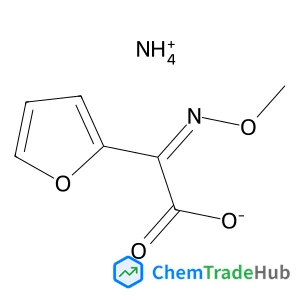
Ammonium (Z)-2-(furan-2-yl)-2-(methoxyimino)acetate
CAS Number:
97148-39-5
Molecular Formula:
C7H10N2O4
Recommended Suppliers





Disclaimer
This page provides academic journal information for reference and research purposes only. We are not affiliated with any journal publishers and do not handle publication submissions. For publication-related inquiries, please contact the respective journal publishers directly.
If you notice any inaccuracies in the information displayed, please contact us at support@chemtradehub.com. We will promptly review and address your concerns.