


Catalyst and electrolyte synergy in Li–O2 batteries
Literature Information
Publication Date
2013-12-19
DOI
10.1039/C3CP54555E
Impact Factor
3.676
Authors
Forrest S. Gittleson, Ryan C. Sekol, Marcelo Linardi, André D. Taylor
View Original
Abstract
Understanding the interactions between catalyst and electrolyte in Li–O2 systems is crucial to improving capacities, efficiencies, and cycle life. In this study, supported noble metal catalysts Pt/C, Pd/C, and Au/C were paired with popular Li–O2 electrolyte solvents dimethoxyethane (DME), tetraglyme (TEGDME), and dimethyl sulfoxide (DMSO). The effects of these combinations on stability, kinetics, and activity were assessed. We show evidence of a synergistic effect between Pt and Pd catalysts and a DMSO-based electrolyte which enhances the kinetics of oxygen reduction and evolution reactions. DME and TEGDME are more prone to decomposition and less kinetically favorable for oxygen reduction and evolution than DMSO. While the order of oxygen reduction onset potentials with each catalyst was found to be consistent across electrolyte (Pd > Pt > Au), larger overpotentials with DME and TEGDME, and negative shifts in onset after only five cycles favor the stability of a DMSO electrolyte. Full cell cycling experiments confirm that catalyst–DMSO combinations produce up to 9 times higher discharge capacities than the same with TEGDME after 20 cycles (∼707.4 vs. 78.8 mA h g−1 with Pd/C). Ex situ EDS and in situ EIS analyses of resistive species in the cathode suggest that improvements in capacity with DMSO are due to a combination of greater electrolyte conductivity and catalyst synergies. Our findings demonstrate that co-selection of catalyst and electrolyte is necessary to exploit chemical synergies and improve the performance of Li–O2 cells.
Recommended Journals

Molecular Pharmacology

European Journal of Wood and Wood Products

Pure and Applied Chemistry

Proceedings of the National Academy of Sciences of the United States of America

Russian Chemical Reviews

Kinetics and Catalysis

Journal of Medicinal Chemistry

Science

Journal of Heterocyclic Chemistry

Journal of Catalysis
Related Literature
Preparation and characterization of pyrene modified uridine derivatives as potential electron donors in RNA
Jennifer Frommer, Beatrice Karg, Klaus Weisz, Sabine Müller
2018-09-27
Paper
DOI: 10.1039/C8OB02246A
Rhodium-catalyzed cyclization of acceptor-substituted biphenyl α-diazoketones: a study of the substitution effect on chemoselectivity
Kuo-Hsin Chen, Yi-Jung Chiang, Jia-Liang Zhu
2018-09-04
Paper
DOI: 10.1039/C8OB01489B
Synthesis of functionalized 3,2′-pyrrolidinyl spirooxindoles via domino 1,6-addition/annulation reactions of para-quinone methides and 3-chlorooxindoles
Xiaochen Tian, Yongxing Zhang
2021-12-20
Research Article
DOI: 10.1039/D1QO01605A
Optimized synthesis and indium complex formation with the bifunctional chelator NODIA-Me
Jason P. Holland, Harald Scherer, Stephan Maus, Tobias Stemler, Hendrik Bohnenberger, Samer Ezziddin, Philipp Kurz
2018-09-24
Paper
DOI: 10.1039/C8OB01981A
1,2-Chlorine atom migration in 3-chloro-2-butyl radicals: a computational study
Bernd Neumann, Hendrik Zipse
2002-11-26
Paper
DOI: 10.1039/B209981K
Synthesis of 1,3-dithiol-2-ones as proligands related to molybdopterin
Ben Bradshaw, David Collison, C. David Garner, John A. Joule
2002-11-27
Paper
DOI: 10.1039/B209217D
Eugenunilones A–H: rearranged sesquiterpenoids from Eugenia uniflora
Mu Chen, Jia-Qing Cao, Song Ang, Ting-Ni Zeng, Ni-Ping Li, Tang-Jia Yang, Jun-Shan Liu, Yan Wu, Wen-Cai Ye, Lei Wang
2021-12-03
Research Article
DOI: 10.1039/D1QO01629F
One-pot synthesis of natural-product inspired spiroindolines with anti-cancer activities
Shi-Qiang Li, Liu-Jun He, Ming Zhang, Dian-Yong Tang, Hong-yu Li, Zhong-Zhu Chen, Zhi-Gang Xu
2021-12-15
Research Article
DOI: 10.1039/D1QO01694F
Synthesis of protectin D1 analogs: novel pro-resolution and radiotracer agents
J. E. Tungen, M. Aursnes, S. Ramon, R. A. Colas, C. N. Serhan, S. Nuruddin, F. Willoch, T. V. Hansen
2018-08-31
Paper
DOI: 10.1039/C8OB01232F
You might also like
Compound Q&A
What is the market or research trend for N-(4-Methoxybenzyl)-2-pyridinamine (CAS: 52818-63-0)?
N-(4-Methoxybenzyl)-2-pyridinamine (CAS: 52818-63-0) is increasingly being used ...
52818-63-0N-(4-Methoxybenzyl)-...
Compound Q&A
What precautions should be taken when handling Ethyl 4-(2-chlorophenyl)-1,3-thiazole-2-carboxylate (CAS: 1050507-06-6)?
When handling Ethyl 4-(2-chlorophenyl)-1,3-thiazole-2-carboxylate, appropriate p...
1050507-06-6Ethyl 4-(2-chlorophe...
Compound Q&A
What regulatory guidelines apply to diethyldiselane (CAS: 628-39-7)?
Diethyldiselane (CAS: 628-39-7) is classified under the Globally Harmonized Syst...
628-39-7Diethyldiselane
Compound Q&A
What is the market or research trend for oxocopper (CAS: 12053-18-8)?
The market for oxocopper (CAS: 12053-18-8) is primarily driven by its use in cat...
12053-18-8oxocopper; oxo-(oxoc...
Compound Q&A
What is the market or research trend for 5-{[(2-Methyl-2-propanyl)oxy]carbonyl}-5-azaspiro[2.4]heptane-7-carboxylic acid?
The market for 5-{[(2-Methyl-2-propanyl)oxy]carbonyl}-5-azaspiro[2.4]heptane-7-c...
1268519-54-55-{[(2-Methyl-2-prop...
Compound Q&A
What is 2-(1-Pyrrolidinyl)-4-pyridinamine (CAS: 35981-63-6)?
2-(1-Pyrrolidinyl)-4-pyridinamine is a chemical compound with the CAS number 359...
35981-63-62-(1-Pyrrolidinyl)-4...
Compound Q&A
What are the physical and chemical properties of 2-(3-Pyridinyl)-1-azabicyclo[2.2.2]octane (CAS: 91556-75-1)?
2-(3-Pyridinyl)-1-azabicyclo[2.2.2]octane (CAS: 91556-75-1) is a crystalline sol...
91556-75-12-(3-Pyridinyl)-1-az...
Compound Q&A
How is (S)-Alpha-allyl-proline hydrochloride (CAS: 129704-91-2) typically synthesized?
(S)-Alpha-allyl-proline hydrochloride is usually synthesized via a Wittig reacti...
129704-91-2(S)-Alpha-allyl-prol...
Compound Q&A
What is 3-Methyl-1,2-oxazole-5-carboxylic acid (CAS: 4857-42-5)?
3-Methyl-1,2-oxazole-5-carboxylic acid (CAS: 4857-42-5) is an organic compound w...
4857-42-53-Methyl-1,2-oxazole...
Compound Q&A
How is Lys-SMCC-DM1 (CAS: 1281816-04-3) typically synthesized?
Lys-SMCC-DM1 is synthesized via a multi-step process involving the coupling of S...
1281816-04-3Lys-SMCC-DM1
Source Journal
Physical Chemistry Chemical Physics

CiteScore:
5.5
Self-citation Rate:
10.3%
Articles per Year:
3036
Physical Chemistry Chemical Physics (PCCP) is an international journal co-owned by 19 physical chemistry and physics societies from around the world. This journal publishes original, cutting-edge research in physical chemistry, chemical physics and biophysical chemistry. To be suitable for publication in PCCP, articles must include significant innovation and/or insight into physical chemistry; this is the most important criterion that reviewers and Editors will judge against when evaluating submissions. The journal has a broad scope and welcomes contributions spanning experiment, theory, computation and data science. Topical coverage includes spectroscopy, dynamics, kinetics, statistical mechanics, thermodynamics, electrochemistry, catalysis, surface science, quantum mechanics, quantum computing and machine learning. Interdisciplinary research areas such as polymers and soft matter, materials, nanoscience, energy, surfaces/interfaces, and biophysical chemistry are welcomed if they demonstrate significant innovation and/or insight into physical chemistry. Joined experimental/theoretical studies are particularly appreciated when complementary and based on up-to-date approaches.
Recommended Compounds
![1-[6-(1H-Imidazol-1-yl)-3-pyridinyl]methanamine structure](https://static.chemtradehub.com/structs/914/914637-08-4-8825.webp "1-[6-(1H-Imidazol-1-yl)-3-pyridinyl]methanamine structure")
![1,10-bis(3,5-dimethylphenyl)-12-hydroxy-4,5,6,7-tetrahydroiindeno[7,1-de:1',7'-fg][1,3,2]dioxaphosphocine 12-oxide structure](https://static.chemtradehub.com/structs/141/1412439-82-7-b9a9.webp "1,10-bis(3,5-dimethylphenyl)-12-hydroxy-4,5,6,7-tetrahydroiindeno[7,1-de:1',7'-fg][1,3,2]dioxaphosphocine 12-oxide structure")
1,10-bis(3,5-dimethylphenyl)-12-hydroxy-4,5,6,7-tetrahydroiindeno[7,1-de:1',7'-fg][1,3,2]dioxaphosphocine 12-oxide
CAS Number:
1412439-82-7
Molecular Formula:
C33H31O4P
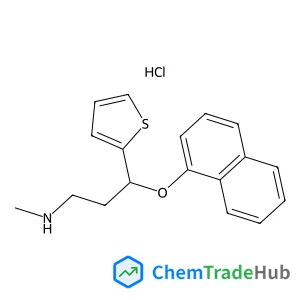
N-Methyl-3-(1-naphthyloxy)-3-(2-thienyl)-1-propanamine hydrochloride (1:1)
CAS Number:
1188266-11-6
Molecular Formula:
C18H20ClNOS
Recommended Suppliers





Disclaimer
This page provides academic journal information for reference and research purposes only. We are not affiliated with any journal publishers and do not handle publication submissions. For publication-related inquiries, please contact the respective journal publishers directly.
If you notice any inaccuracies in the information displayed, please contact us at support@chemtradehub.com. We will promptly review and address your concerns.