













1,2-Chlorine atom migration in 3-chloro-2-butyl radicals: a computational study
Literature Information
Publication Date
2002-11-26
DOI
10.1039/B209981K
Impact Factor
3.876
Authors
Bernd Neumann, Hendrik Zipse
View Original
Abstract
Skell’s hypothesis of bridged 2-haloalkyl radicals has been revisited using several different theoretical methods and the 3-chloro-2-butyl radical as an example. The structure as well as several unimolecular reaction pathways of the 3-chloro-2-butyl radical 1 have been studied at several different theoretical levels (B3LYP/aug-cc-pVDZ, BHLYP/aug-cc-pVDZ, G3(ROMP2)B3). The symmetrically chlorine-bridged structure is a transition state at all levels of theory and the most favorable ground state structure is the unbridged β-chloroalkyl radical. Reaction barriers for the 1,2-chlorine migration process are higher than those for rotation around the central C–C bond. 1,2-migration of the chlorine atom is accompanied by an increase in chlorine negative charge as well as chlorine spin density. This hybrid homo-/heterolytic process is well known from rearrangement reactions in β-(dialkoxyphosphoryloxy)alkyl radicals and suggests that chlorine migration can be influenced by polar substituent effects.
Recommended Journals
Related Literature
Autonomous propulsion of carbon nanotubes powered by a multienzyme ensemble
Davide Pantarotto, Wesley R. Browne, Ben L. Feringa
2007-11-16
Communication
DOI: 10.1039/B715310D
Size matters—strong binding of the terephthalate dianion by thiourea functionalised fused [n]polynorbornane hosts
Adam J. Lowe, Frederick M. Pfeffer
2008-03-18
Communication
DOI: 10.1039/B801798K
Accelerating charge transfer in a triphenylamine–subphthalocyanine donor–acceptor system
Anaïs Medina, Christian G. Claessens, G. M. Aminur Rahman, Al Mokhtar Lamsabhi, Otilia Mó, Manuel Yáñez, Dirk M. Guldi, Tomás Torres
2008-02-11
Communication
DOI: 10.1039/B719226F
Viral capsids as templates for the production of monodisperse Prussian blue nanoparticles
Andrés de la Escosura, Martijn Verwegen, Friso D. Sikkema, Marta Comellas-Aragonès, Andrei Kirilyuk, Theo Rasing, Roeland J. M. Nolte, Jeroen J. L. M. Cornelissen
2008-02-25
Communication
DOI: 10.1039/B800936H
Synthesis of iron oxide nanoparticles in a microfluidic device: preliminary results in a coaxial flow millichannel
Ali Abou Hassan, Olivier Sandre, Valérie Cabuil, Patrick Tabeling
2008-02-18
Communication
DOI: 10.1039/B719550H
Nucleophilicities and carbon basicities of DBU and DBN‡
M. Baidya, Herbert Mayr
2008-03-13
Communication
DOI: 10.1039/B801811A
Fully reversible guest exchange in tetraphosphonate cavitand complexes probed by fluorescence spectroscopy
Elisa Biavardi, Gionata Battistini, Marco Montalti, Roger M. Yebeutchou, Luca Prodi, Enrico Dalcanale
2008-03-05
Communication
DOI: 10.1039/B801729H
Role and substrate specificity of the Streptomyces coelicolor RedH enzyme in undecylprodiginine biosynthesis
Stuart W. Haynes, Paulina K. Sydor, Anna E. Stanley, Lijiang Song, Gregory L. Challis
2008-03-14
Communication
DOI: 10.1039/B801677A
Template-controlled topochemical photodimerization based on “organometallic macrocycles” through single-crystal to single-crystal transformation
Ying-Feng Han, Yue-Jian Lin, Wei-Guo Jia, Guo-Liang Wang, Guo-Xin Jin
2008-02-11
Communication
DOI: 10.1039/B717554J
You might also like
Compound Q&A
What is the market or research trend for N-(4-Methoxybenzyl)-2-pyridinamine (CAS: 52818-63-0)?
N-(4-Methoxybenzyl)-2-pyridinamine (CAS: 52818-63-0) is increasingly being used ...
52818-63-0N-(4-Methoxybenzyl)-...
Compound Q&A
What precautions should be taken when handling Ethyl 4-(2-chlorophenyl)-1,3-thiazole-2-carboxylate (CAS: 1050507-06-6)?
When handling Ethyl 4-(2-chlorophenyl)-1,3-thiazole-2-carboxylate, appropriate p...
1050507-06-6Ethyl 4-(2-chlorophe...
Compound Q&A
What regulatory guidelines apply to diethyldiselane (CAS: 628-39-7)?
Diethyldiselane (CAS: 628-39-7) is classified under the Globally Harmonized Syst...
628-39-7Diethyldiselane
Compound Q&A
What is the market or research trend for oxocopper (CAS: 12053-18-8)?
The market for oxocopper (CAS: 12053-18-8) is primarily driven by its use in cat...
12053-18-8oxocopper; oxo-(oxoc...
Compound Q&A
What is the market or research trend for 5-{[(2-Methyl-2-propanyl)oxy]carbonyl}-5-azaspiro[2.4]heptane-7-carboxylic acid?
The market for 5-{[(2-Methyl-2-propanyl)oxy]carbonyl}-5-azaspiro[2.4]heptane-7-c...
1268519-54-55-{[(2-Methyl-2-prop...
Compound Q&A
What is 2-(1-Pyrrolidinyl)-4-pyridinamine (CAS: 35981-63-6)?
2-(1-Pyrrolidinyl)-4-pyridinamine is a chemical compound with the CAS number 359...
35981-63-62-(1-Pyrrolidinyl)-4...
Compound Q&A
What are the physical and chemical properties of 2-(3-Pyridinyl)-1-azabicyclo[2.2.2]octane (CAS: 91556-75-1)?
2-(3-Pyridinyl)-1-azabicyclo[2.2.2]octane (CAS: 91556-75-1) is a crystalline sol...
91556-75-12-(3-Pyridinyl)-1-az...
Compound Q&A
How is (S)-Alpha-allyl-proline hydrochloride (CAS: 129704-91-2) typically synthesized?
(S)-Alpha-allyl-proline hydrochloride is usually synthesized via a Wittig reacti...
129704-91-2(S)-Alpha-allyl-prol...
Compound Q&A
What is 3-Methyl-1,2-oxazole-5-carboxylic acid (CAS: 4857-42-5)?
3-Methyl-1,2-oxazole-5-carboxylic acid (CAS: 4857-42-5) is an organic compound w...
4857-42-53-Methyl-1,2-oxazole...
Compound Q&A
How is Lys-SMCC-DM1 (CAS: 1281816-04-3) typically synthesized?
Lys-SMCC-DM1 is synthesized via a multi-step process involving the coupling of S...
1281816-04-3Lys-SMCC-DM1
Source Journal
Organic & Biomolecular Chemistry

CiteScore:
3.4
Self-citation Rate:
10.3%
Articles per Year:
1041
Organic & Biomolecular Chemistry (OBC) publishes original and high impact research and reviews in organic chemistry. We welcome research that shows new or significantly improved protocols or methodologies in total synthesis, synthetic methodology or physical and theoretical organic chemistry as well as research that shows a significant advance in the organic chemistry or molecular design aspects of chemical biology, catalysis, supramolecular and macromolecular chemistry, theoretical chemistry, mechanism-oriented physical organic chemistry, medicinal chemistry or natural products. Articles published in the journal should report new work which makes a highly-significant impact in the field. Routine and incremental work is generally not suitable for publication in the journal. More details about key areas of our scope are below. In all cases authors should include in their article clear rationale for why their research has been carried out.
Recommended Compounds
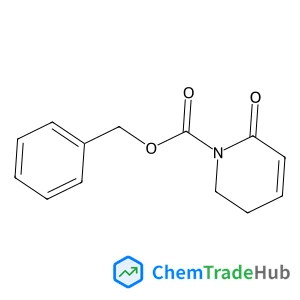
Benzyl 6-oxo-3,6-dihydro-1(2H)-pyridinecarboxylate
CAS Number:
725746-35-0
Molecular Formula:
C13H13NO3

N-Methyl-3-(1-naphthyloxy)-3-(2-thienyl)-1-propanamine hydrochloride (1:1)
CAS Number:
1188266-11-6
Molecular Formula:
C18H20ClNOS
![1-{3-[4-Amino-3-(4-phenoxyphenyl)-1H-pyrazolo[3,4-d]pyrimidin-1-yl]-1-piperidinyl}-2,3-dihydroxy-1-propanone structure](https://static.chemtradehub.com/structs/122/1226872-27-0-e037.webp "1-{3-[4-Amino-3-(4-phenoxyphenyl)-1H-pyrazolo[3,4-d]pyrimidin-1-yl]-1-piperidinyl}-2,3-dihydroxy-1-propanone structure")
1-{3-[4-Amino-3-(4-phenoxyphenyl)-1H-pyrazolo[3,4-d]pyrimidin-1-yl]-1-piperidinyl}-2,3-dihydroxy-1-propanone
CAS Number:
1226872-27-0
Molecular Formula:
C25H26N6O4
![N-{15-[(2,5-Dioxo-1-pyrrolidinyl)oxy]-15-oxo-3,6,9,12-tetraoxapentadec-1-yl}-2-(2-propyn-1-yloxy)acetamide structure](https://static.chemtradehub.com/structs/210/2101206-92-0-2eb5.webp "N-{15-[(2,5-Dioxo-1-pyrrolidinyl)oxy]-15-oxo-3,6,9,12-tetraoxapentadec-1-yl}-2-(2-propyn-1-yloxy)acetamide structure")
N-{15-[(2,5-Dioxo-1-pyrrolidinyl)oxy]-15-oxo-3,6,9,12-tetraoxapentadec-1-yl}-2-(2-propyn-1-yloxy)acetamide
CAS Number:
2101206-92-0
Molecular Formula:
C20H30N2O10
Recommended Suppliers







Disclaimer
This page provides academic journal information for reference and research purposes only. We are not affiliated with any journal publishers and do not handle publication submissions. For publication-related inquiries, please contact the respective journal publishers directly.
If you notice any inaccuracies in the information displayed, please contact us at support@chemtradehub.com. We will promptly review and address your concerns.