












Ni(ii)-Catalyzed intermolecular selective Heck-type arylation of unactivated alkenes with arylboronic acids
Literature Information
Publication Date
2021-12-01
DOI
10.1039/D1QO01579F
Impact Factor
5.281
Authors
Cong Lin, Sai Chen, Yihua Wang, Fei Gao, Liang Shen
View Original
Abstract
The Ni(II)-catalyzed intermolecular arylation of unactivated alkenes with arylboronic acids has been disclosed for the first time. This alkene arylation exhibits excellent E/Z selectivity and regioselectivity (γ-selectivity) to provide the corresponding γ-aryl substituted β,γ-unsaturated carboxylic acid derivatives with E-selectivity. A Heck-type mechanism is proposed, wherein the 8-aminoquinoline auxiliary group takes the crucial role of the alkenes in the insertion/β-H elimination steps.
Related Literature
Blue light-emitting and hole-transporting amorphous molecular materials based on diarylaminobiphenyl-functionalized bimesitylenes
Jarugu Narasimha Moorthy, Parthasarathy Venkatakrishnan, Duo-Fong Huang, Tahsin J. Chow
2008-03-05
Communication
DOI: 10.1039/B718250C
Exploring the relationship between cocrystal stability and symmetry: is Wallach's rule applicable to multi-component solids?
Tomislav Friščić, László Fábián, Jonathan C. Burley, David G. Reid, Melinda J. Duer, William Jones
2008-01-30
Communication
DOI: 10.1039/B717532A
One-pot synthesis of reverse type-I In2O3@In2S3 core–shell nanoparticles
Zhaoyong Sun, Amar Kumbhar, Kai Sun, Qingsheng Liu
2008-03-18
Communication
DOI: 10.1039/B719176F
Rational design of cationic cyclooligosaccharides as efficient gene delivery systems
Alejandro Díaz-Moscoso, Patricia Balbuena, Marta Gómez-García, Carmen Ortiz Mellet, Juan M. Benito, Loïc Le Gourriérec, Christophe Di Giorgio, Pierre Vierling, Antonino Mazzaglia, Norberto Micali, Jacques Defaye, José M. García Fernández
2008-02-25
Communication
DOI: 10.1039/B718672J
Palladium-catalyzed three-component coupling of arynes with allylic acetates or halides and terminal alkynes promoted by cuprous iodide
Sivakolundu Bhuvaneswari, Masilamani Jeganmohan, Ming-Che Yang, Chien-Hong Cheng
2008-03-03
Communication
DOI: 10.1039/B800118A
Single microbead SELEX for efficient ssDNA aptamer generation against botulinum neurotoxin‡
Jeffrey B.-H. Tok, Nicholas O. Fischer
2008-03-18
Communication
DOI: 10.1039/B717936G
A practical demonstration of electronic promotion in the reduction of ceria coated PGM catalysts
Shik Chi Tsang, Stan Golunski, Paul Collier
2008-02-18
Communication
DOI: 10.1039/B718956G
Unimolecular binary half-adders with orthogonal chemical inputs
Lu Zhang, Wesley A. Whitfield, Lei Zhu
2008-02-20
Communication
DOI: 10.1039/B719644J
You might also like
Compound Q&A
What is the market or research trend for N-(4-Methoxybenzyl)-2-pyridinamine (CAS: 52818-63-0)?
N-(4-Methoxybenzyl)-2-pyridinamine (CAS: 52818-63-0) is increasingly being used ...
52818-63-0N-(4-Methoxybenzyl)-...
Compound Q&A
What precautions should be taken when handling Ethyl 4-(2-chlorophenyl)-1,3-thiazole-2-carboxylate (CAS: 1050507-06-6)?
When handling Ethyl 4-(2-chlorophenyl)-1,3-thiazole-2-carboxylate, appropriate p...
1050507-06-6Ethyl 4-(2-chlorophe...
Compound Q&A
What regulatory guidelines apply to diethyldiselane (CAS: 628-39-7)?
Diethyldiselane (CAS: 628-39-7) is classified under the Globally Harmonized Syst...
628-39-7Diethyldiselane
Compound Q&A
What is the market or research trend for oxocopper (CAS: 12053-18-8)?
The market for oxocopper (CAS: 12053-18-8) is primarily driven by its use in cat...
12053-18-8oxocopper; oxo-(oxoc...
Compound Q&A
What is the market or research trend for 5-{[(2-Methyl-2-propanyl)oxy]carbonyl}-5-azaspiro[2.4]heptane-7-carboxylic acid?
The market for 5-{[(2-Methyl-2-propanyl)oxy]carbonyl}-5-azaspiro[2.4]heptane-7-c...
1268519-54-55-{[(2-Methyl-2-prop...
Compound Q&A
What is 2-(1-Pyrrolidinyl)-4-pyridinamine (CAS: 35981-63-6)?
2-(1-Pyrrolidinyl)-4-pyridinamine is a chemical compound with the CAS number 359...
35981-63-62-(1-Pyrrolidinyl)-4...
Compound Q&A
What are the physical and chemical properties of 2-(3-Pyridinyl)-1-azabicyclo[2.2.2]octane (CAS: 91556-75-1)?
2-(3-Pyridinyl)-1-azabicyclo[2.2.2]octane (CAS: 91556-75-1) is a crystalline sol...
91556-75-12-(3-Pyridinyl)-1-az...
Compound Q&A
How is (S)-Alpha-allyl-proline hydrochloride (CAS: 129704-91-2) typically synthesized?
(S)-Alpha-allyl-proline hydrochloride is usually synthesized via a Wittig reacti...
129704-91-2(S)-Alpha-allyl-prol...
Compound Q&A
What is 3-Methyl-1,2-oxazole-5-carboxylic acid (CAS: 4857-42-5)?
3-Methyl-1,2-oxazole-5-carboxylic acid (CAS: 4857-42-5) is an organic compound w...
4857-42-53-Methyl-1,2-oxazole...
Compound Q&A
How is Lys-SMCC-DM1 (CAS: 1281816-04-3) typically synthesized?
Lys-SMCC-DM1 is synthesized via a multi-step process involving the coupling of S...
1281816-04-3Lys-SMCC-DM1
Source Journal
Organic Chemistry Frontiers

CiteScore:
7.8
Self-citation Rate:
8.7%
Articles per Year:
724
Organic Chemistry Frontiers publishes high-quality research from across organic chemistry. Emphases are placed on studies that make significant contributions to the field of organic chemistry by reporting either new or significantly improved protocols or methodologies. Topics include, but are not limited to the following: Organic synthesis Development of synthetic methodologies Catalysis Natural products Functional organic materials Supramolecular and macromolecular chemistry Physical and computational organic chemistry
Recommended Compounds
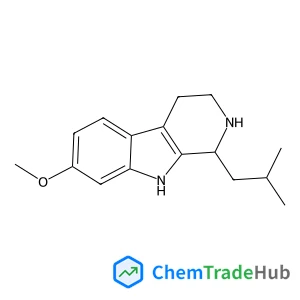
1-Isobutyl-7-methoxy-2,3,4,9-tetrahydro-1H-beta-carboline
CAS Number:
175975-76-5
Molecular Formula:
C16H22N2O
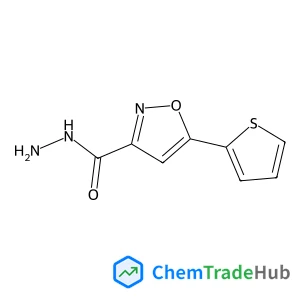
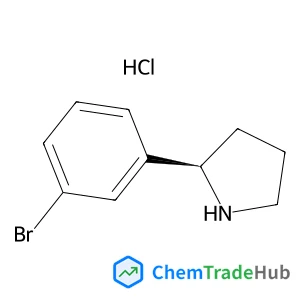
(2R)-2-(3-Bromophenyl)pyrrolidine hydrochloride (1:1)
CAS Number:
1391550-13-2
Molecular Formula:
C10H13BrClN
Recommended Suppliers





Disclaimer
This page provides academic journal information for reference and research purposes only. We are not affiliated with any journal publishers and do not handle publication submissions. For publication-related inquiries, please contact the respective journal publishers directly.
If you notice any inaccuracies in the information displayed, please contact us at support@chemtradehub.com. We will promptly review and address your concerns.