













Parameterization of the optical constants of polydopamine films for spectroscopic ellipsometry studies
Literature Information
Publication Date
2021-02-23
DOI
10.1039/D0CP04796A
Impact Factor
3.676
Authors
Runtian Qie, Saeed Zajforoushan Moghaddam, Esben Thormann
View Original
Abstract
Bio-inspired polydopamine coatings offer vast possibilities for surface modification of materials. The thickness of such nanometric coatings is usually estimated based on ellipsometry measurements. However, the complex light-absorbing nature of polydopamine is often overlooked when analyzing such data, which can result in inaccurate estimations of the coating thickness as well as the optical properties. In this study, we prepared and characterized three polydopamine coatings where the film thickness and surface roughness are systematically varied. For each case, we developed suitable optical models and showed how an inappropriate optical model can provide inaccurate estimates of the coating properties. AFM height profiles were obtained from scratched areas of each sample to verify the thickness values estimated by ellipsometry. The results confirm that polydopamine coatings, depending on the oxidation conditions, can possess different structural and optical properties, and thus require unique optical models for the ellipsometry analysis.
Recommended Journals
Related Literature
An active ferrocenyl triarylphosphine for palladium-catalyzed Suzuki–Miyaura cross-coupling of aryl halides
Fuk Yee Kwong, Kin Shing Chan, Chi Hung Yeung, Albert S. C. Chan
2004-09-21
Communication
DOI: 10.1039/B407661C
A very large Rh–Rh bond shortening on excitation of the [Rh2(1,8-diisocyano-p-menthane)4]2+ ion by time-resolved synchrotron X-ray diffraction
Yu-Sheng Chen, Tim Graber
2004-08-19
Communication
DOI: 10.1039/B409463H
The first samarium(ii)-mediated aryl radical cyclisation onto an aromatic ring
Hiroaki Ohno, Hiroki Iwasaki, Toru Eguchi, Tetsuaki Tanaka
2004-08-23
Communication
DOI: 10.1039/B410457A
Reversible folding/unfolding of linear molecular strands into helical channel-like complexes upon proton-modulated binding and release of metal ions
Adrian-Mihail Stadler, Nathalie Kyritsakas, Jean-Marie Lehn
2004-08-11
Communication
DOI: 10.1039/B407168A
Supramolecular isomerism in spin crossover networks with aurophilic interactions
Ana Galet, M. Carmen Muñoz, Víctor Martínez, José Antonio Real
2004-09-07
Communication
DOI: 10.1039/B409974E
The surprisingly beneficial effect of soft donors on the performance of early transition metal olefin polymerisation catalysts
Daniel C. H. Oakes, Brian S. Kimberley, Vernon C. Gibson, David J. Jones, Andrew J. P. White, David J. Williams
2004-08-23
Communication
DOI: 10.1039/B409870F
Fabrication and photoluminescence of chemically stable La2O3:Eu3+–La2Sn2O7 core–shell-structured nanoparticles
Eiji Hosono, Shinobu Fujihara
2004-08-13
Communication
DOI: 10.1039/B408495K
Racemic d,l-asparagine causes enantiomeric excess of other coexisting racemic d,l-amino acids during recrystallization: a hypothesis accounting for the origin of l-amino acids in the biosphere
Shosuke Kojo, Hiromi Uchino, Mayu Yoshimura, Kyoko Tanaka
2004-09-07
Communication
DOI: 10.1039/B409941A
Aminooxazolinate; a chiral amidinate analogue
Ian J. Munslow, Andrew R. Wade, Robert J. Deeth, Peter Scott
2004-09-30
Communication
DOI: 10.1039/B409113B
Electrodeposition of monodispersed Fe nanocrystals from an ionic liquid
C. L. Aravinda, W. Freyland
2004-10-19
Communication
DOI: 10.1039/B409861G
You might also like
Compound Q&A
What is the market or research trend for N-(4-Methoxybenzyl)-2-pyridinamine (CAS: 52818-63-0)?
N-(4-Methoxybenzyl)-2-pyridinamine (CAS: 52818-63-0) is increasingly being used ...
52818-63-0N-(4-Methoxybenzyl)-...
Compound Q&A
What precautions should be taken when handling Ethyl 4-(2-chlorophenyl)-1,3-thiazole-2-carboxylate (CAS: 1050507-06-6)?
When handling Ethyl 4-(2-chlorophenyl)-1,3-thiazole-2-carboxylate, appropriate p...
1050507-06-6Ethyl 4-(2-chlorophe...
Compound Q&A
What regulatory guidelines apply to diethyldiselane (CAS: 628-39-7)?
Diethyldiselane (CAS: 628-39-7) is classified under the Globally Harmonized Syst...
628-39-7Diethyldiselane
Compound Q&A
What is the market or research trend for oxocopper (CAS: 12053-18-8)?
The market for oxocopper (CAS: 12053-18-8) is primarily driven by its use in cat...
12053-18-8oxocopper; oxo-(oxoc...
Compound Q&A
What is the market or research trend for 5-{[(2-Methyl-2-propanyl)oxy]carbonyl}-5-azaspiro[2.4]heptane-7-carboxylic acid?
The market for 5-{[(2-Methyl-2-propanyl)oxy]carbonyl}-5-azaspiro[2.4]heptane-7-c...
1268519-54-55-{[(2-Methyl-2-prop...
Compound Q&A
What is 2-(1-Pyrrolidinyl)-4-pyridinamine (CAS: 35981-63-6)?
2-(1-Pyrrolidinyl)-4-pyridinamine is a chemical compound with the CAS number 359...
35981-63-62-(1-Pyrrolidinyl)-4...
Compound Q&A
What are the physical and chemical properties of 2-(3-Pyridinyl)-1-azabicyclo[2.2.2]octane (CAS: 91556-75-1)?
2-(3-Pyridinyl)-1-azabicyclo[2.2.2]octane (CAS: 91556-75-1) is a crystalline sol...
91556-75-12-(3-Pyridinyl)-1-az...
Compound Q&A
How is (S)-Alpha-allyl-proline hydrochloride (CAS: 129704-91-2) typically synthesized?
(S)-Alpha-allyl-proline hydrochloride is usually synthesized via a Wittig reacti...
129704-91-2(S)-Alpha-allyl-prol...
Compound Q&A
What is 3-Methyl-1,2-oxazole-5-carboxylic acid (CAS: 4857-42-5)?
3-Methyl-1,2-oxazole-5-carboxylic acid (CAS: 4857-42-5) is an organic compound w...
4857-42-53-Methyl-1,2-oxazole...
Compound Q&A
How is Lys-SMCC-DM1 (CAS: 1281816-04-3) typically synthesized?
Lys-SMCC-DM1 is synthesized via a multi-step process involving the coupling of S...
1281816-04-3Lys-SMCC-DM1
Source Journal
Physical Chemistry Chemical Physics

CiteScore:
5.5
Self-citation Rate:
10.3%
Articles per Year:
3036
Physical Chemistry Chemical Physics (PCCP) is an international journal co-owned by 19 physical chemistry and physics societies from around the world. This journal publishes original, cutting-edge research in physical chemistry, chemical physics and biophysical chemistry. To be suitable for publication in PCCP, articles must include significant innovation and/or insight into physical chemistry; this is the most important criterion that reviewers and Editors will judge against when evaluating submissions. The journal has a broad scope and welcomes contributions spanning experiment, theory, computation and data science. Topical coverage includes spectroscopy, dynamics, kinetics, statistical mechanics, thermodynamics, electrochemistry, catalysis, surface science, quantum mechanics, quantum computing and machine learning. Interdisciplinary research areas such as polymers and soft matter, materials, nanoscience, energy, surfaces/interfaces, and biophysical chemistry are welcomed if they demonstrate significant innovation and/or insight into physical chemistry. Joined experimental/theoretical studies are particularly appreciated when complementary and based on up-to-date approaches.
Recommended Compounds
![1,10-bis(3,5-dimethylphenyl)-12-hydroxy-4,5,6,7-tetrahydroiindeno[7,1-de:1',7'-fg][1,3,2]dioxaphosphocine 12-oxide structure](https://static.chemtradehub.com/structs/141/1412439-82-7-b9a9.webp "1,10-bis(3,5-dimethylphenyl)-12-hydroxy-4,5,6,7-tetrahydroiindeno[7,1-de:1',7'-fg][1,3,2]dioxaphosphocine 12-oxide structure")
1,10-bis(3,5-dimethylphenyl)-12-hydroxy-4,5,6,7-tetrahydroiindeno[7,1-de:1',7'-fg][1,3,2]dioxaphosphocine 12-oxide
CAS Number:
1412439-82-7
Molecular Formula:
C33H31O4P

(3alpha,5beta,6alpha,7alpha)-6-Ethylcholane-3,7,24-triol
CAS Number:
1537866-49-1
Molecular Formula:
C26H46O3
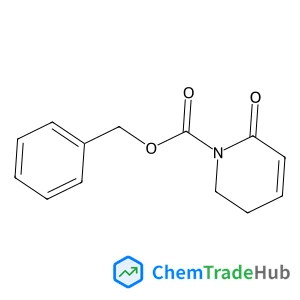
Benzyl 6-oxo-3,6-dihydro-1(2H)-pyridinecarboxylate
CAS Number:
725746-35-0
Molecular Formula:
C13H13NO3
Recommended Suppliers






Disclaimer
This page provides academic journal information for reference and research purposes only. We are not affiliated with any journal publishers and do not handle publication submissions. For publication-related inquiries, please contact the respective journal publishers directly.
If you notice any inaccuracies in the information displayed, please contact us at support@chemtradehub.com. We will promptly review and address your concerns.