












Structural, elastic and electronic properties of atomically thin pyridyne: theoretical predictions
Literature Information
Publication Date
2021-02-10
DOI
10.1039/D0CP06504H
Impact Factor
3.676
Authors
Chuan Liu, Shuaishuai Wang, Xuchun Wang, Xiangju Ye, Zirong Li, Jumeng Wei, Ping Cheng, Yingjie Li
View Original
Abstract
In this paper, we propose a new acetylenic carbon material called pyridyne, which is composed of acetylenic linkages and pyridine rings. From first-principles calculations, we investigate the structural, elastic and electronic properties of pyridyne. It is found that the structure of pyridyne is stable at 300 K and its stability is comparable to experimentally synthesized graphdiyne and graphtetrayne. Compared with graphene or graphyne, pyridyne possesses more diverse pores and reduced delocalization of electrons. The in-plane stiffness of pyridyne is 183 N m−1 with a Poisson's ratio of 0.304. Pyridyne is found to be a semiconductor with a direct band gap of 0.91 eV. The intrinsic electron mobility can reach 6.08 × 104 cm2 V−1 s−1, while the hole mobility can reach 1.82 × 104 cm2 V−1 s−1.
Related Literature
On the dual character of charged metal–molecule hybrids and the opposite behaviour of the forward and reverse CT processes
J. Roman-Perez, S. P. Centeno, M. R. López-Ramírez, J. F. Arenas, J. Soto, I. López-Tocón, J. C. Otero
2014-09-17
Communication
DOI: 10.1039/C4CP03984J
Remarkable enhancement of the photoreactivity of a polyfluoroalkyl azobenzene derivative in an organic–inorganic nano-layered microenvironment
Vivek Ramakrishnan, Shin Sasamoto
2014-09-09
Paper
DOI: 10.1039/C4CP03549F
The shape of d-glucosamine
Isabel Peña, Lucie Kolesniková, Carlos Cabezas, Celina Bermúdez, Matías Berdakin, Alcides Simão, José L. Alonso
2014-09-16
Paper
DOI: 10.1039/C4CP03593C
Brønsted acids in ionic liquids: how acidity depends on the liquid structure
Jade A. McCune, Peizhao He, Marina Petkovic, Fergal Coleman, John D. Holbrey, Kenneth R. Seddon, Małgorzata Swadźba-Kwaśny
2014-09-11
Paper
DOI: 10.1039/C4CP03217A
Dynamic and thermodynamic characteristics associated with the glass transition of amorphous trehalose–water mixtures
Lindong Weng, Gloria D. Elliott
2014-04-25
Paper
DOI: 10.1039/C3CP55418J
Direct measurements of the total rate constant of the reaction NCN + H and implications for the product branching ratio and the enthalpy of formation of NCN
Nancy Faßheber, Johannes Dammeier, Gernot Friedrichs
2014-04-29
Paper
DOI: 10.1039/C4CP01107D
Nanoscale phononic interconnects in THz frequencies
Mahesh R. Neupane, M. M. Sigalas, N. Aravantinos-Zafiris, Roger K. Lake
2014-09-19
Paper
DOI: 10.1039/C4CP02328E
Direct imaging of layered O3- and P2-NaxFe1/2Mn1/2O2 structures at the atomic scale
Yuesheng Wang, Pin Liu, Lin Gu, Yong-Sheng Hu, Hong Li, George P. Demopoulos, Liquan Chen
2014-08-26
Communication
DOI: 10.1039/C4CP02957G
Tavorite-FeSO4F as a potential cathode material for Mg ion batteries: a first principles calculation
Jiandong Wu, Guohua Gao, Guangming Wu, Bo Liu, Huiyu Yang, Xiaowei Zhou, Jichao Wang
2014-09-03
Communication
DOI: 10.1039/C4CP03176H
You might also like
Compound Q&A
What is the market or research trend for N-(4-Methoxybenzyl)-2-pyridinamine (CAS: 52818-63-0)?
N-(4-Methoxybenzyl)-2-pyridinamine (CAS: 52818-63-0) is increasingly being used ...
52818-63-0N-(4-Methoxybenzyl)-...
Compound Q&A
What precautions should be taken when handling Ethyl 4-(2-chlorophenyl)-1,3-thiazole-2-carboxylate (CAS: 1050507-06-6)?
When handling Ethyl 4-(2-chlorophenyl)-1,3-thiazole-2-carboxylate, appropriate p...
1050507-06-6Ethyl 4-(2-chlorophe...
Compound Q&A
What regulatory guidelines apply to diethyldiselane (CAS: 628-39-7)?
Diethyldiselane (CAS: 628-39-7) is classified under the Globally Harmonized Syst...
628-39-7Diethyldiselane
Compound Q&A
What is the market or research trend for oxocopper (CAS: 12053-18-8)?
The market for oxocopper (CAS: 12053-18-8) is primarily driven by its use in cat...
12053-18-8oxocopper; oxo-(oxoc...
Compound Q&A
What is the market or research trend for 5-{[(2-Methyl-2-propanyl)oxy]carbonyl}-5-azaspiro[2.4]heptane-7-carboxylic acid?
The market for 5-{[(2-Methyl-2-propanyl)oxy]carbonyl}-5-azaspiro[2.4]heptane-7-c...
1268519-54-55-{[(2-Methyl-2-prop...
Compound Q&A
What is 2-(1-Pyrrolidinyl)-4-pyridinamine (CAS: 35981-63-6)?
2-(1-Pyrrolidinyl)-4-pyridinamine is a chemical compound with the CAS number 359...
35981-63-62-(1-Pyrrolidinyl)-4...
Compound Q&A
What are the physical and chemical properties of 2-(3-Pyridinyl)-1-azabicyclo[2.2.2]octane (CAS: 91556-75-1)?
2-(3-Pyridinyl)-1-azabicyclo[2.2.2]octane (CAS: 91556-75-1) is a crystalline sol...
91556-75-12-(3-Pyridinyl)-1-az...
Compound Q&A
How is (S)-Alpha-allyl-proline hydrochloride (CAS: 129704-91-2) typically synthesized?
(S)-Alpha-allyl-proline hydrochloride is usually synthesized via a Wittig reacti...
129704-91-2(S)-Alpha-allyl-prol...
Compound Q&A
What is 3-Methyl-1,2-oxazole-5-carboxylic acid (CAS: 4857-42-5)?
3-Methyl-1,2-oxazole-5-carboxylic acid (CAS: 4857-42-5) is an organic compound w...
4857-42-53-Methyl-1,2-oxazole...
Compound Q&A
How is Lys-SMCC-DM1 (CAS: 1281816-04-3) typically synthesized?
Lys-SMCC-DM1 is synthesized via a multi-step process involving the coupling of S...
1281816-04-3Lys-SMCC-DM1
Source Journal
Physical Chemistry Chemical Physics

CiteScore:
5.5
Self-citation Rate:
10.3%
Articles per Year:
3036
Physical Chemistry Chemical Physics (PCCP) is an international journal co-owned by 19 physical chemistry and physics societies from around the world. This journal publishes original, cutting-edge research in physical chemistry, chemical physics and biophysical chemistry. To be suitable for publication in PCCP, articles must include significant innovation and/or insight into physical chemistry; this is the most important criterion that reviewers and Editors will judge against when evaluating submissions. The journal has a broad scope and welcomes contributions spanning experiment, theory, computation and data science. Topical coverage includes spectroscopy, dynamics, kinetics, statistical mechanics, thermodynamics, electrochemistry, catalysis, surface science, quantum mechanics, quantum computing and machine learning. Interdisciplinary research areas such as polymers and soft matter, materials, nanoscience, energy, surfaces/interfaces, and biophysical chemistry are welcomed if they demonstrate significant innovation and/or insight into physical chemistry. Joined experimental/theoretical studies are particularly appreciated when complementary and based on up-to-date approaches.
Recommended Compounds


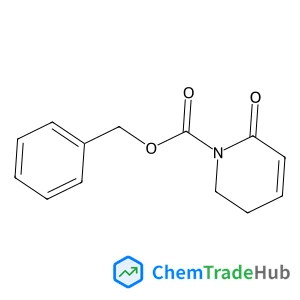
Benzyl 6-oxo-3,6-dihydro-1(2H)-pyridinecarboxylate
CAS Number:
725746-35-0
Molecular Formula:
C13H13NO3
Recommended Suppliers





Disclaimer
This page provides academic journal information for reference and research purposes only. We are not affiliated with any journal publishers and do not handle publication submissions. For publication-related inquiries, please contact the respective journal publishers directly.
If you notice any inaccuracies in the information displayed, please contact us at support@chemtradehub.com. We will promptly review and address your concerns.