


Comparison of the performance of an array of nanoband electrodes with a macro electrode with similar overall area
Literature Information
Publication Date
2013-04-05
DOI
10.1039/C3CP50759A
Impact Factor
3.676
Authors
Reshma Sultana, Naser Reza, Helena Woodvine, Jonathan G. Terry, Anthony J. Walton, Charlotte L. Brady, Ilka Schmueser, Andrew R. Mount
View Original
Abstract
The performance of two electrode architectures with broadly similar overall active electrode areas are examined. The first is an electrode comprising a single contiguous area (a disc) and the second is an electrode in which the cumulative electrode area is dispersed over a wide area as a 50 nm thickness platinum nanoband. A direct comparison of the electrochemical performance of these two electrodes has been made. The relatively simple nanoband electrode architecture is shown to have benefits, including two orders of magnitude greater mass transport limited currents, the ability to measure faster electrode kinetics (by a similar factor), a three orders of magnitude lowering of the Limit of Detection and a significantly reduced susceptibility to hydrodynamic perturbations. The consequences and implications of these performance characteristics on the uses of such a nanoband electrode have been considered.
Recommended Journals

Journal of Physics and Chemistry of Solids

Organic Preparations and Procedures International

Journal of Heterocyclic Chemistry

Pharmacological Reviews

Proceedings of the National Academy of Sciences of the United States of America

Science Progress

Molecular Pharmacology

Journal of Organometallic Chemistry

European Journal of Wood and Wood Products

Journal of Catalysis
Related Literature
Single-molecule magnets: control by a single solvent molecule of Jahn–Teller isomerism in [Mn12O12(O2CCH2But)16(H2O)4]
Mònica Soler, Wolfgang Wernsdorfer, Ziming Sun, John C. Huffman, David N. Hendrickson, George Christou
2003-09-25
Communication
DOI: 10.1039/B306246E
Solvent-free ketone hydrogenations catalyzed by molybdenum complexes
Barbara F. M. Kimmich, Paul J. Fagan, Elisabeth Hauptman, R. Morris Bullock
2004-03-22
Communication
DOI: 10.1039/B401760A
Patterning of DNA nanostructures on silicon surface by electron beam lithography of self-assembled monolayer
Guo-Jun Zhang, Takashi Tanii
2004-03-05
Communication
DOI: 10.1039/B315278B
ZnS bubble clusters with onion-like structures
Eleonora Spanó, Said Hamad, C. Richard A. Catlow
2004-02-27
Communication
DOI: 10.1039/B314104G
Unusual reactions of N-allylic difluoroenamines under thermal conditions
Hideki Amii, Yutaka Ichihara, Takashi Nakagawa, Takeshi Kobayashi, Kenji Uneyama
2003-10-20
Communication
DOI: 10.1039/B309696C
Significant promotional effect of CCl4 on fullerene yield in the graphite arc-discharge reaction
Fei Gao, Su-Yuan Xie, Rong-Bin Huang, Lan-Sun Zheng
2003-09-24
Communication
DOI: 10.1039/B306921B
Tetracyanoresorcin[4]arene ion channel shows pH dependent conductivity change
Song-De Tan, Mika Yamamura
2004-03-03
Communication
DOI: 10.1039/B312952G
Multiple hydrogen bonding-based fluorescent imprinted polymers for cyclobarbital prepared with 2,6-bis(acrylamido)pyridine
Hiroyuki Kubo, Hiroyuki Nariai
2003-10-14
Communication
DOI: 10.1039/B309917B
Assembly of a polyoxometalate into an anisotropic gel
Sophie Favette, Bernold Hasenknopf, Jacqueline Vaissermann, Pierre Gouzerh, Cécile Roux
2003-09-25
Communication
DOI: 10.1039/B308889H
Use of allene in 1,3-dipolar addition to a carbonyl ylide: syntheses of 3-hydroxy-cis-nemorensic acid and nemorensic acid
David M. Hodgson, Frédéric Le Strat
2004-02-24
Communication
DOI: 10.1039/B316908A
You might also like
Compound Q&A
What is the market or research trend for N-(4-Methoxybenzyl)-2-pyridinamine (CAS: 52818-63-0)?
N-(4-Methoxybenzyl)-2-pyridinamine (CAS: 52818-63-0) is increasingly being used ...
52818-63-0N-(4-Methoxybenzyl)-...
Compound Q&A
What precautions should be taken when handling Ethyl 4-(2-chlorophenyl)-1,3-thiazole-2-carboxylate (CAS: 1050507-06-6)?
When handling Ethyl 4-(2-chlorophenyl)-1,3-thiazole-2-carboxylate, appropriate p...
1050507-06-6Ethyl 4-(2-chlorophe...
Compound Q&A
What regulatory guidelines apply to diethyldiselane (CAS: 628-39-7)?
Diethyldiselane (CAS: 628-39-7) is classified under the Globally Harmonized Syst...
628-39-7Diethyldiselane
Compound Q&A
What is the market or research trend for oxocopper (CAS: 12053-18-8)?
The market for oxocopper (CAS: 12053-18-8) is primarily driven by its use in cat...
12053-18-8oxocopper; oxo-(oxoc...
Compound Q&A
What is the market or research trend for 5-{[(2-Methyl-2-propanyl)oxy]carbonyl}-5-azaspiro[2.4]heptane-7-carboxylic acid?
The market for 5-{[(2-Methyl-2-propanyl)oxy]carbonyl}-5-azaspiro[2.4]heptane-7-c...
1268519-54-55-{[(2-Methyl-2-prop...
Compound Q&A
What is 2-(1-Pyrrolidinyl)-4-pyridinamine (CAS: 35981-63-6)?
2-(1-Pyrrolidinyl)-4-pyridinamine is a chemical compound with the CAS number 359...
35981-63-62-(1-Pyrrolidinyl)-4...
Compound Q&A
What are the physical and chemical properties of 2-(3-Pyridinyl)-1-azabicyclo[2.2.2]octane (CAS: 91556-75-1)?
2-(3-Pyridinyl)-1-azabicyclo[2.2.2]octane (CAS: 91556-75-1) is a crystalline sol...
91556-75-12-(3-Pyridinyl)-1-az...
Compound Q&A
How is (S)-Alpha-allyl-proline hydrochloride (CAS: 129704-91-2) typically synthesized?
(S)-Alpha-allyl-proline hydrochloride is usually synthesized via a Wittig reacti...
129704-91-2(S)-Alpha-allyl-prol...
Compound Q&A
What is 3-Methyl-1,2-oxazole-5-carboxylic acid (CAS: 4857-42-5)?
3-Methyl-1,2-oxazole-5-carboxylic acid (CAS: 4857-42-5) is an organic compound w...
4857-42-53-Methyl-1,2-oxazole...
Compound Q&A
How is Lys-SMCC-DM1 (CAS: 1281816-04-3) typically synthesized?
Lys-SMCC-DM1 is synthesized via a multi-step process involving the coupling of S...
1281816-04-3Lys-SMCC-DM1
Source Journal
Physical Chemistry Chemical Physics

CiteScore:
5.5
Self-citation Rate:
10.3%
Articles per Year:
3036
Physical Chemistry Chemical Physics (PCCP) is an international journal co-owned by 19 physical chemistry and physics societies from around the world. This journal publishes original, cutting-edge research in physical chemistry, chemical physics and biophysical chemistry. To be suitable for publication in PCCP, articles must include significant innovation and/or insight into physical chemistry; this is the most important criterion that reviewers and Editors will judge against when evaluating submissions. The journal has a broad scope and welcomes contributions spanning experiment, theory, computation and data science. Topical coverage includes spectroscopy, dynamics, kinetics, statistical mechanics, thermodynamics, electrochemistry, catalysis, surface science, quantum mechanics, quantum computing and machine learning. Interdisciplinary research areas such as polymers and soft matter, materials, nanoscience, energy, surfaces/interfaces, and biophysical chemistry are welcomed if they demonstrate significant innovation and/or insight into physical chemistry. Joined experimental/theoretical studies are particularly appreciated when complementary and based on up-to-date approaches.
Recommended Compounds

![1-(1-Benzyl-1,2,3,6-tetrahydropyridin-4-yl)-1H-benzo[d]imidazol-2(3H)-one structure](https://static.chemtradehub.com/structs/603/60373-71-9-7dfb.webp "1-(1-Benzyl-1,2,3,6-tetrahydropyridin-4-yl)-1H-benzo[d]imidazol-2(3H)-one structure")
1-(1-Benzyl-1,2,3,6-tetrahydropyridin-4-yl)-1H-benzo[d]imidazol-2(3H)-one
CAS Number:
60373-71-9
Molecular Formula:
C19H19N3O

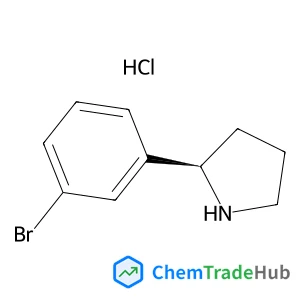
(2R)-2-(3-Bromophenyl)pyrrolidine hydrochloride (1:1)
CAS Number:
1391550-13-2
Molecular Formula:
C10H13BrClN
Recommended Suppliers





Disclaimer
This page provides academic journal information for reference and research purposes only. We are not affiliated with any journal publishers and do not handle publication submissions. For publication-related inquiries, please contact the respective journal publishers directly.
If you notice any inaccuracies in the information displayed, please contact us at support@chemtradehub.com. We will promptly review and address your concerns.