


Insights into the polymorphism of glycine: membrane crystallization in an electric field
Literature Information
Publication Date
2013-05-09
DOI
10.1039/C3CP50664A
Impact Factor
3.676
Authors
Gianluca Di Profio, Mika T. Reijonen, Rocco Caliandro, Antonietta Guagliardi, Efrem Curcio, Enrico Drioli
View Original
Abstract
In this work we studied glycine crystallization with two main objectives: (i) to get improved control of crystal growth and polymorphic selectivity of organic molecules; (ii) to achieve additional insights into the nucleation mechanisms of glycine polymorphs. To reach these goals, membrane crystallization technology, a tool which allows improved control of supersaturation in solution crystallization, was used under different operating conditions: the variable solvent removal rate, acidic and almost neutral pH, the presence of a pulsed electric field. The traditional explanation for the crystallization of α and γ glycine polymorphs from aqueous solution is based on the general cyclic dimer hypothesis and the self-poisoning mechanism. In contrast with both the conventional theories, experimental results suggest that the relative nucleation rates with respect to the relative growth kinetics of the two forms under the different conditions play a dominant role in determining the polymorphic outcome. Our results instead support a molecular nucleation route where open chain dimers can behave as building units for both γ- and α-glycines in the rate determining structuring step of the two-step nucleation mechanism.
Recommended Journals

Science Progress

Fibre Chemistry

Organic Preparations and Procedures International

Pure and Applied Chemistry

Helvetica Chimica Acta

Journal of Medicinal Chemistry

Proceedings of the National Academy of Sciences of the United States of America

Kinetics and Catalysis

Molecular Pharmacology

Russian Chemical Reviews
Related Literature
Intrinsic chemistry of [OUCH]+: reactions with H2O, CH3CN and O2
Luke J. Metzler, Christopher T. Farmen, Theodore A. Corcovilos, Michael J. Van Stipdonk
2021-02-11
Communication
DOI: 10.1039/D1CP00177A
Unveiling the strong dependence of the α-relaxation dispersion on mixing thermodynamics in binary glass-forming liquids
Xin Liu, Xudong Li, Ji Wang, Shidong Feng, Li-Min Wang
2021-02-09
Paper
DOI: 10.1039/D0CP06358D
Synergistic vacancy defects and mechanical strain for the modulation of the mechanical, electronic and optical properties of monolayer tungsten disulfide
Xiaoyong Yang, Ming Jiang, Lixin Chen, Zhiwen Chen
2021-02-12
Paper
DOI: 10.1039/D0CP06336C
Solute-adsorption enhanced heterogeneous nucleation: the effect of Cu adsorption on α-Al nucleation at the sapphire substrate
Sida Ma, Zihui Dong, Nanfu Zong, Tao Jing, Hongbiao Dong
2021-02-02
Paper
DOI: 10.1039/D0CP06000C
Pentagonal B2C monolayer with extremely high theoretical capacity for Li-/Na-ion batteries
Jianbo Gao
2021-02-23
Paper
DOI: 10.1039/D0CP06363K
Liquid droplets of protein LAF1 provide a vehicle to regulate storage of the signaling protein K-Ras4B and its transport to the lipid membrane
Lei Li, Marius Herzog, Simone Möbitz, Roland Winter
2021-02-23
Paper
DOI: 10.1039/D1CP00007A
Biaxial strain, electric field and interlayer distance-tailored electronic structure and magnetic properties of two-dimensional g-C3N4/Li-adsorbed Cr2Ge2Te6 van der Waals heterostructures
Yaoqi Gao, Baozeng Zhou, Xiaocha Wang
2021-03-09
Paper
DOI: 10.1039/D1CP00003A
HPO42− enhanced catalytic activity of N, S, B, and O-codoped carbon nanosphere-armored Co9S8 nanoparticles for organic pollutants degradation via peroxymonosulfate activation: critical roles of superoxide radical, singlet oxygen and electron transfer
Genxing Zhu, Jialu Zhu, Qi Liu, Xinlong Fu, Ziyi Chen, Kai Li, Fengyi Cao, Qi Qin, Mingli Jiao
2021-02-05
Paper
DOI: 10.1039/D0CP04773B
Catalytic cycle of the partial oxidation of methane to methanol over Cu-ZSM-5 revealed using DFT calculations
2021-02-05
Paper
DOI: 10.1039/D0CP06696F
You might also like
Compound Q&A
What is the market or research trend for N-(4-Methoxybenzyl)-2-pyridinamine (CAS: 52818-63-0)?
N-(4-Methoxybenzyl)-2-pyridinamine (CAS: 52818-63-0) is increasingly being used ...
52818-63-0N-(4-Methoxybenzyl)-...
Compound Q&A
What precautions should be taken when handling Ethyl 4-(2-chlorophenyl)-1,3-thiazole-2-carboxylate (CAS: 1050507-06-6)?
When handling Ethyl 4-(2-chlorophenyl)-1,3-thiazole-2-carboxylate, appropriate p...
1050507-06-6Ethyl 4-(2-chlorophe...
Compound Q&A
What regulatory guidelines apply to diethyldiselane (CAS: 628-39-7)?
Diethyldiselane (CAS: 628-39-7) is classified under the Globally Harmonized Syst...
628-39-7Diethyldiselane
Compound Q&A
What is the market or research trend for oxocopper (CAS: 12053-18-8)?
The market for oxocopper (CAS: 12053-18-8) is primarily driven by its use in cat...
12053-18-8oxocopper; oxo-(oxoc...
Compound Q&A
What is the market or research trend for 5-{[(2-Methyl-2-propanyl)oxy]carbonyl}-5-azaspiro[2.4]heptane-7-carboxylic acid?
The market for 5-{[(2-Methyl-2-propanyl)oxy]carbonyl}-5-azaspiro[2.4]heptane-7-c...
1268519-54-55-{[(2-Methyl-2-prop...
Compound Q&A
What is 2-(1-Pyrrolidinyl)-4-pyridinamine (CAS: 35981-63-6)?
2-(1-Pyrrolidinyl)-4-pyridinamine is a chemical compound with the CAS number 359...
35981-63-62-(1-Pyrrolidinyl)-4...
Compound Q&A
What are the physical and chemical properties of 2-(3-Pyridinyl)-1-azabicyclo[2.2.2]octane (CAS: 91556-75-1)?
2-(3-Pyridinyl)-1-azabicyclo[2.2.2]octane (CAS: 91556-75-1) is a crystalline sol...
91556-75-12-(3-Pyridinyl)-1-az...
Compound Q&A
How is (S)-Alpha-allyl-proline hydrochloride (CAS: 129704-91-2) typically synthesized?
(S)-Alpha-allyl-proline hydrochloride is usually synthesized via a Wittig reacti...
129704-91-2(S)-Alpha-allyl-prol...
Compound Q&A
What is 3-Methyl-1,2-oxazole-5-carboxylic acid (CAS: 4857-42-5)?
3-Methyl-1,2-oxazole-5-carboxylic acid (CAS: 4857-42-5) is an organic compound w...
4857-42-53-Methyl-1,2-oxazole...
Compound Q&A
How is Lys-SMCC-DM1 (CAS: 1281816-04-3) typically synthesized?
Lys-SMCC-DM1 is synthesized via a multi-step process involving the coupling of S...
1281816-04-3Lys-SMCC-DM1
Source Journal
Physical Chemistry Chemical Physics

CiteScore:
5.5
Self-citation Rate:
10.3%
Articles per Year:
3036
Physical Chemistry Chemical Physics (PCCP) is an international journal co-owned by 19 physical chemistry and physics societies from around the world. This journal publishes original, cutting-edge research in physical chemistry, chemical physics and biophysical chemistry. To be suitable for publication in PCCP, articles must include significant innovation and/or insight into physical chemistry; this is the most important criterion that reviewers and Editors will judge against when evaluating submissions. The journal has a broad scope and welcomes contributions spanning experiment, theory, computation and data science. Topical coverage includes spectroscopy, dynamics, kinetics, statistical mechanics, thermodynamics, electrochemistry, catalysis, surface science, quantum mechanics, quantum computing and machine learning. Interdisciplinary research areas such as polymers and soft matter, materials, nanoscience, energy, surfaces/interfaces, and biophysical chemistry are welcomed if they demonstrate significant innovation and/or insight into physical chemistry. Joined experimental/theoretical studies are particularly appreciated when complementary and based on up-to-date approaches.
Recommended Compounds
![5'-Fluoro-[2,3'-biindolinylidene]-2',3-dione structure](https://static.chemtradehub.com/structs/251/251903-00-1-9cb1.webp "5'-Fluoro-[2,3'-biindolinylidene]-2',3-dione structure")
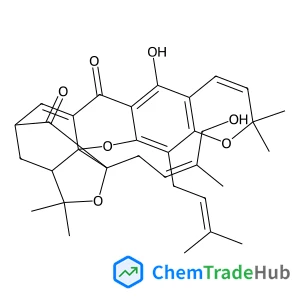
![N-{15-[(2,5-Dioxo-1-pyrrolidinyl)oxy]-15-oxo-3,6,9,12-tetraoxapentadec-1-yl}-2-(2-propyn-1-yloxy)acetamide structure](https://static.chemtradehub.com/structs/210/2101206-92-0-2eb5.webp "N-{15-[(2,5-Dioxo-1-pyrrolidinyl)oxy]-15-oxo-3,6,9,12-tetraoxapentadec-1-yl}-2-(2-propyn-1-yloxy)acetamide structure")
N-{15-[(2,5-Dioxo-1-pyrrolidinyl)oxy]-15-oxo-3,6,9,12-tetraoxapentadec-1-yl}-2-(2-propyn-1-yloxy)acetamide
CAS Number:
2101206-92-0
Molecular Formula:
C20H30N2O10
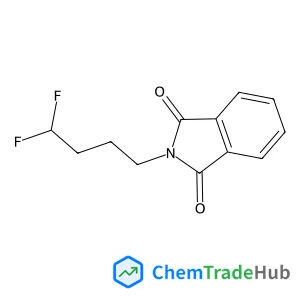
2-(4,4-Difluorobutyl)-1H-isoindole-1,3(2H)-dione
CAS Number:
1265341-14-7
Molecular Formula:
C12H11F2NO2
Recommended Suppliers




Disclaimer
This page provides academic journal information for reference and research purposes only. We are not affiliated with any journal publishers and do not handle publication submissions. For publication-related inquiries, please contact the respective journal publishers directly.
If you notice any inaccuracies in the information displayed, please contact us at support@chemtradehub.com. We will promptly review and address your concerns.