












Synergistic vacancy defects and mechanical strain for the modulation of the mechanical, electronic and optical properties of monolayer tungsten disulfide
Literature Information
Publication Date
2021-02-12
DOI
10.1039/D0CP06336C
Impact Factor
3.676
Authors
Xiaoyong Yang, Ming Jiang, Lixin Chen, Zhiwen Chen
View Original
Abstract
Monolayer transition metal dichalcogenides (TMDs) are the potential candidate materials in nanoelectronic and optoelectronic applications due to their unique physical and chemical properties. Although both defect and strain greatly alter the structural, physical and chemical properties of monolayer TMDs, the defective monolayer TMDs under applied strain have not been adequately studied. In this paper, the synergistic effects of sulfur vacancy defects and mechanical strain on the mechanical, electronic and optical properties of monolayer tungsten disulfide (WS2) have been systematically studied using first principles density functional theory. The results indicate that the sulfur vacancy formation energy increases linearly with increasing sulfur vacancy concentration under different strains. The strain energy and stress of monolayer WS2 with different sulfur vacancy concentrations increase with increasing applied strain in the strain range of −10% to 10%. The band gap of monolayer WS2 decreases with increasing sulfur vacancy concentration under different strains. Moreover, compared with unstrained conditions, 5% compressive strain increases the band gap at a larger vacancy concentration and the case is just opposite at a smaller vacancy concentration, while 5% tensile strain decreases the band gap. The band gap of monolayer WS2 with different sulfur vacancy concentrations firstly increases and then shrinks with increasing applied strain under compressive strain, whereas it decreases monotonically under tensile strain in the strain range of −10% to 10%. In the visible-light wavelength region, the out-of-plane absorption coefficient under different strains increases with increasing sulfur vacancy concentration. Furthermore, 5% compressive strain enhances the absorption coefficient and 5% tensile strain decreases the absorption coefficient. Hence, the synergistic effects of sulfur vacancy defects and mechanical strain in monolayer TMDs can open new avenues for their applications in nanoelectronic and optoelectronic devices.
Recommended Journals
Related Literature
Novel Pt/CeO2/C catalysts for electrooxidation of alcohols in alkaline media
Changwei Xu, Pei Kang Shen
2004-08-25
Communication
DOI: 10.1039/B408589B
Synthesis of core–shell polyurethane–ureananoparticles containing 4,4′-methylenedi-p-phenyl diisocyanate and isophorone diisocyanate by self-assembled neutralization emulsification
In Woo Cheong, Jung Hyun Kim
2004-09-14
Communication
DOI: 10.1039/B409755F
Water reduction and oxidation on Pt–Ru/Y2Ta2O5N2catalyst under visible light irradiation
Meiying Liu, Wansheng You, Zhibin Lei, Guohua Zhou, Jianjun Yang, Guopeng Wu, Guijun Ma, Guoyou Luan, Tuyoshi Takata, Michikazu Hara, Can Li
2004-08-19
Communication
DOI: 10.1039/B407892F
Supramolecular isomerism in spin crossover networks with aurophilic interactions
Ana Galet, M. Carmen Muñoz, Víctor Martínez, José Antonio Real
2004-09-07
Communication
DOI: 10.1039/B409974E
The mechanism of polyleucine catalysed asymmetric epoxidation
David R. Kelly, Stanley M. Roberts
2004-08-25
Communication
DOI: 10.1039/B404390C
Unsaturated 1,2-amino alcohols and ethers from aziridines and organolithiums
David M. Hodgson, Bogdan Štefane, Timothy J. Miles, Jason Witherington
2004-08-24
Communication
DOI: 10.1039/B409486G
Motion of methanol adsorbed in porous coordination polymer with paramagnetic metal ions
Satoshi Horike, Ryotaro Matsuda, Ryo Kitaura, Susumu Kitagawa, Takahiro Iijima, Kazunaka Endo, Yoshiki Kubota, Masaki Takata
2004-08-20
Communication
DOI: 10.1039/B406883A
Molecular tectonics: design of luminescent H-bonded molecular networks
Sylvie Ferlay, Mir Wais Hosseini, Véronique Bulach, Jean-Marc Planeix
2004-09-07
Communication
DOI: 10.1039/B410459P
Stereoelective polymerization of d,l-lactide using N-heterocyclic carbene based compounds
Tryg R. Jensen, Laurie E. Breyfogle, Marc A. Hillmyer, William B. Tolman
2004-09-08
Communication
DOI: 10.1039/B405362A
Room temperature photochromic liquid crystal [3H]-naphtho[2,1-b]pyrans—photochromism in the mesomorphic state
Michel Frigoli, Georg H. Mehl
2004-08-02
Communication
DOI: 10.1039/B407561G
You might also like
Compound Q&A
What is the market or research trend for N-(4-Methoxybenzyl)-2-pyridinamine (CAS: 52818-63-0)?
N-(4-Methoxybenzyl)-2-pyridinamine (CAS: 52818-63-0) is increasingly being used ...
52818-63-0N-(4-Methoxybenzyl)-...
Compound Q&A
What precautions should be taken when handling Ethyl 4-(2-chlorophenyl)-1,3-thiazole-2-carboxylate (CAS: 1050507-06-6)?
When handling Ethyl 4-(2-chlorophenyl)-1,3-thiazole-2-carboxylate, appropriate p...
1050507-06-6Ethyl 4-(2-chlorophe...
Compound Q&A
What regulatory guidelines apply to diethyldiselane (CAS: 628-39-7)?
Diethyldiselane (CAS: 628-39-7) is classified under the Globally Harmonized Syst...
628-39-7Diethyldiselane
Compound Q&A
What is the market or research trend for oxocopper (CAS: 12053-18-8)?
The market for oxocopper (CAS: 12053-18-8) is primarily driven by its use in cat...
12053-18-8oxocopper; oxo-(oxoc...
Compound Q&A
What is the market or research trend for 5-{[(2-Methyl-2-propanyl)oxy]carbonyl}-5-azaspiro[2.4]heptane-7-carboxylic acid?
The market for 5-{[(2-Methyl-2-propanyl)oxy]carbonyl}-5-azaspiro[2.4]heptane-7-c...
1268519-54-55-{[(2-Methyl-2-prop...
Compound Q&A
What is 2-(1-Pyrrolidinyl)-4-pyridinamine (CAS: 35981-63-6)?
2-(1-Pyrrolidinyl)-4-pyridinamine is a chemical compound with the CAS number 359...
35981-63-62-(1-Pyrrolidinyl)-4...
Compound Q&A
What are the physical and chemical properties of 2-(3-Pyridinyl)-1-azabicyclo[2.2.2]octane (CAS: 91556-75-1)?
2-(3-Pyridinyl)-1-azabicyclo[2.2.2]octane (CAS: 91556-75-1) is a crystalline sol...
91556-75-12-(3-Pyridinyl)-1-az...
Compound Q&A
How is (S)-Alpha-allyl-proline hydrochloride (CAS: 129704-91-2) typically synthesized?
(S)-Alpha-allyl-proline hydrochloride is usually synthesized via a Wittig reacti...
129704-91-2(S)-Alpha-allyl-prol...
Compound Q&A
What is 3-Methyl-1,2-oxazole-5-carboxylic acid (CAS: 4857-42-5)?
3-Methyl-1,2-oxazole-5-carboxylic acid (CAS: 4857-42-5) is an organic compound w...
4857-42-53-Methyl-1,2-oxazole...
Compound Q&A
How is Lys-SMCC-DM1 (CAS: 1281816-04-3) typically synthesized?
Lys-SMCC-DM1 is synthesized via a multi-step process involving the coupling of S...
1281816-04-3Lys-SMCC-DM1
Source Journal
Physical Chemistry Chemical Physics

CiteScore:
5.5
Self-citation Rate:
10.3%
Articles per Year:
3036
Physical Chemistry Chemical Physics (PCCP) is an international journal co-owned by 19 physical chemistry and physics societies from around the world. This journal publishes original, cutting-edge research in physical chemistry, chemical physics and biophysical chemistry. To be suitable for publication in PCCP, articles must include significant innovation and/or insight into physical chemistry; this is the most important criterion that reviewers and Editors will judge against when evaluating submissions. The journal has a broad scope and welcomes contributions spanning experiment, theory, computation and data science. Topical coverage includes spectroscopy, dynamics, kinetics, statistical mechanics, thermodynamics, electrochemistry, catalysis, surface science, quantum mechanics, quantum computing and machine learning. Interdisciplinary research areas such as polymers and soft matter, materials, nanoscience, energy, surfaces/interfaces, and biophysical chemistry are welcomed if they demonstrate significant innovation and/or insight into physical chemistry. Joined experimental/theoretical studies are particularly appreciated when complementary and based on up-to-date approaches.
Recommended Compounds
![N-{[(2-Methyl-2-propanyl)oxy]carbonyl}-L-methionylglycine structure](https://static.chemtradehub.com/structs/234/23446-03-9-e1e5.webp "N-{[(2-Methyl-2-propanyl)oxy]carbonyl}-L-methionylglycine structure")
N-{[(2-Methyl-2-propanyl)oxy]carbonyl}-L-methionylglycine
CAS Number:
23446-03-9
Molecular Formula:
C12H22N2O5S
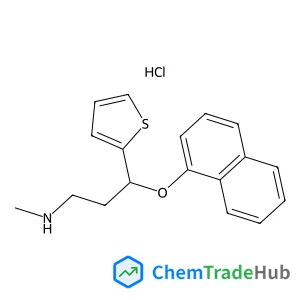
N-Methyl-3-(1-naphthyloxy)-3-(2-thienyl)-1-propanamine hydrochloride (1:1)
CAS Number:
1188266-11-6
Molecular Formula:
C18H20ClNOS
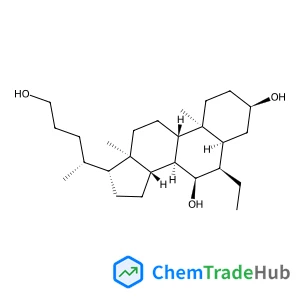
(3alpha,5beta,6alpha,7alpha)-6-Ethylcholane-3,7,24-triol
CAS Number:
1537866-49-1
Molecular Formula:
C26H46O3
Recommended Suppliers





Disclaimer
This page provides academic journal information for reference and research purposes only. We are not affiliated with any journal publishers and do not handle publication submissions. For publication-related inquiries, please contact the respective journal publishers directly.
If you notice any inaccuracies in the information displayed, please contact us at support@chemtradehub.com. We will promptly review and address your concerns.