












Solute-adsorption enhanced heterogeneous nucleation: the effect of Cu adsorption on α-Al nucleation at the sapphire substrate
Literature Information
Publication Date
2021-02-02
DOI
10.1039/D0CP06000C
Impact Factor
3.676
Authors
Sida Ma, Zihui Dong, Nanfu Zong, Tao Jing, Hongbiao Dong
View Original
Abstract
Interfacial adsorption of solute atoms is a promising means to tune heterogeneous nucleation. In this study, a new method has been established to theoretically evaluate the effect of solute addition on the nucleation potency of heterogeneous nucleation interfaces. The evaluation consists of three steps: (1) analyzing the solute adsorption behavior; (2) determining the nucleation mode; and (3) evaluating the effect of solute adsorption on nucleation potency using the solute-adsorbed interface model. A combination of the ab initio and molecular dynamics methods together with the two-phase thermodynamic model was used to evaluate a prototype Al–Cu/(0001) sapphire interface. It is found that solute Cu atoms adsorb at the interface between the melt and (0001) sapphire interface. The adsorption is driven by the strengthening of the Cu–Al bonds as revealed by the Bader charge analysis which is demonstrated to reduce interfacial energy. Furthermore, it is revealed that the interfacial adoption of Cu results in the formation of an Al–Cu adsorption layer, which enhances the interfacial chemical affinity thus enlarging the nucleation driving force. Meanwhile, the lattice mismatch between the sapphire substrate and the primary Al (α-Al) nucleus is decreased by Cu addition, which lowers the barrier for nucleation. The above two effects together increase the nucleation potency of the studied interface, which is in good agreement with previous experiments. It is proposed that the effect of solute adsorption shall be considered in the search for effective substrates for tuning the nucleation.
Related Literature
Can inorganic salts tune electronic properties of graphene quantum dots?
Guilherme Colherinhas, Eudes Eterno Fileti, Vitaly V. Chaban
2015-05-29
Paper
DOI: 10.1039/C5CP02083B
Effects of different manganese precursors as promoters on catalytic performance of CuO–MnOx/TiO2 catalysts for NO removal by CO
Chuanzhi Sun, Yingjie Tang, Fei Gao, Jingfang Sun, Kaili Ma, Changjin Tang
2015-05-15
Paper
DOI: 10.1039/C5CP02158H
Native silica nanoparticles are powerful membrane disruptors
Nan Li, Rémy Berthier, Maurits R. R. de Planque
2015-01-19
Paper
DOI: 10.1039/C4CP05882H
Magneto-optical properties of ABC-stacked trilayer graphene
Yi-Ping Lin, Chiun-Yan Lin, Yen-Hung Ho, Thi-Nga Do, Ming-Fa Lin
2015-05-18
Paper
DOI: 10.1039/C5CP02496J
DNA-assisted photoinduced charge transfer between a cationic poly(phenylene vinylene) and a cationic fullerene
Youngil Park, Cheng-Yu Kuo, Young-Shin Park, Hsinhan Tsai, Jennifer S. Martinez, Andrew P. Shreve, Hsing-Lin Wang
2015-04-10
Communication
DOI: 10.1039/C5CP01309G
Dumbbell stanane: a large-gap quantum spin hall insulator
Xin Chen, Linyang Li, Mingwen Zhao
2015-05-21
Paper
DOI: 10.1039/C5CP00046G
Methyl-branched lipids promote the membrane adsorption of α-synuclein by enhancing shallow lipid-packing defects
Romain Gautier, Luc Bousset, Ronald Melki, Stefano Vanni
2015-03-23
Paper
DOI: 10.1039/C5CP00244C
A new two-dimensional metal–organic framework with high spin-filtering efficiency
Bikash Mandal, Pranab Sarkar
2015-06-08
Paper
DOI: 10.1039/C5CP01359C
Nanodusty plasma chemistry: a mechanistic and variational transition state theory study of the initial steps of silyl anion–silane and silylene anion–silane polymerization reactions
Junwei Lucas Bao, Prasenjit Seal, Donald G. Truhlar
2015-05-18
Paper
DOI: 10.1039/C5CP01979F
You might also like
Compound Q&A
How should waste containing 6-Chloro-5-(2'-hydroxy-3'-methoxy-4-biphenylyl)-3-(3-methoxyphenyl)-1H-pyrrolo[3,2-d]pyrimidine-2,4(3H,5H)-dione (CAS: 1346607-05-3) be handled?
Waste containing 6-Chloro-5-(2'-hydroxy-3'-methoxy-4-biphenylyl)-3-(3-methoxyphe...
1346607-05-36-Chloro-5-(2'-hydro...
Compound Q&A
What are the main uses of (3alpha,5alpha)-3-Hydroxypregnane-11,20-dione (CAS: 23930-19-0)?
(3alpha,5alpha)-3-Hydroxypregnane-11,20-dione is primarily used in the pharmaceu...
23930-19-0(3alpha,5alpha)-3-Hy...
Compound Q&A
What is the market or research trend for 4-Amino-6-chloro-2-pyridinecarboxylic acid (CAS: 546141-56-4)?
The market for 4-Amino-6-chloro-2-pyridinecarboxylic acid (CAS: 546141-56-4) is ...
546141-56-44-Amino-6-chloro-2-p...
Compound Q&A
Are there alternatives to (2-Benzoylethyl)trimethylammonium chloride (CAS: 24472-88-6) in synthesis?
Alternatives to (2-Benzoylethyl)trimethylammonium chloride (CAS: 24472-88-6) in ...
24472-88-6(2-Benzoylethyl)trim...
Compound Q&A
Is N-[4-Nitro-3-(trifluoromethyl)phenyl]acetamide (CAS: 393-12-4) safe?
N-[4-Nitro-3-(trifluoromethyl)phenyl]acetamide (CAS: 393-12-4) is generally safe...
393-12-4N-[4-Nitro-3-(triflu...
Compound Q&A
Are there alternatives to [(4R,5R,6S)-5-hydroxy-10-imino-3,7-dioxa-1,9-diazatricyclo[6.4.0.02,6]dodeca-8,11-dien-4-yl]methyl dihydrogen phosphate (CAS: 39679-56-6) in synthesis?
Alternative reagents such as other phosphates or similar functional groups can b...
39679-56-6[(4R,5R,6S)-5-hydrox...
Compound Q&A
Are there alternatives to N,N'-Bis(3-aminopropyl)-1,3-propanediamine (CAS: 4605-14-5) in synthesis?
There are alternatives to N,N'-Bis(3-aminopropyl)-1,3-propanediamine (CAS: 4605-...
4605-14-5N,N'-Bis(3-aminoprop...
Compound Q&A
What precautions should be taken when handling Aluminium trihexadecanoate (CAS: 555-35-1)?
When handling Aluminium trihexadecanoate, it is important to use appropriate per...
555-35-1Aluminium trihexadec...
Compound Q&A
What is (1,1-Dioxido-3-oxo-1,2-benzothiazol-2(3H)-yl)acetic acid (CAS: 52188-11-1)?
(1,1-Dioxido-3-oxo-1,2-benzothiazol-2(3H)-yl)acetic acid is a chemical compound ...
52188-11-1(1,1-Dioxido-3-oxo-1...
Compound Q&A
Are there alternatives to 5,5-dimethyloxolan-2-one (CAS: 3123-97-5) in synthesis?
Several alternatives to 5,5-dimethyloxolan-2-one (CAS: 3123-97-5) can be used in...
3123-97-55,5-dimethyloxolan-2...
Source Journal
Physical Chemistry Chemical Physics

CiteScore:
5.5
Self-citation Rate:
10.3%
Articles per Year:
3036
Physical Chemistry Chemical Physics (PCCP) is an international journal co-owned by 19 physical chemistry and physics societies from around the world. This journal publishes original, cutting-edge research in physical chemistry, chemical physics and biophysical chemistry. To be suitable for publication in PCCP, articles must include significant innovation and/or insight into physical chemistry; this is the most important criterion that reviewers and Editors will judge against when evaluating submissions. The journal has a broad scope and welcomes contributions spanning experiment, theory, computation and data science. Topical coverage includes spectroscopy, dynamics, kinetics, statistical mechanics, thermodynamics, electrochemistry, catalysis, surface science, quantum mechanics, quantum computing and machine learning. Interdisciplinary research areas such as polymers and soft matter, materials, nanoscience, energy, surfaces/interfaces, and biophysical chemistry are welcomed if they demonstrate significant innovation and/or insight into physical chemistry. Joined experimental/theoretical studies are particularly appreciated when complementary and based on up-to-date approaches.
Recommended Compounds

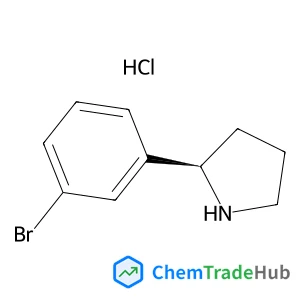
(2R)-2-(3-Bromophenyl)pyrrolidine hydrochloride (1:1)
CAS Number:
1391550-13-2
Molecular Formula:
C10H13BrClN
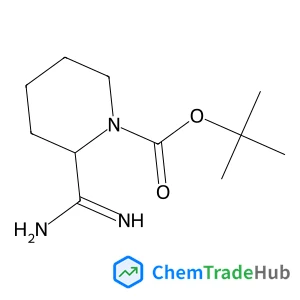
2-Methyl-2-propanyl 2-carbamimidoyl-1-piperidinecarboxylate
CAS Number:
1258640-98-0
Molecular Formula:
C11H21N3O2
Recommended Suppliers





Disclaimer
This page provides academic journal information for reference and research purposes only. We are not affiliated with any journal publishers and do not handle publication submissions. For publication-related inquiries, please contact the respective journal publishers directly.
If you notice any inaccuracies in the information displayed, please contact us at support@chemtradehub.com. We will promptly review and address your concerns.