












PEGMAs with short and long side chains: what is the effect in the formation of stars and brushes by RAFT polymerization?
Literature Information
Publication Date
2023-08-11
DOI
10.1039/D3RE00315A
Impact Factor
4.239
Authors
Hortensia Maldonado-Textle, Ángel Licea-Claveríe, Enrique Saldívar-Guerra
View Original
Abstract
Reversible addition fragmentation chain transfer (RAFT) polymerization of poly(ethylene glycol) methyl ether methacrylate (PEGMAn, where n is the PEG side chain length) for the formation of star-like molecules and bottlebrushes was systematically studied using ethanol as solvent at 70 °C. The effect of PEG units in the side chain on the kinetics of the (macro)monomers 2-ethoxy ethyl methacrylate (EEMA1), PEGMA9, and PEGMA23 was investigated in the presence of 4-cyano-4-(dodecylsulfanylthiocarbonyl) pentanoic acid (CDP) as RAFT agent and 4,4′-azobis(4-cyanopentanoic acid) (ACPA) as initiator. Two periods could be distinguished in the kinetics: (i) the initialization stage related to the pre-equilibrium and competition between the propagation and the first addition of monomer to primary radicals, and (ii) a main equilibrium process; both were quantified via the apparent rate constants kapp1 and kapp2, respectively. While EEMA1 and PEGMA9 RAFT polymerization presented an initiator concentration-dependent acceleration in the first stage, PEGMA23 exhibited inhibition, with practically no polymerization, when the CDP amount was decreased. A retardation effect was observed during the main stage, which decreased at longer PEG side chains of the (macro)monomer. Finally, 1,4-dioxane was used as a solvent for PEGMA23 polymerization and the resulting data were compared with those for the kinetics using ethanol; the former presented not only a strong acceleration in the first stage of the polymerization, reaching 60% conversion at a short time, attributed to the enhanced solubility of PEGMA23, but also stronger discrepancies for RAFT polymerization from experimental and theoretical data.
Related Literature
D–A–π–A featured sensitizers containing an auxiliary acceptor of benzoxadiazole: molecular engineering and co-sensitization
Haibo Zhu, Yongzhen Wu, Jingchuan Liu, Weiwei Zhang, Wenjun Wu, Wei-Hong Zhu
2015-04-15
Paper
DOI: 10.1039/C5TA01371B
Electrostimulus-associated PD-L1 expression on cell membrane revealed by immune SERS nanoprobes
Jiafeng Wang, Yan Wang, Guohua Qi
2021-12-31
Paper
DOI: 10.1039/D1AN01930A
Correction: Redox-responsive, reversibly fluorescent nanoparticles from sustainable cellulose derivatives
Wei Wang, Wei Li, Kai Zhang
2015-04-22
Correction
DOI: 10.1039/C5TA90092A
Development of a focused high-energy macromolecular ion beam
Ming-Lee Chu, Jung-Lee Lin
2021-03-03
Paper
DOI: 10.1039/D0AN02478C
A Pt–Ir nanocube amplified lateral flow immunoassay for dehydroepiandrosterone
Huiyi Yang, Qiyi He, Junkang Pan, Ding Shen, Huanxin Xiao, Xiping Cui, Suqing Zhao
2021-02-25
Paper
DOI: 10.1039/D0AN02293D
Enhanced thermoelectric properties of p-type Ag2Te by Cu substitution
Hangtian Zhu, Jun Luo, Huaizhou Zhao, Jingkui Liang
2015-04-13
Paper
DOI: 10.1039/C5TA01266J
Nonlinear and vibrational microscopy for label-free characterization of amyloid-β plaques in Alzheimer's disease model
Renan Cunha, Lucas Lafeta, Marco A. Romano-Silva, Rafael Vieira, Leandro M. Malard
2021-03-18
Paper
DOI: 10.1039/D1AN00074H
Accurate and rapid microfluidic ELISA to monitor Infliximab titers in patients with inflammatory bowel diseases
Virginia Chu, João Gonçalves
2021-12-30
Paper
DOI: 10.1039/D1AN01810H
You might also like
Compound Q&A
What is the market or research trend for N-(4-Methoxybenzyl)-2-pyridinamine (CAS: 52818-63-0)?
N-(4-Methoxybenzyl)-2-pyridinamine (CAS: 52818-63-0) is increasingly being used ...
52818-63-0N-(4-Methoxybenzyl)-...
Compound Q&A
What precautions should be taken when handling Ethyl 4-(2-chlorophenyl)-1,3-thiazole-2-carboxylate (CAS: 1050507-06-6)?
When handling Ethyl 4-(2-chlorophenyl)-1,3-thiazole-2-carboxylate, appropriate p...
1050507-06-6Ethyl 4-(2-chlorophe...
Compound Q&A
What regulatory guidelines apply to diethyldiselane (CAS: 628-39-7)?
Diethyldiselane (CAS: 628-39-7) is classified under the Globally Harmonized Syst...
628-39-7Diethyldiselane
Compound Q&A
What is the market or research trend for oxocopper (CAS: 12053-18-8)?
The market for oxocopper (CAS: 12053-18-8) is primarily driven by its use in cat...
12053-18-8oxocopper; oxo-(oxoc...
Compound Q&A
What is the market or research trend for 5-{[(2-Methyl-2-propanyl)oxy]carbonyl}-5-azaspiro[2.4]heptane-7-carboxylic acid?
The market for 5-{[(2-Methyl-2-propanyl)oxy]carbonyl}-5-azaspiro[2.4]heptane-7-c...
1268519-54-55-{[(2-Methyl-2-prop...
Compound Q&A
What is 2-(1-Pyrrolidinyl)-4-pyridinamine (CAS: 35981-63-6)?
2-(1-Pyrrolidinyl)-4-pyridinamine is a chemical compound with the CAS number 359...
35981-63-62-(1-Pyrrolidinyl)-4...
Compound Q&A
What are the physical and chemical properties of 2-(3-Pyridinyl)-1-azabicyclo[2.2.2]octane (CAS: 91556-75-1)?
2-(3-Pyridinyl)-1-azabicyclo[2.2.2]octane (CAS: 91556-75-1) is a crystalline sol...
91556-75-12-(3-Pyridinyl)-1-az...
Compound Q&A
How is (S)-Alpha-allyl-proline hydrochloride (CAS: 129704-91-2) typically synthesized?
(S)-Alpha-allyl-proline hydrochloride is usually synthesized via a Wittig reacti...
129704-91-2(S)-Alpha-allyl-prol...
Compound Q&A
What is 3-Methyl-1,2-oxazole-5-carboxylic acid (CAS: 4857-42-5)?
3-Methyl-1,2-oxazole-5-carboxylic acid (CAS: 4857-42-5) is an organic compound w...
4857-42-53-Methyl-1,2-oxazole...
Compound Q&A
How is Lys-SMCC-DM1 (CAS: 1281816-04-3) typically synthesized?
Lys-SMCC-DM1 is synthesized via a multi-step process involving the coupling of S...
1281816-04-3Lys-SMCC-DM1
Source Journal
Reaction Chemistry & Engineering

CiteScore:
0
Self-citation Rate:
8.8%
Articles per Year:
284
Reaction Chemistry & Engineering is an interdisciplinary journal reporting cutting-edge research focused on enhancing the understanding and efficiency of reactions. Reaction engineering leverages the interface where fundamental molecular chemistry meets chemical engineering and technology. Challenges in chemistry can be overcome by the application of new technologies, while engineers may find improved solutions for process development from the latest developments in reaction chemistry. Reaction Chemistry & Engineering is a unique forum for researchers whose interests span the broad areas of chemical engineering and chemical sciences to come together in solving problems of importance to wider society. All papers should be written to be approachable by readers across the engineering and chemical sciences. Papers that consider multiple scales, from the laboratory up to and including plant scale, are particularly encouraged.
Recommended Compounds
![1-[6-(1H-Imidazol-1-yl)-3-pyridinyl]methanamine structure](https://static.chemtradehub.com/structs/914/914637-08-4-8825.webp "1-[6-(1H-Imidazol-1-yl)-3-pyridinyl]methanamine structure")
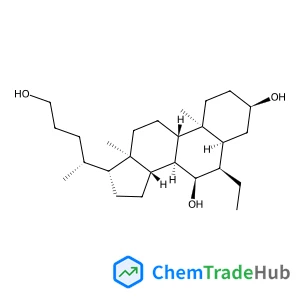
(3alpha,5beta,6alpha,7alpha)-6-Ethylcholane-3,7,24-triol
CAS Number:
1537866-49-1
Molecular Formula:
C26H46O3
Recommended Suppliers






Disclaimer
This page provides academic journal information for reference and research purposes only. We are not affiliated with any journal publishers and do not handle publication submissions. For publication-related inquiries, please contact the respective journal publishers directly.
If you notice any inaccuracies in the information displayed, please contact us at support@chemtradehub.com. We will promptly review and address your concerns.