













Thermostable and nonflammable silica–polyetherimide–polyurethane nanofibrous separators for high power lithium ion batteries
Literature Information
Publication Date
2015-04-13
DOI
10.1039/C5TA00856E
Impact Factor
12.732
Authors
Ke Xiao, Jianyong Yu, Jianmao Yang
View Original
Abstract
Safety remains a practical concern in lithium ion batteries (LIBs), which is closely associated with the internal shorting caused by the poor dimensional thermostability at elevated temperature and the flammability of separators. Here, we report a novel strategy to fabricate thermostable and nonflammable silica–polyetherimide–polyurethane (SiO2–PEI–PU) nanofibrous membranes via an electrospinning process. Benefiting from the high porosity, interpenetrating network structure and synergetic effect of silica nanoparticles, PEI and PU, the as-prepared SiO2–PEI–PU membranes exhibit uniform pore size distribution, high ionic conductivity (6.25 mS cm−1) and good electrochemical stability up to 4.86 V. Notably, the hot oven and combustion tests reveal that the SiO2–PEI–PU membranes possess improved thermostability displaying 2% dimensional change after exposure to 170 °C for 0.5 h and flame retardant properties, which could be beneficial for improving the safety of LIBs. Significantly, the SiO2–PEI–PU membrane based Li/LiFePO4 cell exhibits more excellent cyclability delivering a discharge capacity of 158.91 mA h g−1 at the 90th cycle and better rate capability compared with the cell based on the Celgard membrane. Meanwhile, the SiO2–PEI–PU membrane based Li/LiFePO4 cell also shows more excellent cell performance even at an elevated temperature of 60 °C. The results clearly demonstrate that the SiO2–PEI–PU membranes are promising separator candidates, which will also pave the way for further application of nanofibrous membranes in high power LIBs.
Related Literature
External electric field induced hydrogen storage/release on calcium-decorated single-layer and bilayer silicene
Er Hong Song, Sung Ho Yoo, Jae Joon Kim, Shiau Wu Lai, Qing Jiang, Sung Oh Cho
2014-09-30
Paper
DOI: 10.1039/C4CP02638A
Femtosecond spectroscopy reveals huge differences in the photoisomerisation dynamics between azobenzenes linked to polymers and azobenzenes in solution
Julia Bahrenburg, Falk Renth, Friedrich Temps, Felix Plamper, Walter Richtering
2014-04-25
Paper
DOI: 10.1039/C4CP01196A
Physicochemical properties of pentaglyme–sodium bis(trifluoromethanesulfonyl)amide solvate ionic liquid
Shoshi Terada, Toshihiko Mandai, Risa Nozawa, Kazuki Yoshida, Kazuhide Ueno, Seiji Tsuzuki, Masayoshi Watanabe
2014-04-25
Paper
DOI: 10.1039/C4CP00746H
Effect of torsional twist on 2nd order non-linear optical activity of anthracene and pyrene tricyanofuran derivatives
Miquel Planells, Maddalena Pizzotti, Gary S. Nichol, Francesca Tessore, Neil Robertson
2014-09-24
Paper
DOI: 10.1039/C4CP03509G
Direct imaging of layered O3- and P2-NaxFe1/2Mn1/2O2 structures at the atomic scale
Yuesheng Wang, Pin Liu, Lin Gu, Yong-Sheng Hu, Hong Li, George P. Demopoulos, Liquan Chen
2014-08-26
Communication
DOI: 10.1039/C4CP02957G
Electron spin-polarization and spin lattices in the boron- and nitrogen-doped organic framework COF-5
Xiaobiao Liu, Jie Tan, Aizhu Wang, Xiaoming Zhang, Mingwen Zhao
2014-09-10
Paper
DOI: 10.1039/C4CP03478C
The electronic structure of perfluorodecalin studied by soft X-ray spectroscopy and electronic structure calculations
M. Agåker, C. Schwanke, T. Petit, K. M. Lange, J.-E. Rubensson
2014-09-22
Paper
DOI: 10.1039/C4CP03153A
Depletion region effect of highly efficient hole conductor free CH3NH3PbI3 perovskite solar cells
Sigalit Aharon, Shany Gamliel, Bat El Cohen, Lioz Etgar
2014-04-09
Paper
DOI: 10.1039/C4CP00460D
Effects of kinetic and transport phenomena on thermal explosion and oscillatory behaviour in a spherical reactor with mixed convection
Filipa Gonçalves de Azevedo, John F. Griffiths, Silvana S. S. Cardoso
2014-09-19
Paper
DOI: 10.1039/C4CP02990A
You might also like
Compound Q&A
What is the market or research trend for N-(4-Methoxybenzyl)-2-pyridinamine (CAS: 52818-63-0)?
N-(4-Methoxybenzyl)-2-pyridinamine (CAS: 52818-63-0) is increasingly being used ...
52818-63-0N-(4-Methoxybenzyl)-...
Compound Q&A
What precautions should be taken when handling Ethyl 4-(2-chlorophenyl)-1,3-thiazole-2-carboxylate (CAS: 1050507-06-6)?
When handling Ethyl 4-(2-chlorophenyl)-1,3-thiazole-2-carboxylate, appropriate p...
1050507-06-6Ethyl 4-(2-chlorophe...
Compound Q&A
What regulatory guidelines apply to diethyldiselane (CAS: 628-39-7)?
Diethyldiselane (CAS: 628-39-7) is classified under the Globally Harmonized Syst...
628-39-7Diethyldiselane
Compound Q&A
What is the market or research trend for oxocopper (CAS: 12053-18-8)?
The market for oxocopper (CAS: 12053-18-8) is primarily driven by its use in cat...
12053-18-8oxocopper; oxo-(oxoc...
Compound Q&A
What is the market or research trend for 5-{[(2-Methyl-2-propanyl)oxy]carbonyl}-5-azaspiro[2.4]heptane-7-carboxylic acid?
The market for 5-{[(2-Methyl-2-propanyl)oxy]carbonyl}-5-azaspiro[2.4]heptane-7-c...
1268519-54-55-{[(2-Methyl-2-prop...
Compound Q&A
What is 2-(1-Pyrrolidinyl)-4-pyridinamine (CAS: 35981-63-6)?
2-(1-Pyrrolidinyl)-4-pyridinamine is a chemical compound with the CAS number 359...
35981-63-62-(1-Pyrrolidinyl)-4...
Compound Q&A
What are the physical and chemical properties of 2-(3-Pyridinyl)-1-azabicyclo[2.2.2]octane (CAS: 91556-75-1)?
2-(3-Pyridinyl)-1-azabicyclo[2.2.2]octane (CAS: 91556-75-1) is a crystalline sol...
91556-75-12-(3-Pyridinyl)-1-az...
Compound Q&A
How is (S)-Alpha-allyl-proline hydrochloride (CAS: 129704-91-2) typically synthesized?
(S)-Alpha-allyl-proline hydrochloride is usually synthesized via a Wittig reacti...
129704-91-2(S)-Alpha-allyl-prol...
Compound Q&A
What is 3-Methyl-1,2-oxazole-5-carboxylic acid (CAS: 4857-42-5)?
3-Methyl-1,2-oxazole-5-carboxylic acid (CAS: 4857-42-5) is an organic compound w...
4857-42-53-Methyl-1,2-oxazole...
Compound Q&A
How is Lys-SMCC-DM1 (CAS: 1281816-04-3) typically synthesized?
Lys-SMCC-DM1 is synthesized via a multi-step process involving the coupling of S...
1281816-04-3Lys-SMCC-DM1
Source Journal
Journal of Materials Chemistry A

CiteScore:
19.5
Self-citation Rate:
4.7%
Articles per Year:
2211
Journal of Materials Chemistry A, B & C cover high quality studies across all fields of materials chemistry. The journals focus on those theoretical or experimental studies that report new understanding, applications, properties and synthesis of materials. The journals have a strong history of publishing quality reports of interest to interdisciplinary communities and providing an efficient and rigorous service through peer review and publication. The journals are led by an international team of Editors-in-Chief and Associate Editors who are all active researchers in their fields. Journal of Materials Chemistry A, B & C are separated by the intended application of the material studied. Broadly, applications in energy and sustainability are of interest to Journal of Materials Chemistry A, applications in biology and medicine are of interest to Journal of Materials Chemistry B, and applications in optical, magnetic and electronic devices are of interest to Journal of Materials Chemistry C. More than one Journal of Materials Chemistry journal may be suitable for certain fields and researchers are encouraged to submit their paper to the journal that they feel best fits for their particular article. Example topic areas within the scope of Journal of Materials Chemistry A are listed below. This list is neither exhaustive nor exclusive. Artificial photosynthesis Batteries Carbon dioxide conversion Catalysis Fuel cells Gas capture/separation/storage Green/sustainable materials Hydrogen generation Hydrogen storage Photocatalysis Photovoltaics Self-cleaning materials Self-healing materials Sensors Supercapacitors Thermoelectrics Water splitting Water treatment
Recommended Compounds
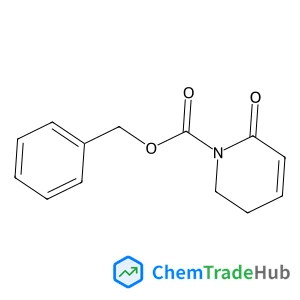
Benzyl 6-oxo-3,6-dihydro-1(2H)-pyridinecarboxylate
CAS Number:
725746-35-0
Molecular Formula:
C13H13NO3


![5'-Fluoro-[2,3'-biindolinylidene]-2',3-dione structure](https://static.chemtradehub.com/structs/251/251903-00-1-9cb1.webp "5'-Fluoro-[2,3'-biindolinylidene]-2',3-dione structure")
Recommended Suppliers





Disclaimer
This page provides academic journal information for reference and research purposes only. We are not affiliated with any journal publishers and do not handle publication submissions. For publication-related inquiries, please contact the respective journal publishers directly.
If you notice any inaccuracies in the information displayed, please contact us at support@chemtradehub.com. We will promptly review and address your concerns.