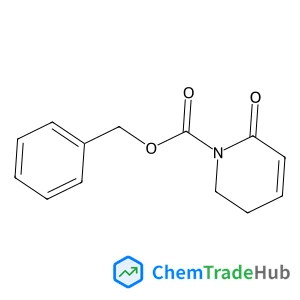
Benzyl 6-oxo-3,6-dihydro-1(2H)-pyridinecarboxylate
CAS Number:
725746-35-0
Molecular Formula:
C13H13NO3
Roli Verma, Banshi D. Gupta
We present a simple and highly selective optical fiber sensor for the detection of tetracycline in foodstuffs by using the combination of surface plasmon resonance (SPR) and a molecular imprinted polymer (MIP) matrix. The sensor is fabricated first by coating a thin film of silver metal over the unclad portion of an optical fiber, and then preparing a molecular imprinting of the target molecules over the metal coated region. The MIP creates several binding sites/nano-cavities which have the complementary shape and functional groups of the target molecules on its surface. The sensor works on the wavelength modulation scheme in which the shift in resonance wavelength is measured with respect to the change in tetracycline concentration. Two kinds of tetracycline, tetracycline hydrochloride (TC) and oxy-tetracycline hydrochloride (OTC) have been selected as the imprinting molecules because these possess similar structures. The presence of tetracycline samples in the vicinity of the sensing region causes the interaction between binding sites and target molecules which results in the change in the dielectric properties of the sensing surface, causing the shift in the SPR spectrum towards the red region. The selectivity of the sensor for dissimilar compounds, and cross-selectivity between TC and OTC, has been tested. The reusability of the sensor has also been checked. The present sensor is suitable for commercialization for the detection of tetracycline in food as it has several advantageous features such as low cost, ease of handling, a miniaturized probe, fast response, high selectivity, reusability and the possibility of online monitoring and remote sensing.
Bernard P. Binks, Amro K. F. Dyab, Paul D. I. Fletcher
DOI: 10.1039/B308998C
Unnikrishnan R. Pillai, Endalkachew Sahle-Demessie
DOI: 10.1039/B313747C
Hayley J. Whitfield, Roger J. Griffin, Ian R. Hardcastle, Andrew Henderson, Jerome Meneyrol, Veronique Mesguiche, Kerry L. Sayle, Bernard T. Golding
DOI: 10.1039/B308948G
Jianzhong Lu, Choiwan Lau, Masaaki Kai
DOI: 10.1039/B306895A
Takahiro Kawai, Masashi Ikegami, Tatsuo Arai
DOI: 10.1039/B316315F
K. Krishnamoorthy, Rajesh S. Gokhale, Aliasgar Q. Contractor, Anil Kumar
DOI: 10.1039/B316794A
DOI: 10.1039/B306771H
Janice Aldrich-Wright, Craig Brodie, Edith C. Glazer, Nathan W. Luedtke, Lev Elson-Schwab, Yitzhak Tor
DOI: 10.1039/B316917K
Jules C. A. A. Roelofs, Peter H. Berben
DOI: 10.1039/B400737A
Thorfinnur Gunnlaugsson, Joseph P. Leonard, Katell Sénéchal, Andrew J. Harte
DOI: 10.1039/B316176E
N-(4-Methoxybenzyl)-2-pyridinamine (CAS: 52818-63-0) is increasingly being used ...
When handling Ethyl 4-(2-chlorophenyl)-1,3-thiazole-2-carboxylate, appropriate p...
Diethyldiselane (CAS: 628-39-7) is classified under the Globally Harmonized Syst...
The market for oxocopper (CAS: 12053-18-8) is primarily driven by its use in cat...
The market for 5-{[(2-Methyl-2-propanyl)oxy]carbonyl}-5-azaspiro[2.4]heptane-7-c...
2-(1-Pyrrolidinyl)-4-pyridinamine is a chemical compound with the CAS number 359...
2-(3-Pyridinyl)-1-azabicyclo[2.2.2]octane (CAS: 91556-75-1) is a crystalline sol...
(S)-Alpha-allyl-proline hydrochloride is usually synthesized via a Wittig reacti...
3-Methyl-1,2-oxazole-5-carboxylic acid (CAS: 4857-42-5) is an organic compound w...
Lys-SMCC-DM1 is synthesized via a multi-step process involving the coupling of S...

Analyst publishes analytical and bioanalytical research that reports premier fundamental discoveries and inventions, and the applications of those discoveries, unconfined by traditional discipline barriers.
![1-oxaspiro[4.4]nonan-6-one structure](https://static.chemtradehub.com/structs/134/134179-01-4-e051.webp "1-oxaspiro[4.4]nonan-6-one structure")