












How to interpret current–voltage relationships of blocking grain boundaries in oxygen ionic conductors
Literature Information
Publication Date
2013-04-18
DOI
10.1039/C3CP00145H
Impact Factor
3.676
Authors
Seong K. Kim, Sergey Khodorov, Chien-Ting Chen, Sangtae Kim, Igor Lubomirsky
View Original
Abstract
A new model based on a linear diffusion equation is proposed to explain the current–voltage characteristics of blocking grain boundaries in Y-doped CeO2 in particular. One can also expect that the model can be applicable to the ionic conductors with blocking grain boundaries, in general. The model considers an infinitely long chain of identical grains separated by grain boundaries, which are treated as regions in which depletion layers of mobile ions are formed due to trapping of immobile charges that do not depend on the applied voltage as well as temperature. The model assumes that (1) the grain boundaries do not represent physical blocking layers, which implies that if there is a second phase at the grain boundaries, then it is too thin to impede ion diffusion and (2) the ions follow Boltzmann distribution throughout the materials. Despite its simplicity, the model successfully reproduces the “power law”: current proportional to voltage power n and illustrated with the experimental example of Y-doped ceria. The model also correctly predicts that the product nT, where T is the temperature in K, is constant and is proportional to the grain boundary potential as long as the charge at the grain boundaries remains trapped. The latter allows its direct determination from the current–voltage characteristics and promises considerable simplification in the analysis of the electrical characteristics of the grain boundaries with respect to the models currently in use.
Related Literature
Retraction: A battle between spherical and cube-shaped Ag/AgCl nanoparticle modified imprinted polymer to achieve femtogram detection of alpha-feto protein
2018-12-03
Retraction
DOI: 10.1039/C8TB90176G
A colorimetric aptasensor for the simple and rapid detection of human papillomavirus type 16 L1 proteins
Li Zhu, Yu Zhao, Shangchen Yao, Mingzhe Xu, Lihui Yin, Xihai Zhai, Xu Teng
2021-02-24
Paper
DOI: 10.1039/D1AN00251A
Self-assembled nanomaterials for biosensing and therapeutics: recent advances and challenges
Shan Huang, Yuexin Song, Zhimei He, Jian-Rong Zhang, Jun-Jie Zhu
2021-03-10
Minireview
DOI: 10.1039/D1AN00077B
In situ characterisation of phytohormones from wounded Arabidopsis leaves using desorption electrospray ionisation mass spectrometry imaging
Asta Žukauskaitė, Ivan Petřík, Aleš Pěnčík, Martin Hönig, Jiří Grúz, Jitka Široká, Ondřej Novák
2021-02-25
Paper
DOI: 10.1039/D0AN02118K
Signal enhancement and low oxidation potentials for miniaturized ECL biosensors via N-butyldiethanolamine
Stefanie Kirschbaum-Harriman, Michael Mayer, Axel Duerkop, Thomas Hirsch
2017-05-15
Paper
DOI: 10.1039/C7AN00261K
A universal in situ strategy for charging supercapacitors
Zhiling Luo, Changhong Liu, Shoushan Fan, Enchong Liu
2019-05-24
Paper
DOI: 10.1039/C9TA04105B
Determination of total ionic alkyllead in water by electrothermal atomisation atomic absorption spectrometry
Paper
DOI: 10.1039/JA9860100293
Overcoming drug resistance with functional mesoporous titanium dioxide nanoparticles combining targeting, drug delivery and photodynamic therapy
Zhaoming Guo, Kun Zheng, Zhenquan Tan, Ye Liu, Ziyin Zhao, Guang Zhu, Kun Ma, Changhao Cui, Li Wang, Tianyu Kang
2018-10-17
Paper
DOI: 10.1039/C8TB01810C
Circumventing paclitaxel resistance in breast cancer cells using a nanoemulsion system and determining its efficacy via an impedance biosensor
Farnoosh Attari, Habibullah Hazim, Ashkan Zandi, Zeinab Mazarei, Hasan Rafati
2021-04-08
Paper
DOI: 10.1039/D0AN02013C
You might also like
Compound Q&A
What is the market or research trend for N-(4-Methoxybenzyl)-2-pyridinamine (CAS: 52818-63-0)?
N-(4-Methoxybenzyl)-2-pyridinamine (CAS: 52818-63-0) is increasingly being used ...
52818-63-0N-(4-Methoxybenzyl)-...
Compound Q&A
What precautions should be taken when handling Ethyl 4-(2-chlorophenyl)-1,3-thiazole-2-carboxylate (CAS: 1050507-06-6)?
When handling Ethyl 4-(2-chlorophenyl)-1,3-thiazole-2-carboxylate, appropriate p...
1050507-06-6Ethyl 4-(2-chlorophe...
Compound Q&A
What regulatory guidelines apply to diethyldiselane (CAS: 628-39-7)?
Diethyldiselane (CAS: 628-39-7) is classified under the Globally Harmonized Syst...
628-39-7Diethyldiselane
Compound Q&A
What is the market or research trend for oxocopper (CAS: 12053-18-8)?
The market for oxocopper (CAS: 12053-18-8) is primarily driven by its use in cat...
12053-18-8oxocopper; oxo-(oxoc...
Compound Q&A
What is the market or research trend for 5-{[(2-Methyl-2-propanyl)oxy]carbonyl}-5-azaspiro[2.4]heptane-7-carboxylic acid?
The market for 5-{[(2-Methyl-2-propanyl)oxy]carbonyl}-5-azaspiro[2.4]heptane-7-c...
1268519-54-55-{[(2-Methyl-2-prop...
Compound Q&A
What is 2-(1-Pyrrolidinyl)-4-pyridinamine (CAS: 35981-63-6)?
2-(1-Pyrrolidinyl)-4-pyridinamine is a chemical compound with the CAS number 359...
35981-63-62-(1-Pyrrolidinyl)-4...
Compound Q&A
What are the physical and chemical properties of 2-(3-Pyridinyl)-1-azabicyclo[2.2.2]octane (CAS: 91556-75-1)?
2-(3-Pyridinyl)-1-azabicyclo[2.2.2]octane (CAS: 91556-75-1) is a crystalline sol...
91556-75-12-(3-Pyridinyl)-1-az...
Compound Q&A
How is (S)-Alpha-allyl-proline hydrochloride (CAS: 129704-91-2) typically synthesized?
(S)-Alpha-allyl-proline hydrochloride is usually synthesized via a Wittig reacti...
129704-91-2(S)-Alpha-allyl-prol...
Compound Q&A
What is 3-Methyl-1,2-oxazole-5-carboxylic acid (CAS: 4857-42-5)?
3-Methyl-1,2-oxazole-5-carboxylic acid (CAS: 4857-42-5) is an organic compound w...
4857-42-53-Methyl-1,2-oxazole...
Compound Q&A
How is Lys-SMCC-DM1 (CAS: 1281816-04-3) typically synthesized?
Lys-SMCC-DM1 is synthesized via a multi-step process involving the coupling of S...
1281816-04-3Lys-SMCC-DM1
Source Journal
Physical Chemistry Chemical Physics

CiteScore:
5.5
Self-citation Rate:
10.3%
Articles per Year:
3036
Physical Chemistry Chemical Physics (PCCP) is an international journal co-owned by 19 physical chemistry and physics societies from around the world. This journal publishes original, cutting-edge research in physical chemistry, chemical physics and biophysical chemistry. To be suitable for publication in PCCP, articles must include significant innovation and/or insight into physical chemistry; this is the most important criterion that reviewers and Editors will judge against when evaluating submissions. The journal has a broad scope and welcomes contributions spanning experiment, theory, computation and data science. Topical coverage includes spectroscopy, dynamics, kinetics, statistical mechanics, thermodynamics, electrochemistry, catalysis, surface science, quantum mechanics, quantum computing and machine learning. Interdisciplinary research areas such as polymers and soft matter, materials, nanoscience, energy, surfaces/interfaces, and biophysical chemistry are welcomed if they demonstrate significant innovation and/or insight into physical chemistry. Joined experimental/theoretical studies are particularly appreciated when complementary and based on up-to-date approaches.
Recommended Compounds
![1,10-bis(3,5-dimethylphenyl)-12-hydroxy-4,5,6,7-tetrahydroiindeno[7,1-de:1',7'-fg][1,3,2]dioxaphosphocine 12-oxide structure](https://static.chemtradehub.com/structs/141/1412439-82-7-b9a9.webp "1,10-bis(3,5-dimethylphenyl)-12-hydroxy-4,5,6,7-tetrahydroiindeno[7,1-de:1',7'-fg][1,3,2]dioxaphosphocine 12-oxide structure")
1,10-bis(3,5-dimethylphenyl)-12-hydroxy-4,5,6,7-tetrahydroiindeno[7,1-de:1',7'-fg][1,3,2]dioxaphosphocine 12-oxide
CAS Number:
1412439-82-7
Molecular Formula:
C33H31O4P
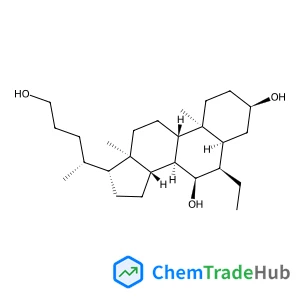
(3alpha,5beta,6alpha,7alpha)-6-Ethylcholane-3,7,24-triol
CAS Number:
1537866-49-1
Molecular Formula:
C26H46O3

1-Isobutyl-7-methoxy-2,3,4,9-tetrahydro-1H-beta-carboline
CAS Number:
175975-76-5
Molecular Formula:
C16H22N2O
Recommended Suppliers






Disclaimer
This page provides academic journal information for reference and research purposes only. We are not affiliated with any journal publishers and do not handle publication submissions. For publication-related inquiries, please contact the respective journal publishers directly.
If you notice any inaccuracies in the information displayed, please contact us at support@chemtradehub.com. We will promptly review and address your concerns.