


A colorimetric aptasensor for the simple and rapid detection of human papillomavirus type 16 L1 proteins
Literature Information
Publication Date
2021-02-24
DOI
10.1039/D1AN00251A
Impact Factor
4.616
Authors
Li Zhu, Yu Zhao, Shangchen Yao, Mingzhe Xu, Lihui Yin, Xihai Zhai, Xu Teng
View Original
Abstract
In this study, a novel colorimetric aptasensor was developed for the rapid detection and visual screening of HPV16 L1 proteins using gold nanoparticles (AuNPs) and an RNA aptamer against HPV16 L1 protein (APTHPV16 L1). The AuNP-APTHPV16 L1 conjugates could be aggregated by the addition of a salt in the presence of HPV16 L1 proteins at the ppb level. At the same time, the surface plasma resonance absorption peaks of AuNPs shifted to a short wavelength, and an observable change in color from red to blue occurred. The relative absorbance (Ablank − Asample/Ablank) at 520 nm exhibited a stable response to HPV16 L1 proteins over a concentration range from 9.6 to 201.6 ng mL−1. The visual detection limit of HPV16 L1 proteins was found to be 9.6 ng mL−1. Finally, the proposed colorimetric aptasensor was successfully applied for the rapid and effective detection of HPV16 L1 proteins in clinical samples and vaccine samples. The validity and reliability of the proposed colorimetric aptasensor were verified by the enzyme-linked immunosorbent assay method. The proposed colorimetric aptasensor provided a promising indicator for screening and quantitative detection of HPV16 L1 proteins in clinical samples.
Recommended Journals

Journal of Catalysis

Russian Chemical Reviews

Fibre Chemistry

Journal of Organometallic Chemistry

Proceedings of the National Academy of Sciences of the United States of America

European Journal of Wood and Wood Products

Nature

Pure and Applied Chemistry

Journal of Physics and Chemistry of Solids

Helvetica Chimica Acta
Related Literature
Vapour diffusion hydrolysis of a self-assembled silylated organogel, the OG–HG transcription process: a new way to cast and handle fluorescent silsesquioxane
Olivier J. Dautel, Jean-Pierre Lère-Porte, Joël J. E. Moreau, Michel Wong Chi Man
2003-09-24
Communication
DOI: 10.1039/B308703D
Regioselective uncatalysed hydrophosphination of alkenes: a facile route to P-alkylated phosphine derivatives
Olivier Delacroix, Annie-Claude Gaumont
2003-10-29
Communication
DOI: 10.1039/B311892D
Rapid synthesis of oligosaccharides using an anomeric fluorous silyl protecting group
Leonardo Manzoni
2003-10-29
Communication
DOI: 10.1039/B311448A
Molecular recognition. Self-assembly of molecular trigonal prisms and their host–guest adducts
James D. Crowley, Andrew J. Goshe, Brice Bosnich
2003-10-17
Communication
DOI: 10.1039/B307385H
Synthetic studies on ecteinascidin 743: rapid access to the fully functionalized tetrahydroisoquinoline with a bridged 10-membered sulfur containing macrocycle
Michaël De Paolis, Angèle Chiaroni, Jieping Zhu
2003-10-20
Communication
DOI: 10.1039/B309824A
A rationally designed novel receptor for probing cooperative interaction between metal ions and bivalent tryptophan side chain in solution
Yitong Li, Chi Ming Yang
2003-10-22
Communication
DOI: 10.1039/B310543A
Porphyrin ring contraction: a one-pot reaction leading to divalent corroles
Christophe Jeandon, Romain Ruppert, Henry J. Callot
2004-04-02
Communication
DOI: 10.1039/B400812J
Noncovalent attachment of oxidenanoparticles onto carbon nanotubes using water-in-oil microemulsions
Jing Sun, Lian Gao, Mikio Iwasa
2004-02-27
Communication
DOI: 10.1039/B400817K
Symmetrical dinuclear complexes with high DNA affinity based on [Ru(dpq)2(phen)]2+
Janice Aldrich-Wright, Craig Brodie, Edith C. Glazer, Nathan W. Luedtke, Lev Elson-Schwab, Yitzhak Tor
2004-03-23
Communication
DOI: 10.1039/B316917K
Applying reversible chemistry of CO2 to supramolecular polymers
Heng Xu, Erin M. Hampe, Dmitry M. Rudkevich
2003-10-14
Communication
DOI: 10.1039/B309580K
You might also like
Compound Q&A
What is the market or research trend for N-(4-Methoxybenzyl)-2-pyridinamine (CAS: 52818-63-0)?
N-(4-Methoxybenzyl)-2-pyridinamine (CAS: 52818-63-0) is increasingly being used ...
52818-63-0N-(4-Methoxybenzyl)-...
Compound Q&A
What precautions should be taken when handling Ethyl 4-(2-chlorophenyl)-1,3-thiazole-2-carboxylate (CAS: 1050507-06-6)?
When handling Ethyl 4-(2-chlorophenyl)-1,3-thiazole-2-carboxylate, appropriate p...
1050507-06-6Ethyl 4-(2-chlorophe...
Compound Q&A
What regulatory guidelines apply to diethyldiselane (CAS: 628-39-7)?
Diethyldiselane (CAS: 628-39-7) is classified under the Globally Harmonized Syst...
628-39-7Diethyldiselane
Compound Q&A
What is the market or research trend for oxocopper (CAS: 12053-18-8)?
The market for oxocopper (CAS: 12053-18-8) is primarily driven by its use in cat...
12053-18-8oxocopper; oxo-(oxoc...
Compound Q&A
What is the market or research trend for 5-{[(2-Methyl-2-propanyl)oxy]carbonyl}-5-azaspiro[2.4]heptane-7-carboxylic acid?
The market for 5-{[(2-Methyl-2-propanyl)oxy]carbonyl}-5-azaspiro[2.4]heptane-7-c...
1268519-54-55-{[(2-Methyl-2-prop...
Compound Q&A
What is 2-(1-Pyrrolidinyl)-4-pyridinamine (CAS: 35981-63-6)?
2-(1-Pyrrolidinyl)-4-pyridinamine is a chemical compound with the CAS number 359...
35981-63-62-(1-Pyrrolidinyl)-4...
Compound Q&A
What are the physical and chemical properties of 2-(3-Pyridinyl)-1-azabicyclo[2.2.2]octane (CAS: 91556-75-1)?
2-(3-Pyridinyl)-1-azabicyclo[2.2.2]octane (CAS: 91556-75-1) is a crystalline sol...
91556-75-12-(3-Pyridinyl)-1-az...
Compound Q&A
How is (S)-Alpha-allyl-proline hydrochloride (CAS: 129704-91-2) typically synthesized?
(S)-Alpha-allyl-proline hydrochloride is usually synthesized via a Wittig reacti...
129704-91-2(S)-Alpha-allyl-prol...
Compound Q&A
What is 3-Methyl-1,2-oxazole-5-carboxylic acid (CAS: 4857-42-5)?
3-Methyl-1,2-oxazole-5-carboxylic acid (CAS: 4857-42-5) is an organic compound w...
4857-42-53-Methyl-1,2-oxazole...
Compound Q&A
How is Lys-SMCC-DM1 (CAS: 1281816-04-3) typically synthesized?
Lys-SMCC-DM1 is synthesized via a multi-step process involving the coupling of S...
1281816-04-3Lys-SMCC-DM1
Source Journal
Analyst

CiteScore:
7.8
Self-citation Rate:
5.6%
Articles per Year:
653
Analyst publishes analytical and bioanalytical research that reports premier fundamental discoveries and inventions, and the applications of those discoveries, unconfined by traditional discipline barriers.
Recommended Compounds
![1-(1-Benzyl-1,2,3,6-tetrahydropyridin-4-yl)-1H-benzo[d]imidazol-2(3H)-one structure](https://static.chemtradehub.com/structs/603/60373-71-9-7dfb.webp "1-(1-Benzyl-1,2,3,6-tetrahydropyridin-4-yl)-1H-benzo[d]imidazol-2(3H)-one structure")
1-(1-Benzyl-1,2,3,6-tetrahydropyridin-4-yl)-1H-benzo[d]imidazol-2(3H)-one
CAS Number:
60373-71-9
Molecular Formula:
C19H19N3O
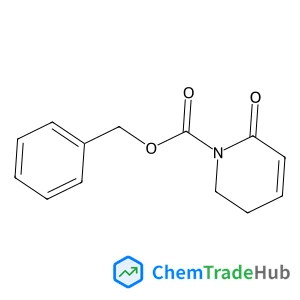
Benzyl 6-oxo-3,6-dihydro-1(2H)-pyridinecarboxylate
CAS Number:
725746-35-0
Molecular Formula:
C13H13NO3
![1-{3-[4-Amino-3-(4-phenoxyphenyl)-1H-pyrazolo[3,4-d]pyrimidin-1-yl]-1-piperidinyl}-2,3-dihydroxy-1-propanone structure](https://static.chemtradehub.com/structs/122/1226872-27-0-e037.webp "1-{3-[4-Amino-3-(4-phenoxyphenyl)-1H-pyrazolo[3,4-d]pyrimidin-1-yl]-1-piperidinyl}-2,3-dihydroxy-1-propanone structure")
1-{3-[4-Amino-3-(4-phenoxyphenyl)-1H-pyrazolo[3,4-d]pyrimidin-1-yl]-1-piperidinyl}-2,3-dihydroxy-1-propanone
CAS Number:
1226872-27-0
Molecular Formula:
C25H26N6O4
Recommended Suppliers




Disclaimer
This page provides academic journal information for reference and research purposes only. We are not affiliated with any journal publishers and do not handle publication submissions. For publication-related inquiries, please contact the respective journal publishers directly.
If you notice any inaccuracies in the information displayed, please contact us at support@chemtradehub.com. We will promptly review and address your concerns.