












Small-angle water reorientations in KOH doped hexagonal ice and clathrate hydrates
Literature Information
Publication Date
2013-02-25
DOI
10.1039/C3CP00139C
Impact Factor
3.676
Authors
B. Geil
View Original
Abstract
Using deuteron nuclear magnetic resonance and dielectric spectroscopy KOH doped tetrahydrofuran clathrate hydrates and KOH doped hexagonal ice are studied at temperatures above 60 and 72 K, respectively. Below these temperatures proton order is established on the lattice formed by the water molecules. In the clathrate hydrate a new type of small-angle motion is discovered using deuteron spin–spin relaxation, line-shape analysis, and stimulated-echo experiments. Based on the latter results a model is developed for the local proton motion that could successfully be tested using random-walk simulations. It is argued that the newly identified small-angle motion, obviously absent in undoped samples, is an important feature of the mechanism which accompanies the establishment of proton order not only in doped clathrate hydrates but also in doped hexagonal ice. Specific motions of OH− defects are demonstrated to explain the experimentally observed behavior. The relative importance of localized versus delocalized OH− defect motions is discussed.
Related Literature
Efficient all polymer active layers with long-range ordered 1D p–n nanoheterojunctions confirmed by TEM tomography
Seon-Mi Jin, Jun Ho Hwang, Jaehyeong Park, Du Hyeon Ryu, BongSoo Kim, Chang Eun Song, Eunji Lee
2023-10-25
Paper
DOI: 10.1039/D3PY00718A
A self-optimised approach to synthesising DEHiBA for advanced nuclear reprocessing, exploiting the power of machine-learning
Thomas Shaw, Adam D. Clayton, Ricardo Labes, Thomas M. Dixon, Sarah Boyall, Oliver J. Kershaw, Richard A. Bourne, Bruce C. Hanson
2023-11-03
Paper
DOI: 10.1039/D3RE00357D
Facile synthesis of N-phenoxycarbonyl amino acids by a two-phase reaction for direct polymerization
2023-12-06
Paper
DOI: 10.1039/D3PY01031G
Green synthesis of the copper and iron phthalocyanine-based metal–organic framework as an efficient catalyst for methylene blue dye degradation and oxidation of cyclohexane
Rupali S. Bhise, Yogesh A. Patil, Ganapati S. Shankarling
2023-08-22
Paper
DOI: 10.1039/D3RE00343D
Efficient metal-free crosslinking of common propellant binders using nitrile oxide–alkene click ligation
Jinkang Dou, Lijie Cheng, Bojun Tan, Binghui Duan, Minghui Xu, Bozhou Wang, Ning Liu
2023-11-02
Paper
DOI: 10.1039/D3PY01081C
Synthesis and characterization of bio-based transesterification catalysts for green 3D-printable dynamic photopolymers
Bernhard Sölle, Usman Shaukat, Elisabeth Rossegger, Sandra Schlögl
2023-10-19
Paper
DOI: 10.1039/D3PY00989K
Binary mixture of subcritical water and acetone: a hybrid solvent system towards the production of lignin nanoparticles
2024-01-03
Paper
DOI: 10.1039/D3RE00424D
Lipoic acid-based vitrimer-like elastomer
Xiaohong Lan, Laura Boetje, Théophile Pelras, Chongnan Ye, Fitrilia Silvianti, Katja Loos
2023-10-20
Paper
DOI: 10.1039/D3PY00883E
You might also like
Compound Q&A
What is the market or research trend for N-(4-Methoxybenzyl)-2-pyridinamine (CAS: 52818-63-0)?
N-(4-Methoxybenzyl)-2-pyridinamine (CAS: 52818-63-0) is increasingly being used ...
52818-63-0N-(4-Methoxybenzyl)-...
Compound Q&A
What precautions should be taken when handling Ethyl 4-(2-chlorophenyl)-1,3-thiazole-2-carboxylate (CAS: 1050507-06-6)?
When handling Ethyl 4-(2-chlorophenyl)-1,3-thiazole-2-carboxylate, appropriate p...
1050507-06-6Ethyl 4-(2-chlorophe...
Compound Q&A
What regulatory guidelines apply to diethyldiselane (CAS: 628-39-7)?
Diethyldiselane (CAS: 628-39-7) is classified under the Globally Harmonized Syst...
628-39-7Diethyldiselane
Compound Q&A
What is the market or research trend for oxocopper (CAS: 12053-18-8)?
The market for oxocopper (CAS: 12053-18-8) is primarily driven by its use in cat...
12053-18-8oxocopper; oxo-(oxoc...
Compound Q&A
What is the market or research trend for 5-{[(2-Methyl-2-propanyl)oxy]carbonyl}-5-azaspiro[2.4]heptane-7-carboxylic acid?
The market for 5-{[(2-Methyl-2-propanyl)oxy]carbonyl}-5-azaspiro[2.4]heptane-7-c...
1268519-54-55-{[(2-Methyl-2-prop...
Compound Q&A
What is 2-(1-Pyrrolidinyl)-4-pyridinamine (CAS: 35981-63-6)?
2-(1-Pyrrolidinyl)-4-pyridinamine is a chemical compound with the CAS number 359...
35981-63-62-(1-Pyrrolidinyl)-4...
Compound Q&A
What are the physical and chemical properties of 2-(3-Pyridinyl)-1-azabicyclo[2.2.2]octane (CAS: 91556-75-1)?
2-(3-Pyridinyl)-1-azabicyclo[2.2.2]octane (CAS: 91556-75-1) is a crystalline sol...
91556-75-12-(3-Pyridinyl)-1-az...
Compound Q&A
How is (S)-Alpha-allyl-proline hydrochloride (CAS: 129704-91-2) typically synthesized?
(S)-Alpha-allyl-proline hydrochloride is usually synthesized via a Wittig reacti...
129704-91-2(S)-Alpha-allyl-prol...
Compound Q&A
What is 3-Methyl-1,2-oxazole-5-carboxylic acid (CAS: 4857-42-5)?
3-Methyl-1,2-oxazole-5-carboxylic acid (CAS: 4857-42-5) is an organic compound w...
4857-42-53-Methyl-1,2-oxazole...
Compound Q&A
How is Lys-SMCC-DM1 (CAS: 1281816-04-3) typically synthesized?
Lys-SMCC-DM1 is synthesized via a multi-step process involving the coupling of S...
1281816-04-3Lys-SMCC-DM1
Source Journal
Physical Chemistry Chemical Physics

CiteScore:
5.5
Self-citation Rate:
10.3%
Articles per Year:
3036
Physical Chemistry Chemical Physics (PCCP) is an international journal co-owned by 19 physical chemistry and physics societies from around the world. This journal publishes original, cutting-edge research in physical chemistry, chemical physics and biophysical chemistry. To be suitable for publication in PCCP, articles must include significant innovation and/or insight into physical chemistry; this is the most important criterion that reviewers and Editors will judge against when evaluating submissions. The journal has a broad scope and welcomes contributions spanning experiment, theory, computation and data science. Topical coverage includes spectroscopy, dynamics, kinetics, statistical mechanics, thermodynamics, electrochemistry, catalysis, surface science, quantum mechanics, quantum computing and machine learning. Interdisciplinary research areas such as polymers and soft matter, materials, nanoscience, energy, surfaces/interfaces, and biophysical chemistry are welcomed if they demonstrate significant innovation and/or insight into physical chemistry. Joined experimental/theoretical studies are particularly appreciated when complementary and based on up-to-date approaches.
Recommended Compounds
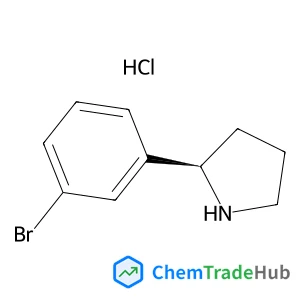
(2R)-2-(3-Bromophenyl)pyrrolidine hydrochloride (1:1)
CAS Number:
1391550-13-2
Molecular Formula:
C10H13BrClN
![N-{15-[(2,5-Dioxo-1-pyrrolidinyl)oxy]-15-oxo-3,6,9,12-tetraoxapentadec-1-yl}-2-(2-propyn-1-yloxy)acetamide structure](https://static.chemtradehub.com/structs/210/2101206-92-0-2eb5.webp "N-{15-[(2,5-Dioxo-1-pyrrolidinyl)oxy]-15-oxo-3,6,9,12-tetraoxapentadec-1-yl}-2-(2-propyn-1-yloxy)acetamide structure")
N-{15-[(2,5-Dioxo-1-pyrrolidinyl)oxy]-15-oxo-3,6,9,12-tetraoxapentadec-1-yl}-2-(2-propyn-1-yloxy)acetamide
CAS Number:
2101206-92-0
Molecular Formula:
C20H30N2O10
![1-oxaspiro[4.4]nonan-6-one structure](https://static.chemtradehub.com/structs/134/134179-01-4-e051.webp "1-oxaspiro[4.4]nonan-6-one structure")
Recommended Suppliers





Disclaimer
This page provides academic journal information for reference and research purposes only. We are not affiliated with any journal publishers and do not handle publication submissions. For publication-related inquiries, please contact the respective journal publishers directly.
If you notice any inaccuracies in the information displayed, please contact us at support@chemtradehub.com. We will promptly review and address your concerns.