(3alpha,5beta,6alpha,7alpha)-6-Ethylcholane-3,7,24-triol
CAS Number:
1537866-49-1
Molecular Formula:
C26H46O3
Jinkang Dou, Lijie Cheng, Bojun Tan, Binghui Duan, Minghui Xu, Bozhou Wang, Ning Liu
The use of isocyanate-free reactions for crosslinking binders is highly desired in solid propellants. The nitrile oxide–alkene click cycloaddition reaction is a promising isocyanate-free reaction due to its metal-free and byproduct-free ligation. In general, ditopic nitrile oxides are synthesized and used as crosslinkers of unsaturated bond-containing polymers, but they are unsuitable for crosslinking common binders containing two reactive end groups due to undesirable chain-extension. Herein, a tritopic nitrile oxide with high stability and high reactivity was synthesized via three simple steps. Thereafter, several matching alkenyl-terminated poly(ethylene oxide-co-tetrahydrofuran) binders were prepared, and the corresponding crosslinking with nitrile oxide was successfully achieved at room temperature based on an efficient nitrile oxide–alkene cycloaddition reaction. All resulting elastomers presented excellent mechanical properties, particularly an obviously improved elongation at break. It is worth mentioning that such metal-free crosslinking can also be well used for the energetic binder poly(3-nitratomethyl-3-methyloxetane) matrix, revealing a versatile method. This work offers a powerful and general isocyanate-free curing strategy, promoting the application of the nitrile oxide–alkene click ligation technique in green crosslinking of propellant binders.

Journal of Catalysis

Proceedings of the National Academy of Sciences of the United States of America

Journal of Medicinal Chemistry

Organic Preparations and Procedures International

Planta Medica

Israel Journal of Chemistry

Kinetics and Catalysis

Molecular Pharmacology

Science

Journal of Organometallic Chemistry
Farnoosh Attari, Habibullah Hazim, Ashkan Zandi, Zeinab Mazarei, Hasan Rafati
DOI: 10.1039/D0AN02013C
Zhaoming Guo, Kun Zheng, Zhenquan Tan, Ye Liu, Ziyin Zhao, Guang Zhu, Kun Ma, Changhao Cui, Li Wang, Tianyu Kang
DOI: 10.1039/C8TB01810C
Mengru Li, Ran Li, Bo Han, Haojie Ma, Xueyan Hou, Yulong Kang, Yuqi Zhang, Ji-Jiang Wang
DOI: 10.1039/D1AN02139G
DOI: 10.1039/C8TB90176G
DOI: 10.1039/JA9860100287
Ming-Lee Chu, Jung-Lee Lin
DOI: 10.1039/D0AN02478C
Yue-Ming Yu, Yuan-Yuan Niu, Ling-Yang Wang, Zhi-Yong Wu, Cui-Wei Yan
DOI: 10.1039/D1AN00171J
Andrew J. Wilson, Katherine A. Willets
DOI: 10.1039/C6AN01266C
Qing-Yun Zhou, Rong-Na Ma, Chao-Long Hu, Fei Sun, Li-Ping Jia, Wei Zhang, Lei Shang, Qing-Wang Xue, Wen-Li Jia, Huai-Sheng Wang
DOI: 10.1039/D1AN00204J
Manuel Otter, Gabriel Partl, Michael Noisternig, Rania Bakry
DOI: 10.1039/D1AN02005F
N-(4-Methoxybenzyl)-2-pyridinamine (CAS: 52818-63-0) is increasingly being used ...
When handling Ethyl 4-(2-chlorophenyl)-1,3-thiazole-2-carboxylate, appropriate p...
Diethyldiselane (CAS: 628-39-7) is classified under the Globally Harmonized Syst...
The market for oxocopper (CAS: 12053-18-8) is primarily driven by its use in cat...
The market for 5-{[(2-Methyl-2-propanyl)oxy]carbonyl}-5-azaspiro[2.4]heptane-7-c...
2-(1-Pyrrolidinyl)-4-pyridinamine is a chemical compound with the CAS number 359...
2-(3-Pyridinyl)-1-azabicyclo[2.2.2]octane (CAS: 91556-75-1) is a crystalline sol...
(S)-Alpha-allyl-proline hydrochloride is usually synthesized via a Wittig reacti...
3-Methyl-1,2-oxazole-5-carboxylic acid (CAS: 4857-42-5) is an organic compound w...
Lys-SMCC-DM1 is synthesized via a multi-step process involving the coupling of S...

Polymer Chemistry welcomes submissions in all areas of polymer science that have a strong focus on macromolecular chemistry. Manuscripts may cover a broad range of fields, yet no direct application focus is required.
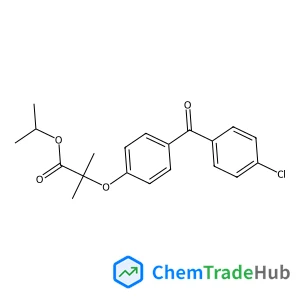
![1-[6-(1H-Imidazol-1-yl)-3-pyridinyl]methanamine structure](https://static.chemtradehub.com/structs/914/914637-08-4-8825.webp "1-[6-(1H-Imidazol-1-yl)-3-pyridinyl]methanamine structure")