












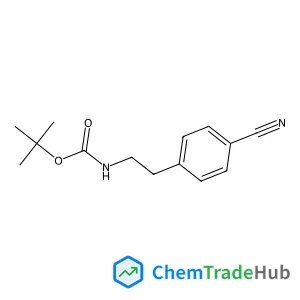
Lipoic acid-based vitrimer-like elastomer
Literature Information
Publication Date
2023-10-20
DOI
10.1039/D3PY00883E
Impact Factor
5.582
Authors
Xiaohong Lan, Laura Boetje, Théophile Pelras, Chongnan Ye, Fitrilia Silvianti, Katja Loos
View Original
Abstract
Dynamic covalent networks (DCNs) are materials that feature reversible bond formation and breaking, allowing for self-healing and recyclability. To speed up the bond exchange, significant amounts of catalyst are used, which creates safety concerns. To tackle this issue, we report the synthesis of a lipoic acid-based vitrimer-like elastomer (LAVE) by combining (i) ring-opening polymerization (ROP) of lactones, (ii) lipoic acid modification of polylactones, and (iii) UV crosslinking. The melting temperature (Tm) of LAVE is below room temperature, which ensures the elastic properties of LAVE at service temperature. By carefully altering the network, it is possible to tune the Tm, as well as the mechanical strength and stretchability of the material. An increase in polylactone chain length in LAVE was found to increase strain at break from 25% to 180% and stress at break from 0.34 to 1.41 MPa. The material showed excellent network stability under cyclic strain loading, with no apparent hysteresis. The introduction of disulfide bonds allows the material to self-heal under UV exposure, extending its shelf life. Overall, this work presents an environmentally friendly approach for producing a sustainable elastomer that has potential for use in applications such as intelligent robots, smart wearable technology, and human–machine interfaces.
Related Literature
A multi-scale molecular dynamics study of the assembly of micron-size supraparticles from 30 nm alkyl-coated nanoparticles
Damien Thompson, Mateusz Sikora, Piotr Szymczak, Marek Cieplak
2013-04-09
Paper
DOI: 10.1039/C3CP50523E
A physicochemical mechanism of chemical gas sensors using an AC analysis
Jaehyun Moon, Jin-Ah Park, Su-Jae Lee, Jeong-Ik Lee, Taehyong Zyung, Eui-Chol Shin, Jong-Sook Lee
2013-04-16
Paper
DOI: 10.1039/C3CP44684K
Powder crystallography of pharmaceutical materials by combined crystal structure prediction and solid-state 1H NMR spectroscopy
Maria Baias, Cory M. Widdifield, Jean-Nicolas Dumez, Hugh P. G. Thompson, Timothy G. Cooper, Elodie Salager, Sirena Bassil, Robin S. Stein, Anne Lesage, Graeme M. Day, Lyndon Emsley
2013-02-19
Paper
DOI: 10.1039/C3CP41095A
Free volume in ionic liquids: a connection of experimentally accessible observables from PALS and PVT experiments with the molecular structure from XRD data‡
Yang Yu, Günter Dlubek, Reinhard Krause-Rehberg, Jürgen Pionteck, Dirk Pfefferkorn, Safak Bulut, Dana Bejan, Christian Friedrich
2013-04-10
Paper
DOI: 10.1039/C3CP43306D
Influence of adsorption thermodynamics on guest diffusivities in nanoporous crystalline materials
Rajamani Krishna, Jasper M. van Baten
2013-03-26
Perspective
DOI: 10.1039/C3CP50449B
K-edge XANES investigation of octakis(DMSO)lanthanoid(iii) complexes in DMSO solution and solid iodides
Paola D'Angelo, Valentina Migliorati, Riccardo Spezia, Simone De Panfilis, Ingmar Persson, Andrea Zitolo
2013-04-17
Paper
DOI: 10.1039/C3CP50842K
Confirmation of disordered structure of ultrasmall CdSe nanoparticles from X-ray atomic pair distribution function analysis
Xiaohao Yang, Ahmad S. Masadeh, James R. McBride, Emil S. Božin, Sandra J. Rosenthal
2013-03-12
Paper
DOI: 10.1039/C3CP00111C
Nonlinear length dependent electrical resistance of a single crystal zinc oxide micro/nanobelt
Chaolong Tang, Chengming Jiang, Wenqiang Lu, Jinhui Song
2013-04-05
Paper
DOI: 10.1039/C3CP50679G
Many-body effects in silicene, silicane, germanene and germanane
Ying Dai, Baibiao Huang, Timo Jacob
2013-04-11
Paper
DOI: 10.1039/C3CP51078F
You might also like
Compound Q&A
What is the market or research trend for N-(4-Methoxybenzyl)-2-pyridinamine (CAS: 52818-63-0)?
N-(4-Methoxybenzyl)-2-pyridinamine (CAS: 52818-63-0) is increasingly being used ...
52818-63-0N-(4-Methoxybenzyl)-...
Compound Q&A
What precautions should be taken when handling Ethyl 4-(2-chlorophenyl)-1,3-thiazole-2-carboxylate (CAS: 1050507-06-6)?
When handling Ethyl 4-(2-chlorophenyl)-1,3-thiazole-2-carboxylate, appropriate p...
1050507-06-6Ethyl 4-(2-chlorophe...
Compound Q&A
What regulatory guidelines apply to diethyldiselane (CAS: 628-39-7)?
Diethyldiselane (CAS: 628-39-7) is classified under the Globally Harmonized Syst...
628-39-7Diethyldiselane
Compound Q&A
What is the market or research trend for oxocopper (CAS: 12053-18-8)?
The market for oxocopper (CAS: 12053-18-8) is primarily driven by its use in cat...
12053-18-8oxocopper; oxo-(oxoc...
Compound Q&A
What is the market or research trend for 5-{[(2-Methyl-2-propanyl)oxy]carbonyl}-5-azaspiro[2.4]heptane-7-carboxylic acid?
The market for 5-{[(2-Methyl-2-propanyl)oxy]carbonyl}-5-azaspiro[2.4]heptane-7-c...
1268519-54-55-{[(2-Methyl-2-prop...
Compound Q&A
What is 2-(1-Pyrrolidinyl)-4-pyridinamine (CAS: 35981-63-6)?
2-(1-Pyrrolidinyl)-4-pyridinamine is a chemical compound with the CAS number 359...
35981-63-62-(1-Pyrrolidinyl)-4...
Compound Q&A
What are the physical and chemical properties of 2-(3-Pyridinyl)-1-azabicyclo[2.2.2]octane (CAS: 91556-75-1)?
2-(3-Pyridinyl)-1-azabicyclo[2.2.2]octane (CAS: 91556-75-1) is a crystalline sol...
91556-75-12-(3-Pyridinyl)-1-az...
Compound Q&A
How is (S)-Alpha-allyl-proline hydrochloride (CAS: 129704-91-2) typically synthesized?
(S)-Alpha-allyl-proline hydrochloride is usually synthesized via a Wittig reacti...
129704-91-2(S)-Alpha-allyl-prol...
Compound Q&A
What is 3-Methyl-1,2-oxazole-5-carboxylic acid (CAS: 4857-42-5)?
3-Methyl-1,2-oxazole-5-carboxylic acid (CAS: 4857-42-5) is an organic compound w...
4857-42-53-Methyl-1,2-oxazole...
Compound Q&A
How is Lys-SMCC-DM1 (CAS: 1281816-04-3) typically synthesized?
Lys-SMCC-DM1 is synthesized via a multi-step process involving the coupling of S...
1281816-04-3Lys-SMCC-DM1
Source Journal
Polymer Chemistry

CiteScore:
8.6
Self-citation Rate:
7.3%
Articles per Year:
457
Polymer Chemistry welcomes submissions in all areas of polymer science that have a strong focus on macromolecular chemistry. Manuscripts may cover a broad range of fields, yet no direct application focus is required.
Recommended Compounds
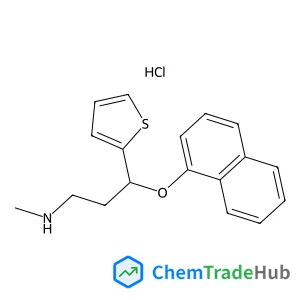
N-Methyl-3-(1-naphthyloxy)-3-(2-thienyl)-1-propanamine hydrochloride (1:1)
CAS Number:
1188266-11-6
Molecular Formula:
C18H20ClNOS
![1,10-bis(3,5-dimethylphenyl)-12-hydroxy-4,5,6,7-tetrahydroiindeno[7,1-de:1',7'-fg][1,3,2]dioxaphosphocine 12-oxide structure](https://static.chemtradehub.com/structs/141/1412439-82-7-b9a9.webp "1,10-bis(3,5-dimethylphenyl)-12-hydroxy-4,5,6,7-tetrahydroiindeno[7,1-de:1',7'-fg][1,3,2]dioxaphosphocine 12-oxide structure")
1,10-bis(3,5-dimethylphenyl)-12-hydroxy-4,5,6,7-tetrahydroiindeno[7,1-de:1',7'-fg][1,3,2]dioxaphosphocine 12-oxide
CAS Number:
1412439-82-7
Molecular Formula:
C33H31O4P
![1-(1-Benzyl-1,2,3,6-tetrahydropyridin-4-yl)-1H-benzo[d]imidazol-2(3H)-one structure](https://static.chemtradehub.com/structs/603/60373-71-9-7dfb.webp "1-(1-Benzyl-1,2,3,6-tetrahydropyridin-4-yl)-1H-benzo[d]imidazol-2(3H)-one structure")
1-(1-Benzyl-1,2,3,6-tetrahydropyridin-4-yl)-1H-benzo[d]imidazol-2(3H)-one
CAS Number:
60373-71-9
Molecular Formula:
C19H19N3O
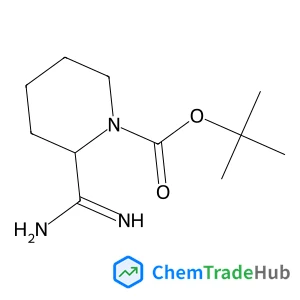
2-Methyl-2-propanyl 2-carbamimidoyl-1-piperidinecarboxylate
CAS Number:
1258640-98-0
Molecular Formula:
C11H21N3O2
Recommended Suppliers





Disclaimer
This page provides academic journal information for reference and research purposes only. We are not affiliated with any journal publishers and do not handle publication submissions. For publication-related inquiries, please contact the respective journal publishers directly.
If you notice any inaccuracies in the information displayed, please contact us at support@chemtradehub.com. We will promptly review and address your concerns.