












Simultaneous measurement of free and conjugated estrogens in surface water using capillary liquid chromatography tandem mass spectrometry
Literature Information
Publication Date
2021-03-03
DOI
10.1039/D0AN02335C
Impact Factor
4.616
Authors
Fan Huang, Kersti Karu, Luiza C. Campos
View Original
Abstract
Given detrimental impacts induced by estrogens at trace level, determination of them is significant but challenging due to their low content in environmental samples and inherent weak ionisation. A modified derivatisation-based methodology was applied for the first time to detect estrogen in free and conjugated forms including some isomers simultaneously using liquid chromatography tandem mass spectrometry (LC-MSn). Derivatisation reaction with previously used 1,2-dimethyl-1H-imidazole-5-sulphonyl chloride allowed significant increase of mass spectrometric signal of analytes and also provided distinctive fragmentation for their confirmation even in complicated matrix. Then satisfactory recovery (>75%) for the majority of analytes was achieved following optimisation of solid phase extraction (SPE) factors. The linearity was validated over a wide concentration with the correlation coefficient around 0.995. The repeatability of this methodology was also confirmed via the intra-day and inter-day precision and was less than 11.73%. Validation of method quantification limits (MQLs) for all chosen estrogens was conducted using 1000 mL surface water, ranging from 7.0 to 132.3 pg L−1. The established methodology was applied to profile presence of targeted estrogens in natural surface water samples. Out of the ten compounds of interest, three free estrogens (E1, E2, E3) and two sulphate estrogens (E1-3S and E2-3S) were found over their MQLs, being in the range of 0.05–0.32 ng L−1.
Related Literature
Ionic liquids based on N-alkyl-N-methylmorpholinium salts as potential electrolytes
Ki-Sub Kim, Sukjeong Choi, D. Demberelnyamba, Huen Lee, Jaeseung Oh, Byoung-Bae Lee, Su-Jin Mun
2004-02-27
Communication
DOI: 10.1039/B400198B
Organization of branched rod–coil molecules into a 3-D tetragonally perforated lamellar mesophase
Nam-Keun Oh, Wang-Cheol Zin, Jun-Hwan Im, Ja-Hyoung Ryu, Myongsoo Lee
2004-04-01
Communication
DOI: 10.1039/B317109D
Heteropoly acid as a novel nitrene transfer agent: a facile and practical aziridination of olefins with Chloramine-T
G. D. Kishore Kumar, Sundarababu Baskaran
2004-03-23
Communication
DOI: 10.1039/B402371D
On-chip separation of peptides prepared within a micro reactor
Vinod George, Paul Watts, Stephen J. Haswell, Esteban Pombo-Villar
2003-10-22
Communication
DOI: 10.1039/B310744B
Solvent-free ketone hydrogenations catalyzed by molybdenum complexes
Barbara F. M. Kimmich, Paul J. Fagan, Elisabeth Hauptman, R. Morris Bullock
2004-03-22
Communication
DOI: 10.1039/B401760A
Rapid synthesis of oligosaccharides using an anomeric fluorous silyl protecting group
Leonardo Manzoni
2003-10-29
Communication
DOI: 10.1039/B311448A
An efficient method to perform milliliter-scale PCR utilizing highly controlled microwave thermocycling
Kristina Orrling, Peter Nilsson, Mats Gullberg, Mats Larhed
2004-03-08
Communication
DOI: 10.1039/B317049G
Peptide-coated CdS quantum dots for the optical detection of copper(ii) and silver(i)‡
Kerim M. Gattás-Asfura, Roger M. Leblanc
2003-09-25
Communication
DOI: 10.1039/B308991F
Molecular recognition. Self-assembly of molecular trigonal prisms and their host–guest adducts
James D. Crowley, Andrew J. Goshe, Brice Bosnich
2003-10-17
Communication
DOI: 10.1039/B307385H
cis-Cyclopentyl PNA (cpPNA) as constrained chiral PNA analogues: stereochemical dependence of DNA/RNA hybridization
T. Govindaraju, Vaijayanti A. Kumar, Krishna N. Ganesh
2004-03-02
Communication
DOI: 10.1039/B317000D
You might also like
Compound Q&A
What is the market or research trend for N-(4-Methoxybenzyl)-2-pyridinamine (CAS: 52818-63-0)?
N-(4-Methoxybenzyl)-2-pyridinamine (CAS: 52818-63-0) is increasingly being used ...
52818-63-0N-(4-Methoxybenzyl)-...
Compound Q&A
What precautions should be taken when handling Ethyl 4-(2-chlorophenyl)-1,3-thiazole-2-carboxylate (CAS: 1050507-06-6)?
When handling Ethyl 4-(2-chlorophenyl)-1,3-thiazole-2-carboxylate, appropriate p...
1050507-06-6Ethyl 4-(2-chlorophe...
Compound Q&A
What regulatory guidelines apply to diethyldiselane (CAS: 628-39-7)?
Diethyldiselane (CAS: 628-39-7) is classified under the Globally Harmonized Syst...
628-39-7Diethyldiselane
Compound Q&A
What is the market or research trend for oxocopper (CAS: 12053-18-8)?
The market for oxocopper (CAS: 12053-18-8) is primarily driven by its use in cat...
12053-18-8oxocopper; oxo-(oxoc...
Compound Q&A
What is the market or research trend for 5-{[(2-Methyl-2-propanyl)oxy]carbonyl}-5-azaspiro[2.4]heptane-7-carboxylic acid?
The market for 5-{[(2-Methyl-2-propanyl)oxy]carbonyl}-5-azaspiro[2.4]heptane-7-c...
1268519-54-55-{[(2-Methyl-2-prop...
Compound Q&A
What is 2-(1-Pyrrolidinyl)-4-pyridinamine (CAS: 35981-63-6)?
2-(1-Pyrrolidinyl)-4-pyridinamine is a chemical compound with the CAS number 359...
35981-63-62-(1-Pyrrolidinyl)-4...
Compound Q&A
What are the physical and chemical properties of 2-(3-Pyridinyl)-1-azabicyclo[2.2.2]octane (CAS: 91556-75-1)?
2-(3-Pyridinyl)-1-azabicyclo[2.2.2]octane (CAS: 91556-75-1) is a crystalline sol...
91556-75-12-(3-Pyridinyl)-1-az...
Compound Q&A
How is (S)-Alpha-allyl-proline hydrochloride (CAS: 129704-91-2) typically synthesized?
(S)-Alpha-allyl-proline hydrochloride is usually synthesized via a Wittig reacti...
129704-91-2(S)-Alpha-allyl-prol...
Compound Q&A
What is 3-Methyl-1,2-oxazole-5-carboxylic acid (CAS: 4857-42-5)?
3-Methyl-1,2-oxazole-5-carboxylic acid (CAS: 4857-42-5) is an organic compound w...
4857-42-53-Methyl-1,2-oxazole...
Compound Q&A
How is Lys-SMCC-DM1 (CAS: 1281816-04-3) typically synthesized?
Lys-SMCC-DM1 is synthesized via a multi-step process involving the coupling of S...
1281816-04-3Lys-SMCC-DM1
Source Journal
Analyst

CiteScore:
7.8
Self-citation Rate:
5.6%
Articles per Year:
653
Analyst publishes analytical and bioanalytical research that reports premier fundamental discoveries and inventions, and the applications of those discoveries, unconfined by traditional discipline barriers.
Recommended Compounds
![1-oxaspiro[4.4]nonan-6-one structure](https://static.chemtradehub.com/structs/134/134179-01-4-e051.webp "1-oxaspiro[4.4]nonan-6-one structure")
![N-{15-[(2,5-Dioxo-1-pyrrolidinyl)oxy]-15-oxo-3,6,9,12-tetraoxapentadec-1-yl}-2-(2-propyn-1-yloxy)acetamide structure](https://static.chemtradehub.com/structs/210/2101206-92-0-2eb5.webp "N-{15-[(2,5-Dioxo-1-pyrrolidinyl)oxy]-15-oxo-3,6,9,12-tetraoxapentadec-1-yl}-2-(2-propyn-1-yloxy)acetamide structure")
N-{15-[(2,5-Dioxo-1-pyrrolidinyl)oxy]-15-oxo-3,6,9,12-tetraoxapentadec-1-yl}-2-(2-propyn-1-yloxy)acetamide
CAS Number:
2101206-92-0
Molecular Formula:
C20H30N2O10
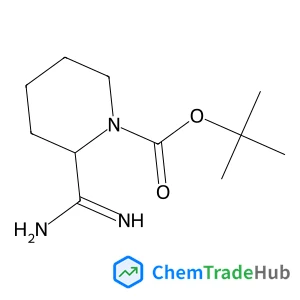
2-Methyl-2-propanyl 2-carbamimidoyl-1-piperidinecarboxylate
CAS Number:
1258640-98-0
Molecular Formula:
C11H21N3O2
Recommended Suppliers





Disclaimer
This page provides academic journal information for reference and research purposes only. We are not affiliated with any journal publishers and do not handle publication submissions. For publication-related inquiries, please contact the respective journal publishers directly.
If you notice any inaccuracies in the information displayed, please contact us at support@chemtradehub.com. We will promptly review and address your concerns.