![trans-2-{[(Tert-butoxy)carbonyl]amino}cyclobutane-1-carboxylic acid structure](https://static.chemtradehub.com/structs/951/951173-25-4-27cd.webp "trans-2-{[(Tert-butoxy)carbonyl]amino}cyclobutane-1-carboxylic acid structure")
trans-2-{[(Tert-butoxy)carbonyl]amino}cyclobutane-1-carboxylic acid
CAS Number:
951173-25-4
Molecular Formula:
C10H17NO4
Makoto Komatsu, Jotaro Nakazaki, Satoshi Uchida, Takaya Kubo, Hiroshi Segawa
A donor–acceptor type organic dye connected with a quinoidal thiophene as a π-conjugated chain, cyano-[5′-(4′′-(N,N-dimethylamino)benzylidene)-5H-thiophen-2′-ylidene]acetic acid, was synthesized and applied to dye-sensitized solar cells (DSSCs). The absorption band of this quinoidal thiophene dye appeared at longer wavelengths than those of dyes with similar π-conjugation length, indicating the effective π-conjugation through the quinoidal structure. Although the excited state of the quinoidal thiophene dye is deactivated within several picoseconds even in solution, the DSSCs using the quinoidal thiophene dye showed incident photon to current conversion efficiency (IPCE) values of more than 90%, demonstrating the fast and efficient electron injection from the excited dye to TiO2. By optimizing the fabrication conditions, the DSSC using this dye afforded a photoelectric conversion efficiency of 5.2%, without enlarging the molecular size.
Honglian Wu, Tianci Wang, Yuting Wang, Sixi Liu, Feiqiu Wen, Gerile Oudeng, Mo Yang
DOI: 10.1039/D3TB01553J
Rui Wang, Shengyu Feng, Gang Yi, Dengxu Wang
DOI: 10.1039/D3NJ04004F
Ludmila A. Oparina, Kseniya V. Belyaeva, Nikita A. Kolyvanov, Igor A. Ushakov, Denis N. Tomilin, Lyubov N. Sobenina, Anton V. Kuzmin, Boris A. Trofimov
DOI: 10.1039/D3NJ05049A
Ahmad Nuruddin, Muhammad Iqbal, Hutomo Suryo Wasisto
DOI: 10.1039/D3TB01327H
Xiaoqing Yi, Zhiwei Shang, Xianliang Nong, Fan Xia
DOI: 10.1039/D3TB02361C
Xuanyu Xiao, Lei Li, Hui Deng, Yuting Zhong, Wei Deng, Yuanyuan Xu, Zhiyu Chen, Jieyu Zhang, Xuefeng Hu, Yunbing Wang
DOI: 10.1039/D3TB01910A
Aleena Pious, Shreya Muthukumar, Dharshini Karnan Singaravelu, Periyappan Nantheeswaran, Mariappan Mariappan, Arvind Sivasubramanian, Fuad Ameen, Anbazhagan Veerappan
DOI: 10.1039/D3NJ04494G
Li Xu, Yi Qian, Lei Bao, Wei Wang, Nengmei Deng, Li Zhang, Guanglin Wang, Xucheng Fu, Wei Fu
DOI: 10.1039/D3NJ04521H
Jiangtao Yu, Linhua Zhu, Xiaoxiao Yu, Jixing Liu, Jingzhou Yin, Peiwen Wu, Jian Liu
DOI: 10.1039/D3NJ04023B
Marrium Saeed, Urooj Kamran, Amina Khan, Md Irfanul Haque Siddiqui, Hasan Jamal, Haq Nawaz Bhatti
DOI: 10.1039/D3NJ04133F
6-(3-Fluorophenyl)picolinic acid is generally considered safe for laboratory use...
(3R)-3-Pyrrolidinol is used in the pharmaceutical industry as a precursor for dr...
When handling (4R,5R)-4,5-Diethoxycarbonyl-2,2-dimethyldioxolane (CAS: 59779-75-...
1-(6-Chloroimidazo[1,2-b]pyridazin-3-yl)ethanone is often synthesized via a mult...
The market for N-Ethyl-3,4-dimethylbenzylamine (CAS: 39180-83-1) remains steady,...
Tert-butyl 3-(pyrrolidin-1-yl)azetidine-1-carboxylate is a chemical compound wit...
1-Bromo-3-chloro-2,4-dimethoxybenzene (CAS: 1228956-93-1) falls under the classi...
The safety of 8-Bromo-2-methyl-3,4-dihydroisoquinolin-1(2H)-one (CAS: 1368622-07...
Benzyl [(3S)-2,6-dioxo-3-piperidinyl]carbamate is generally safe when handled wi...
1-{[4-(4,4,5,5-Tetramethyl-1,3,2-dioxaborolan-2-yl)phenyl]sulfonyl}pyrrolidine s...

Physical Chemistry Chemical Physics (PCCP) is an international journal co-owned by 19 physical chemistry and physics societies from around the world. This journal publishes original, cutting-edge research in physical chemistry, chemical physics and biophysical chemistry. To be suitable for publication in PCCP, articles must include significant innovation and/or insight into physical chemistry; this is the most important criterion that reviewers and Editors will judge against when evaluating submissions. The journal has a broad scope and welcomes contributions spanning experiment, theory, computation and data science. Topical coverage includes spectroscopy, dynamics, kinetics, statistical mechanics, thermodynamics, electrochemistry, catalysis, surface science, quantum mechanics, quantum computing and machine learning. Interdisciplinary research areas such as polymers and soft matter, materials, nanoscience, energy, surfaces/interfaces, and biophysical chemistry are welcomed if they demonstrate significant innovation and/or insight into physical chemistry. Joined experimental/theoretical studies are particularly appreciated when complementary and based on up-to-date approaches.
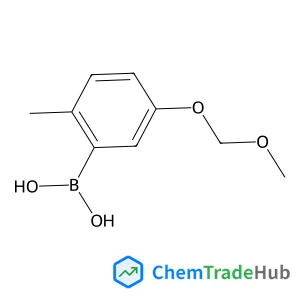
![5-Bromo-3-isopropyl-1H-pyrrolo[2,3-b]pyridine structure](https://static.chemtradehub.com/structs/125/1256819-54-1-8620.webp "5-Bromo-3-isopropyl-1H-pyrrolo[2,3-b]pyridine structure")