












Synthesis of functionalized disiloxanes with nonconventional fluorescence via oxa-Michael addition reaction
Literature Information
Publication Date
2023-11-23
DOI
10.1039/D3NJ04004F
Impact Factor
3.591
Authors
Rui Wang, Shengyu Feng, Gang Yi, Dengxu Wang
View Original
Abstract
Developing a new organosilicon synthetic methodology is significant because it enables the design and synthesis of organosilicon materials with novel structures and functionality, thereby expanding their potential applications. Herein, we introduce the classical oxa-Michael addition reaction to prepare functionalized disiloxanes by reacting 1,3-bis(3-hydroxypropyl)-1,1,3,3-tetramethyldisiloxane with various commercial vinyl compounds containing electron-withdrawing groups, while employing a phosphazene base as the catalyst. The impact of various factors, including catalytic systems, reaction solvent, and reaction temperature, on the efficiency of the process was investigated. It was found that functionalized disiloxanes can be obtained under mild conditions with moderate-to-high yields. Remarkably, these compounds exhibit nonconventional fluorescence due to the cluster-triggered emission of chromophores, such as cyano and sulfone. Moreover, the fluorescence performance of these compounds surpasses that of the analogs lacking Si–O–Si units. This observation is distinct from previous reports suggesting that the enhancement is commonly achieved by the formation of coordination bonds between the heteroatoms and the Si–O units. This implies that the introduction of a Si–O unit can efficiently enhance the fluorescence emission by weak interactions between a Si atom and an O atom from ether groups. These findings demonstrate the efficiency of the oxa-Michael addition reaction as an organosilicon synthetic methodology, thus opening up the possibilities for the development of more organosilicon materials with unique structures and enhanced functionality.
Related Literature
Specific ion effects on the hydrophobic interaction of benzene self-assembled monolayers
S. Dobberschütz, M. Rimmen, T. Hassenkam, M. P. Andersson, S. L. S. Stipp
2015-07-22
Paper
DOI: 10.1039/C5CP01803J
Strength order and nature of the π-hole bond of cyanuric chloride and 1,3,5-triazine with halide
Hui Wang, Chen Li, Weizhou Wang, Wei Jun Jin
2015-07-07
Paper
DOI: 10.1039/C5CP03076E
High performance surface-enhanced Raman scattering from molecular imprinting polymer capsulated silver spheres
Yan Guo, Leilei Kang, Shaona Chen
2015-02-09
Paper
DOI: 10.1039/C5CP00206K
An in situ high-temperature scanning electron microscopy study of acanthite–argentite phase transformation in nanocrystalline silver sulfide powder
S. I. Sadovnikov, A. I. Gusev
2015-07-24
Communication
DOI: 10.1039/C5CP02499D
Dynamic interface tension of a smectic liquid crystal in anionic surfactant solutions
Kirsten Harth, Larissa M. Shepherd, James Honaker, Ralf Stannarius
2015-09-09
Paper
DOI: 10.1039/C5CP04193G
Far- and near-field properties of gold nanoshells studied by photoacoustic and surface-enhanced Raman spectroscopies
V. Weber, A. Feis, C. Gellini, R. Pilot, P. R. Salvi, R. Signorini
2014-12-19
Paper
DOI: 10.1039/C4CP05054A
Theoretical study on interactions of fluorinated organomercurials with arene and gold fragments
Sebastián Miranda-Rojas
2015-09-14
Paper
DOI: 10.1039/C5CP04503G
Surface enhanced Raman scattering of a single molecular junction
Ryuji Matsushita, Manabu Kiguchi
2015-01-15
Paper
DOI: 10.1039/C4CP04906C
Probing the mechanism of CO2 capture in diamine-appended metal–organic frameworks using measured and simulated X-ray spectroscopy
Walter S. Drisdell, Roberta Poloni, Thomas M. McDonald, Tod A. Pascal, Liwen F. Wan, C. Das Pemmaraju, Bess Vlaisavljevich, Samuel O. Odoh, Jeffrey B. Neaton, David Prendergast, Jeffrey B. Kortright
2015-07-23
Paper
DOI: 10.1039/C5CP02951A
Trends in non-metal doping of the SrTiO3 surface: a hybrid density functional study
Yating Guo, Xiaowei Qiu, Hao Dong, Xin Zhou
2015-07-09
Paper
DOI: 10.1039/C5CP03005F
You might also like
Compound Q&A
Is 6-(3-Fluorophenyl)picolinic acid (CAS: 887982-40-3) safe?
6-(3-Fluorophenyl)picolinic acid is generally considered safe for laboratory use...
887982-40-36-(3-Fluorophenyl)pi...
Compound Q&A
What industries use (3R)-3-Pyrrolidinol (CAS: 2799-21-5)?
(3R)-3-Pyrrolidinol is used in the pharmaceutical industry as a precursor for dr...
2799-21-5(3R)-3-Pyrrolidinol
Compound Q&A
What precautions should be taken when handling (4R,5R)-4,5-Diethoxycarbonyl-2,2-dimethyldioxolane (CAS: 59779-75-8)?
When handling (4R,5R)-4,5-Diethoxycarbonyl-2,2-dimethyldioxolane (CAS: 59779-75-...
59779-75-8(4R,5R)-4,5-Diethoxy...
Compound Q&A
How is 1-(6-Chloroimidazo[1,2-b]pyridazin-3-yl)ethanone (CAS: 90734-71-7) typically synthesized?
1-(6-Chloroimidazo[1,2-b]pyridazin-3-yl)ethanone is often synthesized via a mult...
90734-71-71-(6-Chloroimidazo[1...
Compound Q&A
What is the market or research trend for N-Ethyl-3,4-dimethylbenzylamine (CAS: 39180-83-1)?
The market for N-Ethyl-3,4-dimethylbenzylamine (CAS: 39180-83-1) remains steady,...
39180-83-1N-Ethyl-3,4-dimethyl...
Compound Q&A
What is Tert-butyl 3-(pyrrolidin-1-yl)azetidine-1-carboxylate (CAS: 1019008-21-9)?
Tert-butyl 3-(pyrrolidin-1-yl)azetidine-1-carboxylate is a chemical compound wit...
1019008-21-9Tert-butyl 3-(pyrrol...
Compound Q&A
What regulatory guidelines apply to 1-Bromo-3-chloro-2,4-dimethoxybenzene (CAS: 1228956-93-1)?
1-Bromo-3-chloro-2,4-dimethoxybenzene (CAS: 1228956-93-1) falls under the classi...
1228956-93-11-Bromo-3-chloro-2,4...
Compound Q&A
Is 8-Bromo-2-methyl-3,4-dihydroisoquinolin-1(2H)-one (CAS: 1368622-07-4) safe?
The safety of 8-Bromo-2-methyl-3,4-dihydroisoquinolin-1(2H)-one (CAS: 1368622-07...
1368622-07-48-Bromo-2-methyl-3,4...
Compound Q&A
Is Benzyl [(3S)-2,6-dioxo-3-piperidinyl]carbamate (CAS: 22785-43-9) safe?
Benzyl [(3S)-2,6-dioxo-3-piperidinyl]carbamate is generally safe when handled wi...
22785-43-9Benzyl [(3S)-2,6-dio...
Compound Q&A
How should 1-{[4-(4,4,5,5-Tetramethyl-1,3,2-dioxaborolan-2-yl)phenyl]sulfonyl}pyrrolidine (CAS: 928657-21-0) be stored?
1-{[4-(4,4,5,5-Tetramethyl-1,3,2-dioxaborolan-2-yl)phenyl]sulfonyl}pyrrolidine s...
928657-21-01-{[4-(4,4,5,5-Tetra...
Source Journal
New Journal of Chemistry

CiteScore:
5.3
Self-citation Rate:
3.7%
Articles per Year:
2153
NJC (New Journal of Chemistry) is a broad-based primary journal encompassing all branches of chemistry and its sub-disciplines. It contains full research articles, communications, perspectives and focus articles. This well-established journal, owned by the Centre National de la Recherche Scientifique (CNRS) of France, has been co-published with the Royal Society of Chemistry since January 1998. NJC is the forum for the publication of high-quality, original and significant work that opens new directions in chemistry or other scientific disciplines. In addition to having a significant chemical component, work published in NJC must demonstrate that it will have an impact on areas of research other than that of the reported work.
Recommended Compounds
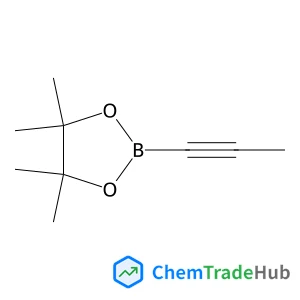
4,4,5,5-Tetramethyl-2-(1-propyn-1-YL)-1,3,2-dioxaborolane
CAS Number:
347389-75-7
Molecular Formula:
C9H15BO2
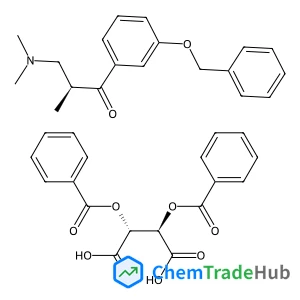
(S)-1-(3-(Benzyloxy)phenyl)-3-(dimethylamino)-2-methylpropan-1-one (2r,3r)-2,3-bis(benzoyloxy)succinate
CAS Number:
1004315-81-4
Molecular Formula:
C37H37NO10
Recommended Suppliers






Disclaimer
This page provides academic journal information for reference and research purposes only. We are not affiliated with any journal publishers and do not handle publication submissions. For publication-related inquiries, please contact the respective journal publishers directly.
If you notice any inaccuracies in the information displayed, please contact us at support@chemtradehub.com. We will promptly review and address your concerns.