













Eco-friendly, in-water, and catalyst-free assembly of acylethenylpyrroloimidazoindoles from 3H-indoles and acylpyrrolylacetylenes
Literature Information
Publication Date
2023-11-17
DOI
10.1039/D3NJ05049A
Impact Factor
3.591
Authors
Ludmila A. Oparina, Kseniya V. Belyaeva, Nikita A. Kolyvanov, Igor A. Ushakov, Denis N. Tomilin, Lyubov N. Sobenina, Anton V. Kuzmin, Boris A. Trofimov
View Original
Abstract
The merging of fundamentally and biologically important heterocyclic structures, such as pyrroles, indoles, and imidazoles, in molecules of dihydropyrrolo[1′,2′:3,4]imidazo[1,2-a]indoles functionalized by E-acylethenyl groups was achieved in water on the platform of commercial 3H-indoles using readily available acylpyrrolylacetylenes as additional building blocks. The yields of the ensembles reached 88% (100 °C, 8 h), which is noticeably better than that produced using conventional solvents (MeCN, MeNO2, DMSO, and CF3CH2OH), wherein the reaction proceeds at a rate of approximately 10 times longer (96 h) with lower yields of the target products (not higher than 80%). The reaction presumably proceeds in a micellar-like microreactor self-assembled in a two-phase aqueous medium that secures favorable mutual orientation of the merging molecules, providing a facile [2+3] concerted cycloaddition to finally form fused polyheterocyclic systems. The performed DFT calculations are in agreement with such mechanistic considerations, particularly those underlying the crucial role of water in the studied cascade process.
Recommended Journals
Related Literature
Far- and near-field properties of gold nanoshells studied by photoacoustic and surface-enhanced Raman spectroscopies
V. Weber, A. Feis, C. Gellini, R. Pilot, P. R. Salvi, R. Signorini
2014-12-19
Paper
DOI: 10.1039/C4CP05054A
CTAB micelles assisted rGO–AgNP hybrids for SERS detection of polycyclic aromatic hydrocarbons
Meng Jiang, Zhijiang Qian, Xufeng Zhou, Xing Xin, Jinghua Wu, Chao Chen, Gongjun Zhang, Gaojie Xu, Yuchuan Cheng
2014-11-28
Paper
DOI: 10.1039/C4CP04888A
Diverse mixtures of 2,4-dihydroxy tautomers and O4 protonated conformers of uridine and 2′-deoxyuridine coexist in the gas phase
R. R. Wu, Bo Yang, C. E. Frieler, G. Berden, M. T. Rodgers
2015-07-21
Paper
DOI: 10.1039/C5CP02227D
Enhanced-fluorescence correlation spectroscopy at micro-molar dye concentration around a single gold nanorod
Saumyakanti Khatua, Haifeng Yuan, Michel Orrit
2014-09-01
Paper
DOI: 10.1039/C4CP03057E
Polypeptide A9K at nanoscale carbon: a simulation study
Vitaly V. Chaban, Andre Arruda, Eudes Eterno Fileti
2015-09-08
Paper
DOI: 10.1039/C5CP04565G
Why LiFePO4 is a safe battery electrode: Coulomb repulsion induced electron-state reshuffling upon lithiation
Bernardo Barbiellini, Hasnain Hafiz, Susmita Basak, Jun Liu, Thomas Richardson, Guojiun Shu, Fangcheng Chou, Tsu-Chien Weng, Dennis Nordlund, Dimosthenis Sokaras, Brian Moritz, Thomas P. Devereaux, Ruimin Qiao, Yi-De Chuang, Arun Bansil, Zahid Hussain, Wanli Yang
2015-09-03
Paper
DOI: 10.1039/C5CP04739K
Surface enhanced Raman scattering of a single molecular junction
Ryuji Matsushita, Manabu Kiguchi
2015-01-15
Paper
DOI: 10.1039/C4CP04906C
Surface-modified CAU-10 MOF materials as humidity sensors: impedance spectroscopic study on water uptake
Alexander Weiss, Nele Reimer, Norbert Stock, Michael Tiemann, Thorsten Wagner
2015-07-13
Paper
DOI: 10.1039/C5CP01988E
Low temperature pollutant trapping and dissociation over two-dimensional tin
Lauren Takahashi, Keisuke Takahashi
2015-07-21
Communication
DOI: 10.1039/C5CP03382A
Wavelength resolved specific optical rotations and homochiral equilibria
P. L. Polavarapu, C. L. Covington
2015-07-24
Paper
DOI: 10.1039/C5CP01834J
You might also like
Compound Q&A
Is 6-(3-Fluorophenyl)picolinic acid (CAS: 887982-40-3) safe?
6-(3-Fluorophenyl)picolinic acid is generally considered safe for laboratory use...
887982-40-36-(3-Fluorophenyl)pi...
Compound Q&A
What industries use (3R)-3-Pyrrolidinol (CAS: 2799-21-5)?
(3R)-3-Pyrrolidinol is used in the pharmaceutical industry as a precursor for dr...
2799-21-5(3R)-3-Pyrrolidinol
Compound Q&A
What precautions should be taken when handling (4R,5R)-4,5-Diethoxycarbonyl-2,2-dimethyldioxolane (CAS: 59779-75-8)?
When handling (4R,5R)-4,5-Diethoxycarbonyl-2,2-dimethyldioxolane (CAS: 59779-75-...
59779-75-8(4R,5R)-4,5-Diethoxy...
Compound Q&A
How is 1-(6-Chloroimidazo[1,2-b]pyridazin-3-yl)ethanone (CAS: 90734-71-7) typically synthesized?
1-(6-Chloroimidazo[1,2-b]pyridazin-3-yl)ethanone is often synthesized via a mult...
90734-71-71-(6-Chloroimidazo[1...
Compound Q&A
What is the market or research trend for N-Ethyl-3,4-dimethylbenzylamine (CAS: 39180-83-1)?
The market for N-Ethyl-3,4-dimethylbenzylamine (CAS: 39180-83-1) remains steady,...
39180-83-1N-Ethyl-3,4-dimethyl...
Compound Q&A
What is Tert-butyl 3-(pyrrolidin-1-yl)azetidine-1-carboxylate (CAS: 1019008-21-9)?
Tert-butyl 3-(pyrrolidin-1-yl)azetidine-1-carboxylate is a chemical compound wit...
1019008-21-9Tert-butyl 3-(pyrrol...
Compound Q&A
What regulatory guidelines apply to 1-Bromo-3-chloro-2,4-dimethoxybenzene (CAS: 1228956-93-1)?
1-Bromo-3-chloro-2,4-dimethoxybenzene (CAS: 1228956-93-1) falls under the classi...
1228956-93-11-Bromo-3-chloro-2,4...
Compound Q&A
Is 8-Bromo-2-methyl-3,4-dihydroisoquinolin-1(2H)-one (CAS: 1368622-07-4) safe?
The safety of 8-Bromo-2-methyl-3,4-dihydroisoquinolin-1(2H)-one (CAS: 1368622-07...
1368622-07-48-Bromo-2-methyl-3,4...
Compound Q&A
Is Benzyl [(3S)-2,6-dioxo-3-piperidinyl]carbamate (CAS: 22785-43-9) safe?
Benzyl [(3S)-2,6-dioxo-3-piperidinyl]carbamate is generally safe when handled wi...
22785-43-9Benzyl [(3S)-2,6-dio...
Compound Q&A
How should 1-{[4-(4,4,5,5-Tetramethyl-1,3,2-dioxaborolan-2-yl)phenyl]sulfonyl}pyrrolidine (CAS: 928657-21-0) be stored?
1-{[4-(4,4,5,5-Tetramethyl-1,3,2-dioxaborolan-2-yl)phenyl]sulfonyl}pyrrolidine s...
928657-21-01-{[4-(4,4,5,5-Tetra...
Source Journal
New Journal of Chemistry

CiteScore:
5.3
Self-citation Rate:
3.7%
Articles per Year:
2153
NJC (New Journal of Chemistry) is a broad-based primary journal encompassing all branches of chemistry and its sub-disciplines. It contains full research articles, communications, perspectives and focus articles. This well-established journal, owned by the Centre National de la Recherche Scientifique (CNRS) of France, has been co-published with the Royal Society of Chemistry since January 1998. NJC is the forum for the publication of high-quality, original and significant work that opens new directions in chemistry or other scientific disciplines. In addition to having a significant chemical component, work published in NJC must demonstrate that it will have an impact on areas of research other than that of the reported work.
Recommended Compounds
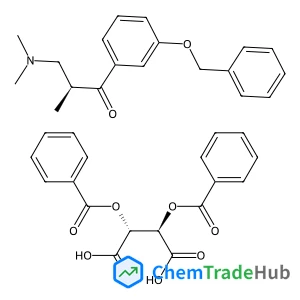
(S)-1-(3-(Benzyloxy)phenyl)-3-(dimethylamino)-2-methylpropan-1-one (2r,3r)-2,3-bis(benzoyloxy)succinate
CAS Number:
1004315-81-4
Molecular Formula:
C37H37NO10
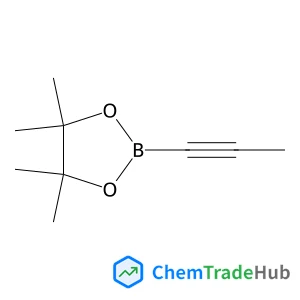
4,4,5,5-Tetramethyl-2-(1-propyn-1-YL)-1,3,2-dioxaborolane
CAS Number:
347389-75-7
Molecular Formula:
C9H15BO2
Recommended Suppliers





Disclaimer
This page provides academic journal information for reference and research purposes only. We are not affiliated with any journal publishers and do not handle publication submissions. For publication-related inquiries, please contact the respective journal publishers directly.
If you notice any inaccuracies in the information displayed, please contact us at support@chemtradehub.com. We will promptly review and address your concerns.