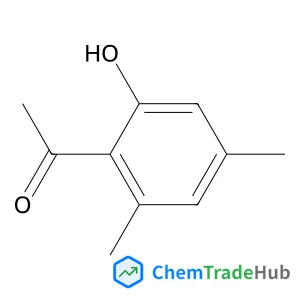
![3-[(3R,4R)-3-[(6-aminopyrimidin-4-yl)-methyl-amino]-4-methyl-1-piperidyl]-3-oxo-propanenitrile structure](https://static.chemtradehub.com/structs/164/1640971-60-3-83a4.webp "3-[(3R,4R)-3-[(6-aminopyrimidin-4-yl)-methyl-amino]-4-methyl-1-piperidyl]-3-oxo-propanenitrile structure")
3-[(3R,4R)-3-[(6-aminopyrimidin-4-yl)-methyl-amino]-4-methyl-1-piperidyl]-3-oxo-propanenitrile
CAS Number:
1640971-60-3
Molecular Formula:
C14H20N6O
Aleena Pious, Shreya Muthukumar, Dharshini Karnan Singaravelu, Periyappan Nantheeswaran, Mariappan Mariappan, Arvind Sivasubramanian, Fuad Ameen, Anbazhagan Veerappan
Water released by industries that generate coloured pollutants must be treated to safeguard the environment and ensure that the treated water is non-toxic. In this study, we demonstrate the utility of glycine-derived designer micelles, N-lauroyl-N-(pyridin-2-ylmethyl)glycine (PyN12G), as a capping agent to prepare black bismuth oxide nanoparticles (Bi2O3 NPs). The obtained Bi2O3 NPs were confirmed by X-ray photoelectron spectroscopy and energy-dispersive X-ray spectroscopy. Transmission electron microscopy demonstrated that the Bi2O3 NPs are crystalline, with a quasi-spherical morphology and an average size of 42.3 nm, which are further corroborated by powder X-ray diffraction studies to be monoclinic. Fourier transform infrared spectra revealed that the surface of Bi2O3 NPs was stabilized by PyN12G and that the –COOH group of the micelles was involved in surface functionalization. The application of Bi2O3 NPs in environmental remediation was demonstrated by degrading a toxic dye, Congo red (CR). Bi2O3 NPs catalyze sodium borohydride-mediated CR degradation with an efficiency of 88.8% in 15 minutes and a rate constant of 1.92 × 10⁻³ s−1. Besides CR, Bi2O3 NPs catalyzed the degradation of methylene blue, bromophenol blue, Coomassie blue, crystal violet, and rhodamine B with efficiencies of 95%, 92%, 95%, 90%, and 86%, respectively. Gas chromatography-mass spectrometry analysis reveals that CR is degraded into smaller molecules. The disclosed dye degradation process eliminates the hazardous feature of the dye, which was proven by the seed germination assay. Furthermore, toxicology experiments revealed that Bi2O3 NPs do not affect bacterial growth or seed germination, proving that the NPs are non-toxic and safe to use as a chemocatalyst to eliminate toxic dyes without affecting the environment.
Nicole L. Ing, Tyler D. Nusca
DOI: 10.1039/C7CP03651E
E. Suturina, E. Reijerse, W. Lubitz
DOI: 10.1039/C7CP03680A
Jun Li, Changjian Xie, Hua Guo
DOI: 10.1039/C7CP04578F
M. H. N. Assadi, H. Katayama-Yoshida
DOI: 10.1039/C7CP03752J
Xue-fang Yu, Shohei Yamazaki, Tetsuya Taketsugu
DOI: 10.1039/C7CP04942K
Nejc Hodnik, Francisco Ruiz-Zepeda, Martin Šala, Vid Simon Šelih, Tim Patrick Fellinger
DOI: 10.1039/C7CP03192K
Paulo Piquini, Alex A. Schmidt, Marcelo A. Kuroda
DOI: 10.1039/C7CP04615D
Ibério de P. R. Moreira, Francesc Illas
DOI: 10.1039/C7CP04145D
DOI: 10.1039/C7CP03216A
Xiaoxiao Zhang, Qing Xue
DOI: 10.1039/C7CP04092J
6-(3-Fluorophenyl)picolinic acid is generally considered safe for laboratory use...
(3R)-3-Pyrrolidinol is used in the pharmaceutical industry as a precursor for dr...
When handling (4R,5R)-4,5-Diethoxycarbonyl-2,2-dimethyldioxolane (CAS: 59779-75-...
1-(6-Chloroimidazo[1,2-b]pyridazin-3-yl)ethanone is often synthesized via a mult...
The market for N-Ethyl-3,4-dimethylbenzylamine (CAS: 39180-83-1) remains steady,...
Tert-butyl 3-(pyrrolidin-1-yl)azetidine-1-carboxylate is a chemical compound wit...
1-Bromo-3-chloro-2,4-dimethoxybenzene (CAS: 1228956-93-1) falls under the classi...
The safety of 8-Bromo-2-methyl-3,4-dihydroisoquinolin-1(2H)-one (CAS: 1368622-07...
Benzyl [(3S)-2,6-dioxo-3-piperidinyl]carbamate is generally safe when handled wi...
1-{[4-(4,4,5,5-Tetramethyl-1,3,2-dioxaborolan-2-yl)phenyl]sulfonyl}pyrrolidine s...

NJC (New Journal of Chemistry) is a broad-based primary journal encompassing all branches of chemistry and its sub-disciplines. It contains full research articles, communications, perspectives and focus articles. This well-established journal, owned by the Centre National de la Recherche Scientifique (CNRS) of France, has been co-published with the Royal Society of Chemistry since January 1998. NJC is the forum for the publication of high-quality, original and significant work that opens new directions in chemistry or other scientific disciplines. In addition to having a significant chemical component, work published in NJC must demonstrate that it will have an impact on areas of research other than that of the reported work.
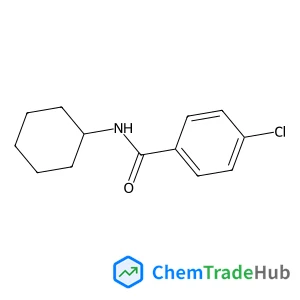
![1H-Imidazo[4,5-c]pyridine-7-carboxylic acid structure](https://static.chemtradehub.com/structs/123/1234616-39-7-1344.webp "1H-Imidazo[4,5-c]pyridine-7-carboxylic acid structure")