


Hierarchical supramolecular structuring and dynamical properties of water soluble polyethylene glycol–perylene self-assemblies
Literature Information
Publication Date
2012-02-29
DOI
10.1039/C2CP23786E
Impact Factor
3.676
Authors
Nicolas Jouault, Yunjie Xiang, Emilie Moulin, Gad Fuks, Nicolas Giuseppone, Eric Buhler
View Original
Abstract
The structural and dynamical properties of dilute aqueous solutions of poly(ethylene glycol)–perylene diimides (PEGn–PDI) have been investigated by means of static and dynamic light scattering, TEM microscopy, and small-angle X-ray scattering experiments. The amphiphilic PEGn–PDI molecules first self-assemble into stable and compact primary stacks of a few units of planar PDI through hydrophobic and π–π interactions. These primary stacks subsequently arrange in large and globular aggregates of typically 100–250 nm via weak PEG chain interpenetration. Surprisingly, the scattered electric field autocorrelation function g(1)(q,t) measured by dynamic light scattering evolves over very long periods of times (several months) and up to a bimodal distribution. The fast relaxation mechanism is associated to the diffusion of free primary stacks, whereas the slower relaxation still indicates the presence of large self-assemblies. Kinetic experiments show that the large supramolecular aggregates slowly release the free primary stacks whose proportion increases with time. This dissociation depends on several parameters such as PEG side chain length, total concentration, and shaking.
Recommended Journals

Australian Journal of Chemistry

AIAA Journal

Chemistry of Natural Compounds

Advances in Colloid and Interface Science

Cement and Concrete Research

Bulletin of the Chemical Society of Japan

Accounts of Chemical Research

Journal of the Chinese Chemical Society

Corrosion Science

Anti-Corrosion Methods and Materials
Related Literature
The enzymology of clavam and carbapenem biosynthesis
Nadia J. Kershaw, Matthew E. C. Caines, Mark C. Sleeman, Christopher J. Schofield
2005-08-08
Feature Article
DOI: 10.1039/B505964J
Rhodium-catalyzed tandem cyclization–cycloaddition reactions of enynebenzaldehydes: construction of polycyclic ring systems
Seunghoon Shin, Arun Kumar Gupta, Chul Yun Rhim, Chang Ho Oh
2005-07-29
Communication
DOI: 10.1039/B506003F
The depth of molecular recognition: voltage-sensitive blockage of synthetic multifunctional pores with refined architecture
Yoann Baudry, Masamichi Nishihara, Naomi Sakai, Stefan Matile
2005-09-05
Communication
DOI: 10.1039/B509610C
New bidentate cationic and zwitterionic relatives of Crabtree's hydrogenation catalyst
Judy Cipot, Robert McDonald, Mark Stradiotto
2005-09-07
Communication
DOI: 10.1039/B510253G
Visible light-induced selective oxidation of cyclohexane to cyclohexanone on Cr–Si binary oxide with molecular oxygen
Yasuhiro Shiraishi, Yugo Teshima, Takayuki Hirai
2005-08-17
Communication
DOI: 10.1039/B508172F
Morphological control and molecular recognition by bis-urea hydrogen bonding in micelles of amphiphilic tri-block copolymers
Natalia Chebotareva, Paul H. H. Bomans, Peter M. Frederik, Nico A. J. M. Sommerdijk, Rint P. Sijbesma
2005-09-08
Communication
DOI: 10.1039/B507171B
Crystalline Na–Si(NN) derivatives [Si(NN) = Si{(NCH2tBu)2C6H4-1,2}]: the silylenoid [Si(NN)OMe]−, the dianion [(NN)Si–Si(NN)]2−, and the radical anionc-[Si(NN)]3−
Floria Antolini, Barbara Gehrhus, Peter B. Hitchcock, Michael F. Lappert
2005-09-19
Communication
DOI: 10.1039/B509310D
Spatially controlled self-assembly of gold nanoparticles encased in α-helical polypeptide nanospheres
Masa-aki Morikawa, Nobuo Kimizuka
2005-09-07
Communication
DOI: 10.1039/B507818K
Plasma-promoted dielectric heating in the microwave synthesis of spinels
David J. Brooks, Richard E. Douthwaite, Lisa J. Gillie
2005-09-05
Communication
DOI: 10.1039/B506569K
You might also like
Compound Q&A
Is 6-(3-Fluorophenyl)picolinic acid (CAS: 887982-40-3) safe?
6-(3-Fluorophenyl)picolinic acid is generally considered safe for laboratory use...
887982-40-36-(3-Fluorophenyl)pi...
Compound Q&A
What industries use (3R)-3-Pyrrolidinol (CAS: 2799-21-5)?
(3R)-3-Pyrrolidinol is used in the pharmaceutical industry as a precursor for dr...
2799-21-5(3R)-3-Pyrrolidinol
Compound Q&A
What precautions should be taken when handling (4R,5R)-4,5-Diethoxycarbonyl-2,2-dimethyldioxolane (CAS: 59779-75-8)?
When handling (4R,5R)-4,5-Diethoxycarbonyl-2,2-dimethyldioxolane (CAS: 59779-75-...
59779-75-8(4R,5R)-4,5-Diethoxy...
Compound Q&A
How is 1-(6-Chloroimidazo[1,2-b]pyridazin-3-yl)ethanone (CAS: 90734-71-7) typically synthesized?
1-(6-Chloroimidazo[1,2-b]pyridazin-3-yl)ethanone is often synthesized via a mult...
90734-71-71-(6-Chloroimidazo[1...
Compound Q&A
What is the market or research trend for N-Ethyl-3,4-dimethylbenzylamine (CAS: 39180-83-1)?
The market for N-Ethyl-3,4-dimethylbenzylamine (CAS: 39180-83-1) remains steady,...
39180-83-1N-Ethyl-3,4-dimethyl...
Compound Q&A
What is Tert-butyl 3-(pyrrolidin-1-yl)azetidine-1-carboxylate (CAS: 1019008-21-9)?
Tert-butyl 3-(pyrrolidin-1-yl)azetidine-1-carboxylate is a chemical compound wit...
1019008-21-9Tert-butyl 3-(pyrrol...
Compound Q&A
What regulatory guidelines apply to 1-Bromo-3-chloro-2,4-dimethoxybenzene (CAS: 1228956-93-1)?
1-Bromo-3-chloro-2,4-dimethoxybenzene (CAS: 1228956-93-1) falls under the classi...
1228956-93-11-Bromo-3-chloro-2,4...
Compound Q&A
Is 8-Bromo-2-methyl-3,4-dihydroisoquinolin-1(2H)-one (CAS: 1368622-07-4) safe?
The safety of 8-Bromo-2-methyl-3,4-dihydroisoquinolin-1(2H)-one (CAS: 1368622-07...
1368622-07-48-Bromo-2-methyl-3,4...
Compound Q&A
Is Benzyl [(3S)-2,6-dioxo-3-piperidinyl]carbamate (CAS: 22785-43-9) safe?
Benzyl [(3S)-2,6-dioxo-3-piperidinyl]carbamate is generally safe when handled wi...
22785-43-9Benzyl [(3S)-2,6-dio...
Compound Q&A
How should 1-{[4-(4,4,5,5-Tetramethyl-1,3,2-dioxaborolan-2-yl)phenyl]sulfonyl}pyrrolidine (CAS: 928657-21-0) be stored?
1-{[4-(4,4,5,5-Tetramethyl-1,3,2-dioxaborolan-2-yl)phenyl]sulfonyl}pyrrolidine s...
928657-21-01-{[4-(4,4,5,5-Tetra...
Source Journal
Physical Chemistry Chemical Physics

CiteScore:
5.5
Self-citation Rate:
10.3%
Articles per Year:
3036
Physical Chemistry Chemical Physics (PCCP) is an international journal co-owned by 19 physical chemistry and physics societies from around the world. This journal publishes original, cutting-edge research in physical chemistry, chemical physics and biophysical chemistry. To be suitable for publication in PCCP, articles must include significant innovation and/or insight into physical chemistry; this is the most important criterion that reviewers and Editors will judge against when evaluating submissions. The journal has a broad scope and welcomes contributions spanning experiment, theory, computation and data science. Topical coverage includes spectroscopy, dynamics, kinetics, statistical mechanics, thermodynamics, electrochemistry, catalysis, surface science, quantum mechanics, quantum computing and machine learning. Interdisciplinary research areas such as polymers and soft matter, materials, nanoscience, energy, surfaces/interfaces, and biophysical chemistry are welcomed if they demonstrate significant innovation and/or insight into physical chemistry. Joined experimental/theoretical studies are particularly appreciated when complementary and based on up-to-date approaches.
Recommended Compounds
![2-Methyl-2-propanyl [(2S)-1-hydroxy-3-(4-hydroxyphenyl)-2-propanyl]carbamate structure](https://static.chemtradehub.com/structs/833/83345-46-4-eec2.webp "2-Methyl-2-propanyl [(2S)-1-hydroxy-3-(4-hydroxyphenyl)-2-propanyl]carbamate structure")
2-Methyl-2-propanyl [(2S)-1-hydroxy-3-(4-hydroxyphenyl)-2-propanyl]carbamate
CAS Number:
83345-46-4
Molecular Formula:
C14H21NO4

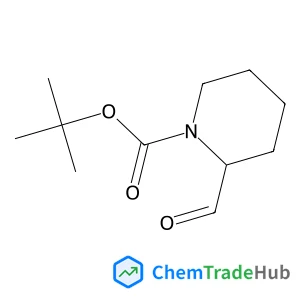
2-Methyl-2-propanyl (2R)-2-formyl-1-piperidinecarboxylate
CAS Number:
134526-69-5
Molecular Formula:
C11H19NO3
Recommended Suppliers




Disclaimer
This page provides academic journal information for reference and research purposes only. We are not affiliated with any journal publishers and do not handle publication submissions. For publication-related inquiries, please contact the respective journal publishers directly.
If you notice any inaccuracies in the information displayed, please contact us at support@chemtradehub.com. We will promptly review and address your concerns.