












Back matter
Literature Information
Publication Date
DOI
10.1039/B513395P
Impact Factor
6.222
Authors
View Original
Abstract
The first page of this article is displayed as the abstract.
Related Literature
Two-dimensional diamine-linked covalent organic frameworks for CO2/N2 capture and separation: theoretical modeling and simulations
Noelia Faginas-Lago, Andrea Lombardi
2020-10-28
Paper
DOI: 10.1039/D0CP04258G
Dynamics and kinetics of the OH + HO2 → H2O + O2 (1Δg) reaction on a global full-dimensional singlet-state potential energy surface
Xiaoxiao Lu, Bina Fu, Dong H. Zhang
2020-10-28
Paper
DOI: 10.1039/D0CP04611F
Excellent thermoelectric properties of monolayer RbAgM (M = Se and Te): first-principles calculations
Jinjie Gu, Xilong Qu
2020-10-23
Paper
DOI: 10.1039/D0CP04565A
Distance dependent energy transfer dynamics from a molecular donor to a zeolitic imidazolate framework acceptor
Wenhui Hu, Fan Yang, Nick Pietraszak, Jing Gu, Jier Huang
2020-10-20
Communication
DOI: 10.1039/D0CP03995K
DNA-binding mechanisms of human and mouse cGAS: a comparative MD and MM/GBSA study
Honghui Zhang, Wenjin Li
2020-10-24
Paper
DOI: 10.1039/D0CP04162A
Chemical reactions of a CL-20 crystal under heat and shock determined by ReaxFF reactive molecular dynamics simulations
Fuping Wang, Lang Chen, Deshen Geng, Jianying Lu, Junying Wu
2020-09-17
Paper
DOI: 10.1039/D0CP02796K
Correlation of electrochemical and ab initio investigations of iron poly-bipyridine coordination complexes for battery applications: impact of the anionic environment and the local geometries of the redox complexes on the electrochemical response
Adama Sy, Asif Iqbal Bhatti, Fahim Hamidouche, Olivier Le Bacq, Lauréline Lecarme, Jean-Claude Leprêtre
2020-07-20
Paper
DOI: 10.1039/D0CP01576H
Triangulenes and theirs ions: reaching the limits of Clar's rule
Eduardo Martín Rico-Sotomayor, José Enrique Barquera-Lozada
2020-09-29
Paper
DOI: 10.1039/D0CP03305G
Binding of divalent cations to acetate: molecular simulations guided by Raman spectroscopy
Denilson Mendes de Oliveira, Samual R. Zukowski, Vladimir Palivec, Hector Martinez-Seara, Dor Ben-Amotz, Pavel Jungwirth
2020-10-10
Paper
DOI: 10.1039/D0CP02987D
You might also like
Compound Q&A
How should waste containing 2-Ethyl-4-Methyl-1H-Imidazole-5-Carbaldehyde (CAS: 88634-80-4) be handled?
Waste containing 2-Ethyl-4-Methyl-1H-Imidazole-5-Carbaldehyde (CAS: 88634-80-4) ...
88634-80-42-Ethyl-4-Methyl-1H-...
Compound Q&A
What industries use Triethoxy(octyl)silane (CAS: 1385031-14-0)?
Triethoxy(octyl)silane (CAS: 1385031-14-0) is widely used in the pharmaceuticals...
1385031-14-0Triethoxy(octyl)sila...
Compound Q&A
Are there alternatives to 3-iodo-7-nitro-1H-indazole (CAS: 864724-64-1) in synthesis?
Several alternatives to 3-iodo-7-nitro-1H-indazole (CAS: 864724-64-1) exist in t...
864724-64-13-iodo-7-nitro-1H-in...
Compound Q&A
Are there alternatives to Benzene, bis[(trimethoxysilyl)ethyl] (CAS: 266317-71-9) in synthesis?
Yes, there are alternatives to Benzene, bis[(trimethoxysilyl)ethyl] (CAS: 266317...
266317-71-9Benzene, bis[(trimet...
Compound Q&A
Is Isothiazole-3-carbonitrile (CAS: 1452-17-1) safe?
Isothiazole-3-carbonitrile (CAS: 1452-17-1) is generally considered safe when us...
1452-17-1Isothiazole-3-carbon...
Compound Q&A
Is (3-Chlorophenyl)methanol (CAS: 873-63-2) safe?
(3-Chlorophenyl)methanol (CAS: 873-63-2) is considered low to moderately toxic. ...
873-63-2(3-Chlorophenyl)meth...
Compound Q&A
How is (2S,3S)-2-Hydroxy-3-({[(2-methyl-2-propanyl)oxy]carbonyl}amino)-3-(2-naphthyl)propanoic acid (CAS: 959583-98-3) typically synthesized?
(2S,3S)-2-Hydroxy-3-({[(2-methyl-2-propanyl)oxy]carbonyl}amino)-3-(2-naphthyl)pr...
959583-98-3(2S,3S)-2-Hydroxy-3-...
Compound Q&A
What precautions should be taken when handling Methyl 2-(bromomethyl)-5-methoxybenzoate (CAS: 788081-99-2)?
Proper handling of methyl 2-(bromomethyl)-5-methoxybenzoate requires the use of ...
788081-99-2Methyl 2-(bromomethy...
Compound Q&A
What is 6,8-Dibromoimidazo[1,2-a]pyridine-2-carboxylic acid (CAS: 904805-36-3)?
6,8-Dibromoimidazo[1,2-a]pyridine-2-carboxylic acid (CAS: 904805-36-3) is an aro...
904805-36-36,8-Dibromoimidazo[1...
Compound Q&A
Is 3-Amino-5-bromo-2-pyridinecarbonitrile (CAS: 573675-27-1) safe?
3-Amino-5-bromo-2-pyridinecarbonitrile is considered safe when handled under pro...
573675-27-13-Amino-5-bromo-2-py...
Source Journal
Chemical Communications

CiteScore:
8.6
Self-citation Rate:
4.7%
Articles per Year:
2458
ChemComm publishes urgent research which is of outstanding significance and interest to experts in the field, while also appealing to the journal’s broad chemistry readership. Our communication format is ideally suited to short, urgent studies that are of such importance that they require accelerated publication. Our scope covers all topics in chemistry, and research at the interface of chemistry and other disciplines (such as materials science, nanoscience, physics, engineering and biology) where there is a significant novelty in the chemistry aspects. Major topic areas covered include: Analytical Chemistry Catalysis Chemical Biology and medicinal chemistry Computational Chemistry and Machine Learning Energy and sustainable chemistry Environmental Chemistry Green Chemistry Inorganic Chemistry Materials Chemistry Nanoscience Organic Chemistry Physical Chemistry Polymer Chemistry Supramolecular Chemistry
Recommended Compounds
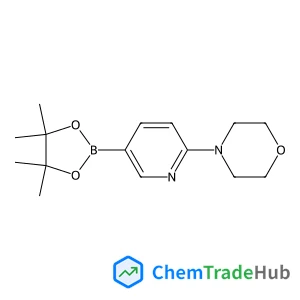
4-(5-(4,4,5,5-tetramethyl-1,3,2-dioxaborolan-2-yl)pyridin-2-yl)morpholine
CAS Number:
485799-04-0
Molecular Formula:
C15H23BN2O3
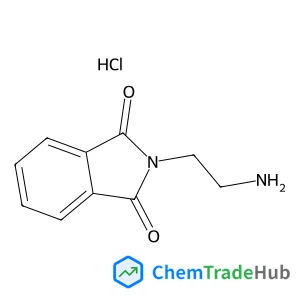
2-(2-Aminoethyl)-1H-isoindole-1,3(2H)-dione hydrochloride (1:1)
CAS Number:
30250-67-0
Molecular Formula:
C10H11ClN2O2
Recommended Suppliers






Disclaimer
This page provides academic journal information for reference and research purposes only. We are not affiliated with any journal publishers and do not handle publication submissions. For publication-related inquiries, please contact the respective journal publishers directly.
If you notice any inaccuracies in the information displayed, please contact us at support@chemtradehub.com. We will promptly review and address your concerns.