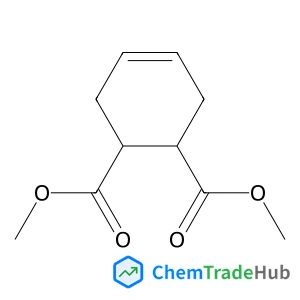
4-Cyclohexene-1,2-dicarboxylic acid, 1,2-dimethyl ester, (1R,2R)-rel-
CAS Number:
17673-68-6
Molecular Formula:
C10H14O4
Gil Ho Kim, Deok Hyun Hwang, Seong Ihl Woo
Carbon nanotubes (CNTs), either single wall carbon nanotubes (SWNTs) or multiwall carbon nanotubes (MWNTs), can improve the thermoelectric properties of poly(3,4-ethylenedioxythiophene) poly(styrenesulfonate) (PEDOT : PSS), but it requires addition of 30–40 wt% CNTs. We report that the figure of merit (ZT) value of PEDOT : PSS thin film for thermoelectric property is increased about 10 times by incorporating 2 wt% of graphene. PEDOT : PSS thin films containing 1, 2, 3 wt% graphene are prepared by solution spin coating method. X-ray photoelectron spectroscopy (XPS) and Raman spectroscopy analyses identified the strong π–π interactions which facilitated the dispersion between graphene and PEDOT : PSS. The uniformly distributed graphene increased the interfacial area by 2–10 times as compared with CNT based on the same weight. The power factor and ZT value of PEDOT : PSS thin film containing 2 wt% graphene was 11.09 μW mK−2 and 2.1 × 10⁻², respectively. This enhancement arises from the facilitated carrier transfer between PEDOT : PSS and graphene as well as the high electron mobility of graphene (200 000 cm2 V−1 s−1). Furthermore the porous structure of the thin film decreases the thermal conductivity resulting in a high ZT value, which is higher by 20% than that for a PEDOT : PSS thin film containing 35 wt% SWNTs.
Seunghoon Shin, Arun Kumar Gupta, Chul Yun Rhim, Chang Ho Oh
DOI: 10.1039/B506003F
Raymond Wai-Yin Sun, Rong Chen, Nancy P.-Y. Chung, Chi-Ming Ho, Chen-Lung Steve Lin, Chi-Ming Che
DOI: 10.1039/B510984A
Sanjib Bhattacharyya, Jean-Paul Salvetat, Romain Fleurier, Anke Husmann, Thomas Cacciaguerra, Marie-Louise Saboungi
DOI: 10.1039/B509026A
Hongwei Gu, Keming Xu, Zhimou Yang, Chi K. Chang
DOI: 10.1039/B507779F
Natalia Chebotareva, Paul H. H. Bomans, Peter M. Frederik, Nico A. J. M. Sommerdijk, Rint P. Sijbesma
DOI: 10.1039/B507171B
Philip D. Stevens, Guifeng Li, Jinda Fan, Max Yen, Yong Gao
DOI: 10.1039/B505424A
Yoann Baudry, Masamichi Nishihara, Naomi Sakai, Stefan Matile
DOI: 10.1039/B509610C
Kathleen M. McKenzie, Michael M. Meijler, Colin A. Lowery, Grant E. Boldt, Kim D. Janda
DOI: 10.1039/B509396A
Guido Marconi, Stéphane Bellemin-Laponnaz, Hubert Wadepohl
DOI: 10.1039/B509571A
Xiaofeng Wu, Daniele Vinci, Takao Ikariya, Jiangliang Xiao
DOI: 10.1039/B507276J
6-(3-Fluorophenyl)picolinic acid is generally considered safe for laboratory use...
(3R)-3-Pyrrolidinol is used in the pharmaceutical industry as a precursor for dr...
When handling (4R,5R)-4,5-Diethoxycarbonyl-2,2-dimethyldioxolane (CAS: 59779-75-...
1-(6-Chloroimidazo[1,2-b]pyridazin-3-yl)ethanone is often synthesized via a mult...
The market for N-Ethyl-3,4-dimethylbenzylamine (CAS: 39180-83-1) remains steady,...
Tert-butyl 3-(pyrrolidin-1-yl)azetidine-1-carboxylate is a chemical compound wit...
1-Bromo-3-chloro-2,4-dimethoxybenzene (CAS: 1228956-93-1) falls under the classi...
The safety of 8-Bromo-2-methyl-3,4-dihydroisoquinolin-1(2H)-one (CAS: 1368622-07...
Benzyl [(3S)-2,6-dioxo-3-piperidinyl]carbamate is generally safe when handled wi...
1-{[4-(4,4,5,5-Tetramethyl-1,3,2-dioxaborolan-2-yl)phenyl]sulfonyl}pyrrolidine s...

Physical Chemistry Chemical Physics (PCCP) is an international journal co-owned by 19 physical chemistry and physics societies from around the world. This journal publishes original, cutting-edge research in physical chemistry, chemical physics and biophysical chemistry. To be suitable for publication in PCCP, articles must include significant innovation and/or insight into physical chemistry; this is the most important criterion that reviewers and Editors will judge against when evaluating submissions. The journal has a broad scope and welcomes contributions spanning experiment, theory, computation and data science. Topical coverage includes spectroscopy, dynamics, kinetics, statistical mechanics, thermodynamics, electrochemistry, catalysis, surface science, quantum mechanics, quantum computing and machine learning. Interdisciplinary research areas such as polymers and soft matter, materials, nanoscience, energy, surfaces/interfaces, and biophysical chemistry are welcomed if they demonstrate significant innovation and/or insight into physical chemistry. Joined experimental/theoretical studies are particularly appreciated when complementary and based on up-to-date approaches.