


Role of defects and exposed graphene in carbon nanomaterial-based electrocatalysts
Literature Information
Publication Date
2023-12-04
DOI
10.1039/D3NJ04054B
Impact Factor
3.591
Authors
Charles C. Chusuei, Ram Chandra Nepal
View Original
Abstract
Carbon nanomaterials (CNMs, carbon dots, carbon nanotubes, and graphene) have received much attention in recent decades for their technological roles as electrocatalysts for biosensing and fuel cell applications in aqueous solutions. Their complex form factor presents challenges for delineating structure–property relationships, namely the interplay of electroactive area surface defects and exposed graphene planar structure, for optimizing their electrocatalytic activity. Conflicting examples in the literature show higher defect density in the graphene structure with increased or decreased conduction of the material. The graphenyl sheet curvature, voltage range of the electrochemical redox reaction, dispersion of charged impurities affecting the charge mobility, and overall resistivity of the CNM materials should be considered to optimize the overall electrochemical activity, particularly as they relate to redox reactions taking place in the −0.2 to +0.3 V standard potential range.
Recommended Journals

Journal of Organometallic Chemistry

Israel Journal of Chemistry

Russian Chemical Reviews

Pharmacological Reviews

Fibre Chemistry

Pure and Applied Chemistry

Kinetics and Catalysis

Proceedings of the National Academy of Sciences of the United States of America

Organic Preparations and Procedures International

Journal of Medicinal Chemistry
Related Literature
Efficient construction of pyrrolo[1′,2′:1,2]azocino[4,5-c]quinolines via cascade cycloaddition and annulation reaction
Wen-Tao Wu, Ying Han, Jing Sun, Chao-Guo Yan
2019-09-04
Research Article
DOI: 10.1039/C9QO00891H
Diastereoselective formal [3 + 3] cycloaddition of isatin-based α-(trifluoromethyl)imines with N,N′-dialkyloxyureas
Hong-Wu Zhao, Jia-Ming Guo, Li-Ru Wang, Wan-Qiu Ding, Zhe Tang, Xiu-Qing Song, Hui-Hui Wu, Xiao-Zu Fan, Xiao-Fan Bi
2019-10-21
Research Article
DOI: 10.1039/C9QO01181A
Reagent-controlled regiodivergence in the [3,3]-sigmatropic rearrangement of N-(acyloxy)enamides
Norihiko Takeda, Narumi Arisawa, Misaki Miyamoto, Yukiko Kobori, Tetsuro Shinada, Masafumi Ueda
2019-09-27
Research Article
DOI: 10.1039/C9QO01109A
More than a CO source: palladium-catalyzed carbonylative synthesis of butenolides from propargyl alcohols and TFBen
Zhengjie Le, Jun Ying
2019-07-19
Research Article
DOI: 10.1039/C9QO00779B
Pd/P/dba-Promoted cascade annulations to produce fused medium-sized sulfoximine polyheterocycles
Xiaoyan Chen, Hao Zhou, Zhiyuan Chen
2019-08-29
Research Article
DOI: 10.1039/C9QO00880B
N-Heterocyclic carbene catalysed umpolung reactions of imines approaching enantioselective synthesis
2019-10-21
Highlight
DOI: 10.1039/C9QO01074B
Applications of sulfuryl fluoride (SO2F2) in chemical transformations
Ravindar Lekkala, Revathi Lekkala, Balakrishna Moku, K. P. Rakesh, Hua-Li Qin
2019-09-17
Review Article
DOI: 10.1039/C9QO00747D
Synthesis of a dimer of the repeating unit of type Ia group B Streptococcus extracellular capsular polysaccharide and immunological evaluations of related protein conjugates
Deying Yang, Zhongqiu Liu
2019-05-13
Research Article
DOI: 10.1039/C9QO00486F
TFA-promoted sulfonation/cascade cyclization of 2-propynolphenols with sodium sulfinates to 4-sulfonyl 2H-chromenes under metal-free conditions
Tao Yang, Peihao Kou, Fengyan Jin, Xian-Rong Song, Jiang Bai, Haixin Ding, Qiang Xiao, Yong-Min Liang
2019-07-19
Research Article
DOI: 10.1039/C9QO00712A
Asymmetric domino 1,6-addition/annulation reaction of 3-cyano-4-alkenyl-2H-chromen-2-ones with isatin-derived MBH carbonates: enantioselective synthesis of 3,3′-cyclopentenylspirooxindoles bearing 2H-chromen-2-ones
Zhen-Hua Wang, Chuan-Wen Lei, Xia-Yan Zhang, Yong You, Jian-Qiang Zhao
2019-08-14
Research Article
DOI: 10.1039/C9QO00890J
You might also like
Compound Q&A
Is 6-(3-Fluorophenyl)picolinic acid (CAS: 887982-40-3) safe?
6-(3-Fluorophenyl)picolinic acid is generally considered safe for laboratory use...
887982-40-36-(3-Fluorophenyl)pi...
Compound Q&A
What industries use (3R)-3-Pyrrolidinol (CAS: 2799-21-5)?
(3R)-3-Pyrrolidinol is used in the pharmaceutical industry as a precursor for dr...
2799-21-5(3R)-3-Pyrrolidinol
Compound Q&A
What precautions should be taken when handling (4R,5R)-4,5-Diethoxycarbonyl-2,2-dimethyldioxolane (CAS: 59779-75-8)?
When handling (4R,5R)-4,5-Diethoxycarbonyl-2,2-dimethyldioxolane (CAS: 59779-75-...
59779-75-8(4R,5R)-4,5-Diethoxy...
Compound Q&A
How is 1-(6-Chloroimidazo[1,2-b]pyridazin-3-yl)ethanone (CAS: 90734-71-7) typically synthesized?
1-(6-Chloroimidazo[1,2-b]pyridazin-3-yl)ethanone is often synthesized via a mult...
90734-71-71-(6-Chloroimidazo[1...
Compound Q&A
What is the market or research trend for N-Ethyl-3,4-dimethylbenzylamine (CAS: 39180-83-1)?
The market for N-Ethyl-3,4-dimethylbenzylamine (CAS: 39180-83-1) remains steady,...
39180-83-1N-Ethyl-3,4-dimethyl...
Compound Q&A
What is Tert-butyl 3-(pyrrolidin-1-yl)azetidine-1-carboxylate (CAS: 1019008-21-9)?
Tert-butyl 3-(pyrrolidin-1-yl)azetidine-1-carboxylate is a chemical compound wit...
1019008-21-9Tert-butyl 3-(pyrrol...
Compound Q&A
What regulatory guidelines apply to 1-Bromo-3-chloro-2,4-dimethoxybenzene (CAS: 1228956-93-1)?
1-Bromo-3-chloro-2,4-dimethoxybenzene (CAS: 1228956-93-1) falls under the classi...
1228956-93-11-Bromo-3-chloro-2,4...
Compound Q&A
Is 8-Bromo-2-methyl-3,4-dihydroisoquinolin-1(2H)-one (CAS: 1368622-07-4) safe?
The safety of 8-Bromo-2-methyl-3,4-dihydroisoquinolin-1(2H)-one (CAS: 1368622-07...
1368622-07-48-Bromo-2-methyl-3,4...
Compound Q&A
Is Benzyl [(3S)-2,6-dioxo-3-piperidinyl]carbamate (CAS: 22785-43-9) safe?
Benzyl [(3S)-2,6-dioxo-3-piperidinyl]carbamate is generally safe when handled wi...
22785-43-9Benzyl [(3S)-2,6-dio...
Compound Q&A
How should 1-{[4-(4,4,5,5-Tetramethyl-1,3,2-dioxaborolan-2-yl)phenyl]sulfonyl}pyrrolidine (CAS: 928657-21-0) be stored?
1-{[4-(4,4,5,5-Tetramethyl-1,3,2-dioxaborolan-2-yl)phenyl]sulfonyl}pyrrolidine s...
928657-21-01-{[4-(4,4,5,5-Tetra...
Source Journal
New Journal of Chemistry

CiteScore:
5.3
Self-citation Rate:
3.7%
Articles per Year:
2153
NJC (New Journal of Chemistry) is a broad-based primary journal encompassing all branches of chemistry and its sub-disciplines. It contains full research articles, communications, perspectives and focus articles. This well-established journal, owned by the Centre National de la Recherche Scientifique (CNRS) of France, has been co-published with the Royal Society of Chemistry since January 1998. NJC is the forum for the publication of high-quality, original and significant work that opens new directions in chemistry or other scientific disciplines. In addition to having a significant chemical component, work published in NJC must demonstrate that it will have an impact on areas of research other than that of the reported work.
Recommended Compounds
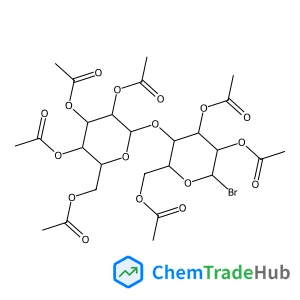
2,3,6-Tri-O-acetyl-4-O-(2,3,4,6-tetra-O-acetyl-beta-D-galactopyranosyl)-alpha-D-glucopyranosyl bromide
CAS Number:
4753-07-5
Molecular Formula:
C26H35BrO17
![Methyl 2-[5-(3-Phenoxyphenyl)-2H-tetrazol-2-yl]acetate structure](https://static.chemtradehub.com/structs/130/1305320-60-8-84b4.webp "Methyl 2-[5-(3-Phenoxyphenyl)-2H-tetrazol-2-yl]acetate structure")
Methyl 2-[5-(3-Phenoxyphenyl)-2H-tetrazol-2-yl]acetate
CAS Number:
1305320-60-8
Molecular Formula:
C16H14N4O3
Recommended Suppliers






Disclaimer
This page provides academic journal information for reference and research purposes only. We are not affiliated with any journal publishers and do not handle publication submissions. For publication-related inquiries, please contact the respective journal publishers directly.
If you notice any inaccuracies in the information displayed, please contact us at support@chemtradehub.com. We will promptly review and address your concerns.