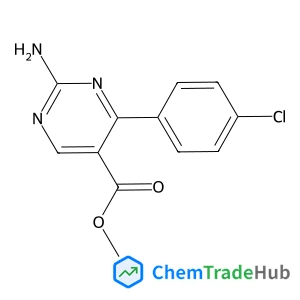
Methyl 2-amino-4-(4-chlorophenyl)-5-pyrimidinecarboxylate
CAS Number:
1133115-56-6
Molecular Formula:
C12H10ClN3O2
Houqiang Yu, Shuanghua Zheng, Cai Wang, Jun Xing, Ling Li
Nanobubbles (NBs), as ultrasound contrast agents, possess the potential for clinical applications in targeted ultrasound molecular imaging due to their small diameters and the specific molecular markers attached. Previous research studies mainly focused on the tumor-specific recruitment capability or drug carriers based on subcutaneous tumor models. In clinical trials, orthotopic tumor models are considered more clinically relevant and better predictive models for assessing drug efficacy compared to standard subcutaneous models. Here, we first prepared uniform-sized NBs with a soft chitosan-lipid membrane containing perfluoropropane gas and then anti-VEGFR2 antibodies were incorporated into NB membranes in order to achieve targeting ability toward tumor angiogenesis. The results of physicochemical characterization (the average size of 260.9 ± 3.3 nm and a PDI of 0.168 ± 0.036, n = 3) indicated that the targeted nanobubbles (tNBsv) have a spherical morphology and a vacant core. In vitro experiments found that the contrast enhancement abilities of tNBsv are similar to those of commercial SonoVue. In in vivo experiments, the orthotopic model of the rabbit VX2 hepatic tumor was used to evaluate the targeted binding ability of tNBsv toward tumor angiogenesis. Ultrasound sonograms revealed that tNBsv achieved the peak intensity of ultrasound imaging enhancement in the region of peripheral vasculature of VX2 tumors over non-targeted NBs or SonoVue, and the imaging time was longer than that of the other two. Ex vivo fluorescence imaging and examination using a confocal laser scanning microscope further verified that tNBsv were capable of binding to tumor angiogenesis. These results from our studies suggested that tNBsv are useful to develop an ultrasound imaging probe to evaluate anti-angiogenic cancer therapy by monitoring tumor angiogenesis.
Xiaoxiao Zhang, Qing Xue
DOI: 10.1039/C7CP04092J
Daniel L. Z. Caetano, Sidney J. de Carvalho, Ralf Metzler, Andrey G. Cherstvy
DOI: 10.1039/C7CP04040G
X. Liu, Y. Geng, A. Forni, E. Lucenti, S. Righetto, S. Decurtins, S.-X. Liu
DOI: 10.1039/C7CP04687A
M. M. Maitani, K. Tanaka, Q. Shen, T. Toyoda, Y. Wada
DOI: 10.1039/C7CP03593D
Xiaoyi Tao, Tianxiang Yin
DOI: 10.1039/C7CP03807K
Zongxia Guo, Kun Wang, Ping Yu, Shengyue Zhang, Kai Sun, Zhibo Li
DOI: 10.1039/C7CP04928E
H. T. Chin, C. H. Shih, C. C. Ting, J. N. Aoh, M. Hofmann
DOI: 10.1039/C7CP03207B
Debdutta Chakraborty, Ranjita Das, Pratim Kumar Chattaraj
DOI: 10.1039/C7CP02433A
O. O. Taiwo, D. P. Finegan, J. M. Paz-Garcia, A. J. Bodey, C. Rau, S. A. Hall, D. J. L. Brett, P. R. Shearing
DOI: 10.1039/C7CP02872E
6-(3-Fluorophenyl)picolinic acid is generally considered safe for laboratory use...
(3R)-3-Pyrrolidinol is used in the pharmaceutical industry as a precursor for dr...
When handling (4R,5R)-4,5-Diethoxycarbonyl-2,2-dimethyldioxolane (CAS: 59779-75-...
1-(6-Chloroimidazo[1,2-b]pyridazin-3-yl)ethanone is often synthesized via a mult...
The market for N-Ethyl-3,4-dimethylbenzylamine (CAS: 39180-83-1) remains steady,...
Tert-butyl 3-(pyrrolidin-1-yl)azetidine-1-carboxylate is a chemical compound wit...
1-Bromo-3-chloro-2,4-dimethoxybenzene (CAS: 1228956-93-1) falls under the classi...
The safety of 8-Bromo-2-methyl-3,4-dihydroisoquinolin-1(2H)-one (CAS: 1368622-07...
Benzyl [(3S)-2,6-dioxo-3-piperidinyl]carbamate is generally safe when handled wi...
1-{[4-(4,4,5,5-Tetramethyl-1,3,2-dioxaborolan-2-yl)phenyl]sulfonyl}pyrrolidine s...
Journal of Materials Chemistry A, B & C cover high quality studies across all fields of materials chemistry. The journals focus on those theoretical or experimental studies that report new understanding, applications, properties and synthesis of materials. The journals have a strong history of publishing quality reports of interest to interdisciplinary communities and providing an efficient and rigorous service through peer review and publication. The journals are led by an international team of Editors-in-Chief and Associate Editors who are all active researchers in their fields. Journal of Materials Chemistry A, B & C are separated by the intended application of the material studied. Broadly, applications in energy and sustainability are of interest to Journal of Materials Chemistry A, applications in biology and medicine are of interest to Journal of Materials Chemistry B, and applications in optical, magnetic and electronic devices are of interest to Journal of Materials Chemistry C. More than one Journal of Materials Chemistry journal may be suitable for certain fields and researchers are encouraged to submit their paper to the journal that they feel best fits for their particular article. Example topic areas within the scope of Journal of Materials Chemistry B are listed below. This list is neither exhaustive nor exclusive. Antifouling coatings Biocompatible materials Bioelectronics Bioimaging Biomimetics Biomineralisation Bionics Biosensors Diagnostics Drug delivery Gene delivery Immunobiology Nanomedicine Regenerative medicine & Tissue engineering Scaffolds Soft robotics Stem cells Therapeutic devices image block All articles published in Journal of Materials Chemistry B from 2019 onwards will be indexed in MEDLINE®. Articles that primarily focus on providing insight into the underlying science and performance of biomaterials within a biological environment are more suited to our companion journal, Biomaterials Science.
![5-Bromo-3-isopropyl-1H-pyrrolo[2,3-b]pyridine structure](https://static.chemtradehub.com/structs/125/1256819-54-1-8620.webp "5-Bromo-3-isopropyl-1H-pyrrolo[2,3-b]pyridine structure")
![3-[(3R,4R)-3-[(6-aminopyrimidin-4-yl)-methyl-amino]-4-methyl-1-piperidyl]-3-oxo-propanenitrile structure](https://static.chemtradehub.com/structs/164/1640971-60-3-83a4.webp "3-[(3R,4R)-3-[(6-aminopyrimidin-4-yl)-methyl-amino]-4-methyl-1-piperidyl]-3-oxo-propanenitrile structure")