


Photo-orientation of axial molecules
Literature Information
Publication Date
2011-12-02
DOI
10.1039/C2CP23128J
Impact Factor
3.676
Authors
Piet Van Leuven, Valentina Cantatore, Maurizio Persico
View Original
Abstract
We examine the photo-orientation of molecules in a linearly polarized field and the ensuing optical anisotropy of a sample. We propose a theoretical model that considers both photoinduced reorientation and rotational diffusion, for the case of linear or axial molecules not interacting among them, as in dilute solutions in viscous media. We perform numerical simulations to highlight the dependence on the parameters of the molecular reorientation processes, on the intensity of the exciting light, and on the use of cross polarized pulses. As a realistic example we simulate the photo-orientation of azobenzene in ethylene glycol.
Recommended Journals

Main Group Chemistry

Bioorganic & Medicinal Chemistry Letters

Heteroatom Chemistry

Polycyclic Aromatic Compounds

Journal of the Indian Institute of Science

Journal of Chemical Sciences

Topics in Catalysis

Herald of the Russian Academy of Sciences

Journal of Asian Natural Products Research

Atomization and Sprays
Related Literature
Regulation of the innate immune system by fragmented heparin-conjugated lipids on lipid bilayered membranes in vitro
Anna Adler, Marlene Fritsch, Karin Fromell, Bo Nilsson
2023-10-31
Paper
DOI: 10.1039/D3TB01721D
Polymeric engineering of AIEgens for NIR-II fluorescence imaging and detection of abdominal metastases of ovarian cancer in vivo
Xiaobo Zhou, Yuhan Zeng, Shijie Li, Ke Zhang, Lingfeng Zhao, Guo Li, Qi Wang, Haiwei Ji, Mingmin Wu, Jinxia Liu, Yuling Qin, Wei Feng, Li Wu
2023-10-10
Communication
DOI: 10.1039/D3TB01750H
Advancement in total hip implant: a comprehensive review of mechanics and performance parameters across diverse novelties
Md Mohiuddin Soliman, Mohammad Tariqul Islam, Muhammad E. H. Chowdhury, Farayi Musharavati, Touhidul Alam, Norbahiah Misran, Sakib Mahmud, Amith Khandakar
2023-10-11
Review Article
DOI: 10.1039/D3TB01469J
Novel solar-light-driven Z-scheme BiOCl@WS2 nanocomposite photocatalysts for the photocatalytic removal of organic pollutants
Chang-Mou Wu, Kebena Gebeyehu Motora, Pankaj Koinkar, Akihiro Furube
2023-11-06
Paper
DOI: 10.1039/D3NJ04410F
Application of exosomes as nanocarriers in cancer therapy
Jiawei Hu, Junfei Zhu, Jingjing Chai, Yudie Zhao, Jiajie Luan, Yan Wang
2023-10-23
Review Article
DOI: 10.1039/D3TB01991H
Eco-friendly, in-water, and catalyst-free assembly of acylethenylpyrroloimidazoindoles from 3H-indoles and acylpyrrolylacetylenes
Ludmila A. Oparina, Kseniya V. Belyaeva, Nikita A. Kolyvanov, Igor A. Ushakov, Denis N. Tomilin, Lyubov N. Sobenina, Anton V. Kuzmin, Boris A. Trofimov
2023-11-17
Paper
DOI: 10.1039/D3NJ05049A
Revealing charge-shift bonds in H3+ and their metallic analogs M3+ (M = Li, Na, K) through electron density topology
2023-08-29
Paper
DOI: 10.1039/D3NJ03674J
On the mechanochemical synthesis of C-scorpionates with an oxime moiety and their application in the copper-catalyzed azide–alkyne cycloaddition (CuAAC) reaction
Carla Gomes, Mariana Costa, Susana M. M. Lopes, Bernardo Albuquerque Nogueira, José A. Paixão, Teresa M. V. D. Pinho e Melo, Luísa M. D. R. S. Martins, Marta Pineiro
2023-12-15
Paper
DOI: 10.1039/D3NJ05017C
Photo-electro concerted catalysis of a highly active Pt/CoP/C nanocomposite for the hydrogen evolution reaction
Yixiang Ye, Jiannan Cai, Zhongshui Li, Shen Lin
2023-12-05
Paper
DOI: 10.1039/D3NJ03794K
A review of recent research and development on GLP-1 receptor agonists-sustained-release microspheres
2023-11-08
Review Article
DOI: 10.1039/D3TB02207B
You might also like
Compound Q&A
Is 6-(3-Fluorophenyl)picolinic acid (CAS: 887982-40-3) safe?
6-(3-Fluorophenyl)picolinic acid is generally considered safe for laboratory use...
887982-40-36-(3-Fluorophenyl)pi...
Compound Q&A
What industries use (3R)-3-Pyrrolidinol (CAS: 2799-21-5)?
(3R)-3-Pyrrolidinol is used in the pharmaceutical industry as a precursor for dr...
2799-21-5(3R)-3-Pyrrolidinol
Compound Q&A
What precautions should be taken when handling (4R,5R)-4,5-Diethoxycarbonyl-2,2-dimethyldioxolane (CAS: 59779-75-8)?
When handling (4R,5R)-4,5-Diethoxycarbonyl-2,2-dimethyldioxolane (CAS: 59779-75-...
59779-75-8(4R,5R)-4,5-Diethoxy...
Compound Q&A
How is 1-(6-Chloroimidazo[1,2-b]pyridazin-3-yl)ethanone (CAS: 90734-71-7) typically synthesized?
1-(6-Chloroimidazo[1,2-b]pyridazin-3-yl)ethanone is often synthesized via a mult...
90734-71-71-(6-Chloroimidazo[1...
Compound Q&A
What is the market or research trend for N-Ethyl-3,4-dimethylbenzylamine (CAS: 39180-83-1)?
The market for N-Ethyl-3,4-dimethylbenzylamine (CAS: 39180-83-1) remains steady,...
39180-83-1N-Ethyl-3,4-dimethyl...
Compound Q&A
What is Tert-butyl 3-(pyrrolidin-1-yl)azetidine-1-carboxylate (CAS: 1019008-21-9)?
Tert-butyl 3-(pyrrolidin-1-yl)azetidine-1-carboxylate is a chemical compound wit...
1019008-21-9Tert-butyl 3-(pyrrol...
Compound Q&A
What regulatory guidelines apply to 1-Bromo-3-chloro-2,4-dimethoxybenzene (CAS: 1228956-93-1)?
1-Bromo-3-chloro-2,4-dimethoxybenzene (CAS: 1228956-93-1) falls under the classi...
1228956-93-11-Bromo-3-chloro-2,4...
Compound Q&A
Is 8-Bromo-2-methyl-3,4-dihydroisoquinolin-1(2H)-one (CAS: 1368622-07-4) safe?
The safety of 8-Bromo-2-methyl-3,4-dihydroisoquinolin-1(2H)-one (CAS: 1368622-07...
1368622-07-48-Bromo-2-methyl-3,4...
Compound Q&A
Is Benzyl [(3S)-2,6-dioxo-3-piperidinyl]carbamate (CAS: 22785-43-9) safe?
Benzyl [(3S)-2,6-dioxo-3-piperidinyl]carbamate is generally safe when handled wi...
22785-43-9Benzyl [(3S)-2,6-dio...
Compound Q&A
How should 1-{[4-(4,4,5,5-Tetramethyl-1,3,2-dioxaborolan-2-yl)phenyl]sulfonyl}pyrrolidine (CAS: 928657-21-0) be stored?
1-{[4-(4,4,5,5-Tetramethyl-1,3,2-dioxaborolan-2-yl)phenyl]sulfonyl}pyrrolidine s...
928657-21-01-{[4-(4,4,5,5-Tetra...
Source Journal
Physical Chemistry Chemical Physics

CiteScore:
5.5
Self-citation Rate:
10.3%
Articles per Year:
3036
Physical Chemistry Chemical Physics (PCCP) is an international journal co-owned by 19 physical chemistry and physics societies from around the world. This journal publishes original, cutting-edge research in physical chemistry, chemical physics and biophysical chemistry. To be suitable for publication in PCCP, articles must include significant innovation and/or insight into physical chemistry; this is the most important criterion that reviewers and Editors will judge against when evaluating submissions. The journal has a broad scope and welcomes contributions spanning experiment, theory, computation and data science. Topical coverage includes spectroscopy, dynamics, kinetics, statistical mechanics, thermodynamics, electrochemistry, catalysis, surface science, quantum mechanics, quantum computing and machine learning. Interdisciplinary research areas such as polymers and soft matter, materials, nanoscience, energy, surfaces/interfaces, and biophysical chemistry are welcomed if they demonstrate significant innovation and/or insight into physical chemistry. Joined experimental/theoretical studies are particularly appreciated when complementary and based on up-to-date approaches.
Recommended Compounds
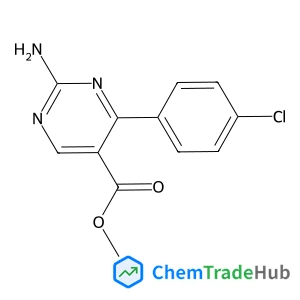
Methyl 2-amino-4-(4-chlorophenyl)-5-pyrimidinecarboxylate
CAS Number:
1133115-56-6
Molecular Formula:
C12H10ClN3O2
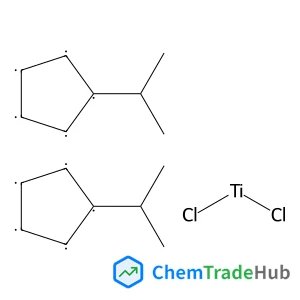
BIS(I-PROPYLCYCLOPENTADIENYL)TITANIUM DICHLORIDE
CAS Number:
12130-65-3
Molecular Formula:
C16H22Cl2Ti
Recommended Suppliers




Disclaimer
This page provides academic journal information for reference and research purposes only. We are not affiliated with any journal publishers and do not handle publication submissions. For publication-related inquiries, please contact the respective journal publishers directly.
If you notice any inaccuracies in the information displayed, please contact us at support@chemtradehub.com. We will promptly review and address your concerns.