













On the mechanochemical synthesis of C-scorpionates with an oxime moiety and their application in the copper-catalyzed azide–alkyne cycloaddition (CuAAC) reaction
Literature Information
Publication Date
2023-12-15
DOI
10.1039/D3NJ05017C
Impact Factor
3.591
Authors
Carla Gomes, Mariana Costa, Susana M. M. Lopes, Bernardo Albuquerque Nogueira, José A. Paixão, Teresa M. V. D. Pinho e Melo, Luísa M. D. R. S. Martins, Marta Pineiro
View Original
Abstract
The development of sustainable processes requires the integration of the principles of green chemistry. In this work, we develop the solvent-free synthesis of bis- and tris-(pyrazol-1-yl)methanes from pyrazole and halooximes via 1,4-addition to conjugated α-halogenated nitrosoalkenes generated in situ under ball milling. The pro-ligands were complexed with copper, using a solvent-free procedure with equimolar quantities of reactants, to give catalysts copper(II) C-scorpionates with the oxime substituent at the C-center. The new catalysts were used to efficiently catalyze azide–alkyne cycloaddition reactions under solvent-free mechanochemical conditions. Through the overall process, we combine atom economy, the use of safer solvents and auxiliaries, design for energy efficiency and reduction of derivatives and catalysis (the 1st, 5th, 6th, 8th, and 9th principles of Green Chemistry). The sustainability metrics show that mechanochemistry provides a greener and more sustainable approach for the preparation of the catalysts and for the copper-catalyzed azide–alkyne cycloaddition (CuAAC) reactions. The development of novel C-scorpionates and their metal complexes, and their subsequent application in CuAAC reactions under mechanochemical conditions, presents an exciting avenue for the future of sustainable click chemistry.
Related Literature
Retraction: A miraculous chiral Ir–Rh bimetallic nanocatalyst for asymmetric hydrogenation of activated ketones
Xiuru Xue, Zhaohui Zhao, Yanhua Wang
2019-09-27
Retraction
DOI: 10.1039/C9QO90089F
Diastereoselective bicyclization of enynols via gold catalysis
Chiara Cecchini, Gianpiero Cera, Matteo Lanzi, Luciano Marchiò, Max Malacria, Giovanni Maestri
2019-09-06
Research Article
DOI: 10.1039/C9QO00963A
Cobalt-catalyzed condensation of sulfonyl azides with o-diisocyanoarenes and anilines: a new approach to N-sulfonyl guanidines
Jin-Ming Yang, Rong Zhang, Shun-Yi Wang, Shun-Jun Ji
2019-08-20
Research Article
DOI: 10.1039/C9QO00815B
Steric hindrance classified: treatment of isothiocyanatoallene with secondary amines bearing bulky substituents to generate 2-aminothiazoles‡
Klaus Banert, Jennifer Seifert
2019-05-17
Research Article
DOI: 10.1039/C9QO00312F
Asymmetric synthesis of spiro-structural 2,3-dihydrobenzofurans via the bifunctional phosphonium salt-promoted [4 + 1] cyclization of ortho-quinone methides with α-bromoketones
Song Zhang, Jianke Pan, Hongsu Zhang, Tianli Wang
2019-10-08
Research Article
DOI: 10.1039/C9QO01096C
Photocatalytic decarboxylative [2 + 2 + 1] annulation of 1,6-enynes with N-hydroxyphthalimide esters for the synthesis of indene-containing polycyclic compounds
Meng-Jie Jiao, Dan Liu, Xiu-Qin Hu, Peng-Fei Xu
2019-10-16
Research Article
DOI: 10.1039/C9QO01166H
Organocatalyzed asymmetric formal [3 + 2] cycloaddition of isocyanoacetates with N-itaconimides: facile access to optically active spiropyrroline succinimide derivatives
Mei-Xin Zhao, Qiang Liu, Kun-Ming Yu, Xiao-Li Zhao
2019-10-17
Research Article
DOI: 10.1039/C9QO00939F
N-Heterocyclic carbene catalysed umpolung reactions of imines approaching enantioselective synthesis
2019-10-21
Highlight
DOI: 10.1039/C9QO01074B
You might also like
Compound Q&A
Is 6-(3-Fluorophenyl)picolinic acid (CAS: 887982-40-3) safe?
6-(3-Fluorophenyl)picolinic acid is generally considered safe for laboratory use...
887982-40-36-(3-Fluorophenyl)pi...
Compound Q&A
What industries use (3R)-3-Pyrrolidinol (CAS: 2799-21-5)?
(3R)-3-Pyrrolidinol is used in the pharmaceutical industry as a precursor for dr...
2799-21-5(3R)-3-Pyrrolidinol
Compound Q&A
What precautions should be taken when handling (4R,5R)-4,5-Diethoxycarbonyl-2,2-dimethyldioxolane (CAS: 59779-75-8)?
When handling (4R,5R)-4,5-Diethoxycarbonyl-2,2-dimethyldioxolane (CAS: 59779-75-...
59779-75-8(4R,5R)-4,5-Diethoxy...
Compound Q&A
How is 1-(6-Chloroimidazo[1,2-b]pyridazin-3-yl)ethanone (CAS: 90734-71-7) typically synthesized?
1-(6-Chloroimidazo[1,2-b]pyridazin-3-yl)ethanone is often synthesized via a mult...
90734-71-71-(6-Chloroimidazo[1...
Compound Q&A
What is the market or research trend for N-Ethyl-3,4-dimethylbenzylamine (CAS: 39180-83-1)?
The market for N-Ethyl-3,4-dimethylbenzylamine (CAS: 39180-83-1) remains steady,...
39180-83-1N-Ethyl-3,4-dimethyl...
Compound Q&A
What is Tert-butyl 3-(pyrrolidin-1-yl)azetidine-1-carboxylate (CAS: 1019008-21-9)?
Tert-butyl 3-(pyrrolidin-1-yl)azetidine-1-carboxylate is a chemical compound wit...
1019008-21-9Tert-butyl 3-(pyrrol...
Compound Q&A
What regulatory guidelines apply to 1-Bromo-3-chloro-2,4-dimethoxybenzene (CAS: 1228956-93-1)?
1-Bromo-3-chloro-2,4-dimethoxybenzene (CAS: 1228956-93-1) falls under the classi...
1228956-93-11-Bromo-3-chloro-2,4...
Compound Q&A
Is 8-Bromo-2-methyl-3,4-dihydroisoquinolin-1(2H)-one (CAS: 1368622-07-4) safe?
The safety of 8-Bromo-2-methyl-3,4-dihydroisoquinolin-1(2H)-one (CAS: 1368622-07...
1368622-07-48-Bromo-2-methyl-3,4...
Compound Q&A
Is Benzyl [(3S)-2,6-dioxo-3-piperidinyl]carbamate (CAS: 22785-43-9) safe?
Benzyl [(3S)-2,6-dioxo-3-piperidinyl]carbamate is generally safe when handled wi...
22785-43-9Benzyl [(3S)-2,6-dio...
Compound Q&A
How should 1-{[4-(4,4,5,5-Tetramethyl-1,3,2-dioxaborolan-2-yl)phenyl]sulfonyl}pyrrolidine (CAS: 928657-21-0) be stored?
1-{[4-(4,4,5,5-Tetramethyl-1,3,2-dioxaborolan-2-yl)phenyl]sulfonyl}pyrrolidine s...
928657-21-01-{[4-(4,4,5,5-Tetra...
Source Journal
New Journal of Chemistry

CiteScore:
5.3
Self-citation Rate:
3.7%
Articles per Year:
2153
NJC (New Journal of Chemistry) is a broad-based primary journal encompassing all branches of chemistry and its sub-disciplines. It contains full research articles, communications, perspectives and focus articles. This well-established journal, owned by the Centre National de la Recherche Scientifique (CNRS) of France, has been co-published with the Royal Society of Chemistry since January 1998. NJC is the forum for the publication of high-quality, original and significant work that opens new directions in chemistry or other scientific disciplines. In addition to having a significant chemical component, work published in NJC must demonstrate that it will have an impact on areas of research other than that of the reported work.
Recommended Compounds
![1-Benzyl-1,7-diazaspiro[4.4]nonane dihydrochloride structure](https://static.chemtradehub.com/structs/115/1159822-71-5-0320.webp "1-Benzyl-1,7-diazaspiro[4.4]nonane dihydrochloride structure")
1-Benzyl-1,7-diazaspiro[4.4]nonane dihydrochloride
CAS Number:
1159822-71-5
Molecular Formula:
C14H22Cl2N2
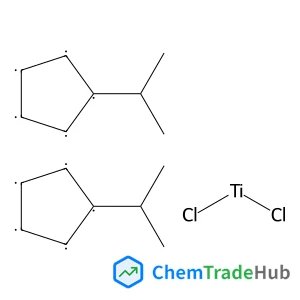
BIS(I-PROPYLCYCLOPENTADIENYL)TITANIUM DICHLORIDE
CAS Number:
12130-65-3
Molecular Formula:
C16H22Cl2Ti
Recommended Suppliers






Disclaimer
This page provides academic journal information for reference and research purposes only. We are not affiliated with any journal publishers and do not handle publication submissions. For publication-related inquiries, please contact the respective journal publishers directly.
If you notice any inaccuracies in the information displayed, please contact us at support@chemtradehub.com. We will promptly review and address your concerns.