












Novel solar-light-driven Z-scheme BiOCl@WS2 nanocomposite photocatalysts for the photocatalytic removal of organic pollutants
Literature Information
Publication Date
2023-11-06
DOI
10.1039/D3NJ04410F
Impact Factor
3.591
Authors
Chang-Mou Wu, Kebena Gebeyehu Motora, Pankaj Koinkar, Akihiro Furube
View Original
Abstract
Considering the strong sunlight-absorption property of WS2 and the good photocatalytic activity of BiOCl, a solar-light-active Z-scheme BiOCl@WS2 nanocomposite photocatalyst was synthesized by a precipitation approach. The developed photocatalyst was systematically characterized using available precision instruments. The photocatalytic property of the synthesized photocatalyst toward methyl orange (MO), rhodamine B (RhB), and crystal violet (CV) as anionic and cationic model organic dyes was investigated. In addition, the influence of operational factors, such as the catalyst dose, dye concentration, and pH, on the photocatalytic performance of the proposed photocatalyst was examined. The degree of mineralization of the fabricated Z-scheme BiOCl@WS2 nanocomposite photocatalyst during photodegradation of CV was also evaluated via total organic content (TOC) measurements. The findings showed that the developed Z-scheme BiOCl@WS2 nanocomposite exhibited excellent photocatalytic properties toward the organic pollutants MO, RhB, and CV. Moreover, the nanocomposite exhibited a better photocatalytic activity when compared with that of the solar-light-active photocatalysts reported in the open literature. It also displayed the potential to photocatalytically degrade 81% of MO, 100% of RhB, and 95% of CV within 120 min. Besides, 88% of CV could be mineralized by the fabricated photocatalyst in two hours. The outstanding photocatalytic performance of the Z-scheme BiOCl@WS2 nanocomposite could be attributed to the narrow band gap, large surface area, extended optical activity, and suppressed charge recombination rate. Thus, this work opens the door for developing effective, efficient, and stable solar-light-active photocatalysts for the photodegradation of organic dyes in wastewater.
Related Literature
Evidence for coherent mixing of excited and charge-transfer states in the major plant light-harvesting antenna, LHCII
Charusheela Ramanan, Marco Ferretti, Henny van Roon, Vladimir I. Novoderezhkin, Rienk van Grondelle
2017-08-03
Paper
DOI: 10.1039/C7CP03038J
Tuning the gap of lead-based halide perovskites by introducing superalkali species at the cationic sites of ABX3-type structure
C. Paduani, Andrew M. Rappe
2017-07-19
Paper
DOI: 10.1039/C7CP02091K
Redox titration of gold and platinum surface oxides at porous microelectrodes
Mareike Haensch, Luis Balboa, Alexander Dyck, Gunther Wittstock
2017-08-09
Paper
DOI: 10.1039/C7CP04589A
Dislocation assisted crack healing in h-BN nanosheets
Rajesh Kumar, Avinash Parashar
2017-07-25
Paper
DOI: 10.1039/C7CP04455K
Ergothioneine and related histidine derivatives in the gas phase: tautomer structures determined by IRMPD spectroscopy and theory
Katrin Peckelsen, Jonathan Martens, Lisa Czympiel, Giel Berden, Dirk Gründemann, Anthony J. H. M. Meijer, Mathias Schäfer
2017-08-14
Paper
DOI: 10.1039/C7CP03843G
Investigating the evolving microstructure of lithium metal electrodes in 3D using X-ray computed tomography
O. O. Taiwo, D. P. Finegan, J. M. Paz-Garcia, A. J. Bodey, C. Rau, S. A. Hall, D. J. L. Brett, P. R. Shearing
2017-07-25
Paper
DOI: 10.1039/C7CP02872E
How active sites facilitate charge-transfer interactions of silver and gold clusters with TCNQ?
Jing Chen, Zhixun Luo, Jiannian Yao
2017-07-25
Paper
DOI: 10.1039/C7CP02538F
Vibrational nonlinear optical properties of spatially confined weakly bound complexes
Robert Zaleśny, Marta Chołuj, Justyna Kozłowska, Wojciech Bartkowiak, Josep M. Luis
2017-08-14
Paper
DOI: 10.1039/C7CP04259K
Transport properties and ionicity of phosphonium ionic liquids
F. Philippi, J. Zapp
2017-08-03
Paper
DOI: 10.1039/C7CP04552B
You might also like
Compound Q&A
Is 6-(3-Fluorophenyl)picolinic acid (CAS: 887982-40-3) safe?
6-(3-Fluorophenyl)picolinic acid is generally considered safe for laboratory use...
887982-40-36-(3-Fluorophenyl)pi...
Compound Q&A
What industries use (3R)-3-Pyrrolidinol (CAS: 2799-21-5)?
(3R)-3-Pyrrolidinol is used in the pharmaceutical industry as a precursor for dr...
2799-21-5(3R)-3-Pyrrolidinol
Compound Q&A
What precautions should be taken when handling (4R,5R)-4,5-Diethoxycarbonyl-2,2-dimethyldioxolane (CAS: 59779-75-8)?
When handling (4R,5R)-4,5-Diethoxycarbonyl-2,2-dimethyldioxolane (CAS: 59779-75-...
59779-75-8(4R,5R)-4,5-Diethoxy...
Compound Q&A
How is 1-(6-Chloroimidazo[1,2-b]pyridazin-3-yl)ethanone (CAS: 90734-71-7) typically synthesized?
1-(6-Chloroimidazo[1,2-b]pyridazin-3-yl)ethanone is often synthesized via a mult...
90734-71-71-(6-Chloroimidazo[1...
Compound Q&A
What is the market or research trend for N-Ethyl-3,4-dimethylbenzylamine (CAS: 39180-83-1)?
The market for N-Ethyl-3,4-dimethylbenzylamine (CAS: 39180-83-1) remains steady,...
39180-83-1N-Ethyl-3,4-dimethyl...
Compound Q&A
What is Tert-butyl 3-(pyrrolidin-1-yl)azetidine-1-carboxylate (CAS: 1019008-21-9)?
Tert-butyl 3-(pyrrolidin-1-yl)azetidine-1-carboxylate is a chemical compound wit...
1019008-21-9Tert-butyl 3-(pyrrol...
Compound Q&A
What regulatory guidelines apply to 1-Bromo-3-chloro-2,4-dimethoxybenzene (CAS: 1228956-93-1)?
1-Bromo-3-chloro-2,4-dimethoxybenzene (CAS: 1228956-93-1) falls under the classi...
1228956-93-11-Bromo-3-chloro-2,4...
Compound Q&A
Is 8-Bromo-2-methyl-3,4-dihydroisoquinolin-1(2H)-one (CAS: 1368622-07-4) safe?
The safety of 8-Bromo-2-methyl-3,4-dihydroisoquinolin-1(2H)-one (CAS: 1368622-07...
1368622-07-48-Bromo-2-methyl-3,4...
Compound Q&A
Is Benzyl [(3S)-2,6-dioxo-3-piperidinyl]carbamate (CAS: 22785-43-9) safe?
Benzyl [(3S)-2,6-dioxo-3-piperidinyl]carbamate is generally safe when handled wi...
22785-43-9Benzyl [(3S)-2,6-dio...
Compound Q&A
How should 1-{[4-(4,4,5,5-Tetramethyl-1,3,2-dioxaborolan-2-yl)phenyl]sulfonyl}pyrrolidine (CAS: 928657-21-0) be stored?
1-{[4-(4,4,5,5-Tetramethyl-1,3,2-dioxaborolan-2-yl)phenyl]sulfonyl}pyrrolidine s...
928657-21-01-{[4-(4,4,5,5-Tetra...
Source Journal
New Journal of Chemistry

CiteScore:
5.3
Self-citation Rate:
3.7%
Articles per Year:
2153
NJC (New Journal of Chemistry) is a broad-based primary journal encompassing all branches of chemistry and its sub-disciplines. It contains full research articles, communications, perspectives and focus articles. This well-established journal, owned by the Centre National de la Recherche Scientifique (CNRS) of France, has been co-published with the Royal Society of Chemistry since January 1998. NJC is the forum for the publication of high-quality, original and significant work that opens new directions in chemistry or other scientific disciplines. In addition to having a significant chemical component, work published in NJC must demonstrate that it will have an impact on areas of research other than that of the reported work.
Recommended Compounds
![1-Benzyl-1,7-diazaspiro[4.4]nonane dihydrochloride structure](https://static.chemtradehub.com/structs/115/1159822-71-5-0320.webp "1-Benzyl-1,7-diazaspiro[4.4]nonane dihydrochloride structure")
1-Benzyl-1,7-diazaspiro[4.4]nonane dihydrochloride
CAS Number:
1159822-71-5
Molecular Formula:
C14H22Cl2N2
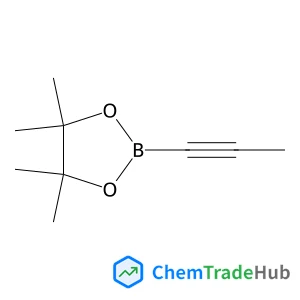
4,4,5,5-Tetramethyl-2-(1-propyn-1-YL)-1,3,2-dioxaborolane
CAS Number:
347389-75-7
Molecular Formula:
C9H15BO2
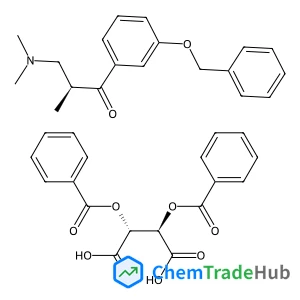
(S)-1-(3-(Benzyloxy)phenyl)-3-(dimethylamino)-2-methylpropan-1-one (2r,3r)-2,3-bis(benzoyloxy)succinate
CAS Number:
1004315-81-4
Molecular Formula:
C37H37NO10
Recommended Suppliers


Disclaimer
This page provides academic journal information for reference and research purposes only. We are not affiliated with any journal publishers and do not handle publication submissions. For publication-related inquiries, please contact the respective journal publishers directly.
If you notice any inaccuracies in the information displayed, please contact us at support@chemtradehub.com. We will promptly review and address your concerns.