


Synthesis of star and H-shape polymersvia a combination of cobalt-mediated radical polymerization and nitrone-mediated radical coupling reactions
Literature Information
Publication Date
2011-09-12
DOI
10.1039/C1PY00297J
Impact Factor
5.582
Authors
Christophe Detrembleur, Antoine Debuigne, Ozcan Altintas, Matthias Conradi, Edgar H. H. Wong, Christine Jérôme, Christopher Barner-Kowollik, Tanja Junkers
View Original
Abstract
Via consecutive cobalt-mediated radical polymerization (CMRP), nitrone-mediated radical coupling (NMRC) and copper catalyzed azide-alkynecycloaddition (CuAAC), polymers with mikto-arm star and H-shape architecture were synthesized. Poly(vinyl acetate)40-block-poly(acrylonitrile)78-Co(acac)2polymers were synthesized viaCMRC and subsequently coupled using an alkyne functional nitrone. The coupling efficiency of the NMRC process was assessed employing N-tert-butyl α-phenyl nitrone (PBN), which is structurally very similar to the later employed coupling agent. Generally, coupling efficiencies of close to 90% or higher were observed in all cases. Since the coupling reaction yields triblock copolymers bearing an alkoxyamine functionality (and thus also an alkynegroup) in the middle of the chain, well defined PEG conjugates could be obtained viaCuAAC. Miktoarm star polymers of the structure (PVAc-b-PAN)2-PEG were generated as well as H-shaped material of the structure (PVAc-b-PAN)2-PEG-(PVAc-b-PAN)2viaconjugation with bifunctional PEG. In all cases, very narrow molecular weight material was obtained. Molecular weight analysis of the intermediate and the final products reveals that the hydrodynamic volume of the miktoarm star and the H-shaped materials is not substantially increased during the final conjugation reaction despite the fact that the absolute molecular weight increases by more than a factor of two in the latter case. Success of the conjugation reactions was confirmed via composition analysis viaNMR.
Recommended Journals

Russian Chemical Reviews

Fibre Chemistry

Science Progress

Journal of Organometallic Chemistry

Proceedings of the National Academy of Sciences of the United States of America

Journal of Medicinal Chemistry

Nature

Pure and Applied Chemistry

Israel Journal of Chemistry

European Journal of Wood and Wood Products
Related Literature
Pd(ii)/Ag(i)-Cocatalyzed ortho direct arylation of O-phenylcarbamates with pinacol aryl boronates
Huijun Ma, Tao Wang, Chenying Gao, Guangshen Li, Minghao Zhang
2019-03-05
Research Article
DOI: 10.1039/C9QO00227H
Intramolecular aminocyanation of alkenes promoted by hypervalent iodine
Hang Shen, Qingfu Deng, Ruojuan Liu, Yangyang Feng, Congke Zheng
2017-06-12
Research Article
DOI: 10.1039/C7QO00214A
Photoredox-catalyzed sulfonylation of alkenylcyclobutanols with the insertion of sulfur dioxide through semipinacol rearrangement
Fu-Sheng He, Youqian Wu, Xiaofang Li, Hongguang Xia
2019-04-11
Research Article
DOI: 10.1039/C9QO00300B
A carbene-catalyzed tandem isomerization/cyclisation strategy: an efficient assembly of benzoxazinones
Ming Lang, Jian Wang
2019-02-25
Research Article
DOI: 10.1039/C9QO00094A
CuBr-mediated radical cascade difluoroacetamidation of acrylamides using α,α-difluoro-α-(TMS)-acetamides
Kai Liu, Lin-Chao Sui, Qiao Jin, Deng-Yuan Li, Pei-Nian Liu
2017-05-08
Research Article
DOI: 10.1039/C7QO00209B
Direct synthesis of hydrazones by visible light mediated aerobic oxidative cleavage of the CC bond
Ya Ding, Hao Li, Yunge Meng, Te Zhang, Jiawen Li, Qiu-Yun Chen
2017-05-15
Research Article
DOI: 10.1039/C7QO00276A
Rh(i)-Catalyzed intramolecular [3 + 2] cycloaddition reactions of yne-vinylidenecyclopropanes
Kang-Hua Rui
2019-04-03
Research Article
DOI: 10.1039/C9QO00343F
The solvent effect on the excited-state intramolecular proton transfer of cyanine derivative molecules
Wei Shi, Yunfan Yang, Yu Zhao, Yongqing Li
2019-04-02
Research Article
DOI: 10.1039/C9QO00230H
Synthesis of α-aminoketones from N-sulfonyl-1,2,3-triazoles via N-sulfinyl imines generated by intramolecular oxygen transfer
Ze-Feng Xu, Lihong Shan, Wan Zhang, Mengjie Cen, Chuan-Ying Li
2019-03-05
Research Article
DOI: 10.1039/C9QO00126C
You might also like
Compound Q&A
Are there alternatives to 1-(4-Chlorophenyl)-N-hydroxymethanimine (CAS: 3848-36-0) in synthesis?
When considering alternatives to 1-(4-Chlorophenyl)-N-hydroxymethanimine (CAS: 3...
3848-36-01-(4-Chlorophenyl)-N...
Compound Q&A
How should (1R,9S,10S,12S,14E,16S,19R,20R,21S,22R)-3,9,21-Trihydroxy-5,10,12,14,16,20,22-heptamethyl-23,24-dioxatetracyclo[17.3.1.1~6,9~.0~2,7~]tetracosa-2,5,7,14-tetraen-4-one (CAS: 183202-73-5) be stored?
This compound should be stored in a cool, dry place away from direct sunlight. I...
183202-73-5(1R,9S,10S,12S,14E,1...
Compound Q&A
How is 3-(4-Bromophenyl)-5-(2-fluorophenyl)-1,2,4-oxadiazole (CAS: 419553-16-5) typically synthesized?
3-(4-Bromophenyl)-5-(2-fluorophenyl)-1,2,4-oxadiazole is synthesized through a m...
419553-16-53-(4-Bromophenyl)-5-...
Compound Q&A
How is 5-Chloro-2-(4-chlorophenyl)-4-methyl-6-[3-(1-piperidinyl)propoxy]pyrimidine (CAS: 1639220-19-1) typically synthesized?
5-Chloro-2-(4-chlorophenyl)-4-methyl-6-[3-(1-piperidinyl)propoxy]pyrimidine (CAS...
1639220-19-15-Chloro-2-(4-chloro...
Compound Q&A
What industries use 2-Chloro-4-(difluoromethoxy)pyridine (CAS: 1206978-15-5)?
2-Chloro-4-(difluoromethoxy)pyridine is used in the pharmaceutical industry for ...
1206978-15-52-Chloro-4-(difluoro...
Compound Q&A
What regulatory guidelines apply to 3-Chloro-6-methylpyridazine (CAS: 1121-79-5)?
3-Chloro-6-methylpyridazine (CAS: 1121-79-5) is classified under the Globally Ha...
1121-79-53-Chloro-6-methylpyr...
Compound Q&A
Are there alternatives to Methyl 4,5-dimethyl-2-nitrobenzoate in synthesis?
Several alternatives can be used in the synthesis of Methyl 4,5-dimethyl-2-nitro...
90922-74-0Methyl 4,5-dimethyl-...
Compound Q&A
Are there alternatives to (2E,2'E)-3,3'-(1,4-Phenylene)bisacrylaldehyde in synthesis?
Alternatives to (2E,2'E)-3,3'-(1,4-Phenylene)bisacrylaldehyde include other acry...
63405-68-5(2E,2'E)-3,3'-(1,4-P...
Compound Q&A
What is 3-Amino-5-chloropyridin-2-ol hydrochloride (CAS: 1261906-29-9)?
3-Amino-5-chloropyridin-2-ol hydrochloride is an organic compound with the CAS n...
1261906-29-93-Amino-5-chloropyri...
Compound Q&A
What precautions should be taken when handling 6,7-Difluoro-2,3-dihydro-4H-chromen-4-one (CAS: 1092349-93-3)?
When handling 6,7-Difluoro-2,3-dihydro-4H-chromen-4-one, it is essential to wear...
1092349-93-36,7-Difluoro-2,3-dih...
Source Journal
Polymer Chemistry

CiteScore:
8.6
Self-citation Rate:
7.3%
Articles per Year:
457
Polymer Chemistry welcomes submissions in all areas of polymer science that have a strong focus on macromolecular chemistry. Manuscripts may cover a broad range of fields, yet no direct application focus is required.
Recommended Compounds
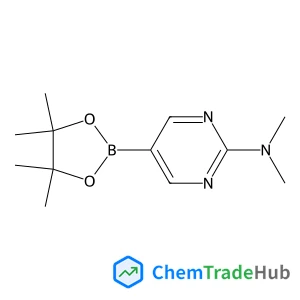
N,N-Dimethyl-5-(4,4,5,5-tetramethyl-1,3,2-dioxaborolan-2-yl)-2-pyrimidinamine
CAS Number:
1032759-30-0
Molecular Formula:
C12H20BN3O2
Recommended Suppliers






Disclaimer
This page provides academic journal information for reference and research purposes only. We are not affiliated with any journal publishers and do not handle publication submissions. For publication-related inquiries, please contact the respective journal publishers directly.
If you notice any inaccuracies in the information displayed, please contact us at support@chemtradehub.com. We will promptly review and address your concerns.