












Interaction between NO and Na, O, S, Cl on Au and Pd(111) surfaces
Literature Information
Publication Date
2011-07-07
DOI
10.1039/C1CP20974D
Impact Factor
3.676
Authors
Ren-Yu Tian, Xiao-Bao Yang, Song-Lin Peng
View Original
Abstract
NO co-adsorption with X (X = Na, O, S, and Cl) on Au and Pd(111) surfaces is studied using density functional theory (DFT) calculations to get a deeper insight into the extraordinary sulfur enhanced adsorption on the Au surface. It is found that both electronegative and electropositive adatoms can enhance NO adsorption on Au(111). In Na + NO/Au(111), the strong electrostatic attraction between Na and NO dominates and stabilizes NO adsorption, though Na-induced surface negative charging weakens NO adsorption. In (O, S, Cl) + NO/Au, the electronegative atoms would induce a slight surface distortion and enhance NO adsorption accordingly. NO adsorption on Pd(111) is enhanced by Na, but weakened by electronegative species. We suggest that the unique features of noble metals, i.e., the narrow DOS at the Fermi level (EF) and the deep buried d-band center, should play an important role in the promotion of NO adsorption on their surface as the CO case.
Related Literature
Highly improved performance of a film-based fluorescent sensor via a nanomesh scaffold strategy
Meng Liu, Dong Li, Kun Li, Haitao Xu, Jiufu Lu, Xianzhao Shao, Taihong Liu
2021-11-01
Communication
DOI: 10.1039/D1SD00016K
Posttranslational modifications of α-conotoxins: sulfotyrosine and C-terminal amidation stabilise structures and increase acetylcholine receptor binding
Thao N. T. Ho, Han Siean Lee, Shilpa Swaminathan, Lewis Goodwin, Nishant Rai, Brianna Ushay, Richard J. Lewis, K. Johan Rosengren, Anne C. Conibear
2021-07-26
Research Article
DOI: 10.1039/D1MD00182E
Antibiotic administration in targeted nanoparticles protects the faecal microbiota of mice
Baris A. Borsa, Mert Sudagidan, Mehmet E. Aldag, Isik I. Baris, Elif E. Acar, Cagatay Acuner, Murat Kavruk, Veli C. Ozalp
2021-01-15
Research Article
DOI: 10.1039/D0MD00347F
Biological evaluation of native streptococcal competence stimulating peptides reveals potential crosstalk between Streptococcus mitis and Streptococcus pneumoniae and a new scaffold for the development of S. pneumoniae quorum sensing modulators
Tahmina Ahmed Milly, Yftah Tal-Gan
2020-05-29
Paper
DOI: 10.1039/D0CB00012D
Potent and selective A3 adenosine receptor antagonists bearing aminoesters as heterobifunctional moieties
Stephanie Federico, Stefano Moro, Sonja Kachler, Karl-Norbert Klotz, Giampiero Spalluto
2020-12-14
Research Article
DOI: 10.1039/D0MD00380H
Nanoscale, automated, high throughput synthesis and screening for the accelerated discovery of protein modifiers
Kai Gao, Shabnam Shaabani, Ruixue Xu, Tryfon Zarganes-Tzitzikas, Li Gao, Maryam Ahmadianmoghaddam, Matthew R. Groves, Alexander Dömling
2021-05-05
Research Article
DOI: 10.1039/D1MD00087J
Aloe-emodin derived azoles as a new structural type of potential antibacterial agents: design, synthesis, and evaluation of the action on membrane, DNA, and MRSA DNA isomerase‡
Xin-Yuan Liang, Narsaiah Battini, Yan-Fei Sui, Mohammad Fawad Ansari, Lin-Ling Gan, Cheng-He Zhou
2021-03-03
Research Article
DOI: 10.1039/D0MD00429D
Design and optimisation of a small-molecule TLR2/4 antagonist for anti-tumour therapy
Qun Xu, Tian Li, Hekai Chen, Jun Kong, Liwei Zhang
2021-09-07
Research Article
DOI: 10.1039/D1MD00175B
Discovery of potent nucleotide pyrophosphatase/phosphodiesterase3 (NPP3) inhibitors with ancillary carbonic anhydrase inhibition for cancer (immuno)therapy
Sang-Yong Lee, Vigneshwaran Namasivayam, Arianna Perotti, Salahuddin Mirza, Silvia Bua, Claudiu T. Supuran, Christa E. Müller
2021-06-16
Research Article
DOI: 10.1039/D1MD00117E
You might also like
Compound Q&A
What are the main uses of 1-(3-Aminophenyl)-3-[(3R)-1-(3,3-dimethyl-2-oxobutyl)-2-oxo-5-(2-pyridinyl)-2,3-dihydro-1H-1,4-benzodiazepin-3-yl]urea (CAS: 155412-88-7)?
This compound is mainly used as an intermediate in the synthesis of antipsychoti...
155412-88-71-(3-Aminophenyl)-3-...
Compound Q&A
How should waste containing 1-(D-Ribofuranosyl)-1,4-dihydro-3-pyridinecarboxamide (CAS: 19132-12-8) be handled?
Waste containing 1-(D-Ribofuranosyl)-1,4-dihydro-3-pyridinecarboxamide (CAS: 191...
19132-12-81-(D-Ribofuranosyl)-...
Compound Q&A
What regulatory guidelines apply to 2-Methyl-2-propanyl 3-bromo-3-(hydroxymethyl)-1-azetidinecarboxylate (CAS: 2007919-81-3)?
2-Methyl-2-propanyl 3-bromo-3-(hydroxymethyl)-1-azetidinecarboxylate (CAS: 20079...
2007919-81-32-Methyl-2-propanyl ...
Compound Q&A
What is N-(4-Chloro-2-pyridinyl)acetamide (CAS: 245056-66-0)?
N-(4-Chloro-2-pyridinyl)acetamide (CAS: 245056-66-0) is a chemical compound with...
245056-66-0N-(4-Chloro-2-pyridi...
Compound Q&A
What is 5-Chloro-2-hydroxybenzoic acid (CAS: 321-14-2)?
5-Chloro-2-hydroxybenzoic acid, also known as 5-chlorosalicylic acid, is an arom...
321-14-25-Chloro-2-hydroxybe...
Compound Q&A
What precautions should be taken when handling 1,1-Dichloro-1-fluoroethane (CAS: 1717-00-6)?
When handling 1,1-Dichloro-1-fluoroethane (CAS: 1717-00-6), it is important to u...
1717-00-61,1-Dichloro-1-fluor...
Compound Q&A
What are the physical and chemical properties of Fmoc-(2S,3R)-3-phenylpyrrolidine-2-carboxylic acid (CAS: 281655-32-1)?
Fmoc-(2S,3R)-3-phenylpyrrolidine-2-carboxylic acid is a white crystalline solid ...
281655-32-1Fmoc-(2S,3R)-3-pheny...
Compound Q&A
What are the main uses of 4-Amino-5-bromo-2-pyridinecarboxylic acid (CAS: 1363381-01-4)?
4-Amino-5-bromo-2-pyridinecarboxylic acid is primarily used as a precursor in th...
1363381-01-44-Amino-5-bromo-2-py...
Compound Q&A
What precautions should be taken when handling (S)-tert-butyl 2-((2-(4-bromophenyl)-2-oxoethyl)carbamoyl)pyrrolidine-1-carboxylate (CAS: 1007881-98-2)?
Handling this compound should be done with personal protective equipment (PPE) i...
1007881-98-2(S)-tert-butyl 2-((2...
Compound Q&A
What precautions should be taken when handling 8-bromo-2,2-dimethyl-3,4-dihydro-2H-1,4-benzoxazin-3-one (CAS: 688363-73-7)?
When handling 8-bromo-2,2-dimethyl-3,4-dihydro-2H-1,4-benzoxazin-3-one, use prop...
688363-73-78-bromo-2,2-dimethyl...
Source Journal
Physical Chemistry Chemical Physics

CiteScore:
5.5
Self-citation Rate:
10.3%
Articles per Year:
3036
Physical Chemistry Chemical Physics (PCCP) is an international journal co-owned by 19 physical chemistry and physics societies from around the world. This journal publishes original, cutting-edge research in physical chemistry, chemical physics and biophysical chemistry. To be suitable for publication in PCCP, articles must include significant innovation and/or insight into physical chemistry; this is the most important criterion that reviewers and Editors will judge against when evaluating submissions. The journal has a broad scope and welcomes contributions spanning experiment, theory, computation and data science. Topical coverage includes spectroscopy, dynamics, kinetics, statistical mechanics, thermodynamics, electrochemistry, catalysis, surface science, quantum mechanics, quantum computing and machine learning. Interdisciplinary research areas such as polymers and soft matter, materials, nanoscience, energy, surfaces/interfaces, and biophysical chemistry are welcomed if they demonstrate significant innovation and/or insight into physical chemistry. Joined experimental/theoretical studies are particularly appreciated when complementary and based on up-to-date approaches.
Recommended Compounds
![2,6-Di(thiophen-2-yl)dithieno[3,2-b:2',3'-d]thiophene structure](https://static.chemtradehub.com/structs/910/910788-24-8-5b70.webp "2,6-Di(thiophen-2-yl)dithieno[3,2-b:2',3'-d]thiophene structure")
2,6-Di(thiophen-2-yl)dithieno[3,2-b:2',3'-d]thiophene
CAS Number:
910788-24-8
Molecular Formula:
C16H8S5
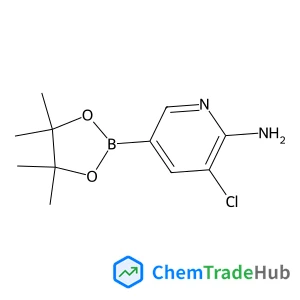
3-Chloro-5-(4,4,5,5-tetramethyl-1,3,2-dioxaborolan-2-yl)-2-pyridinamine
CAS Number:
1032758-99-8
Molecular Formula:
C11H16BClN2O2
Recommended Suppliers






Disclaimer
This page provides academic journal information for reference and research purposes only. We are not affiliated with any journal publishers and do not handle publication submissions. For publication-related inquiries, please contact the respective journal publishers directly.
If you notice any inaccuracies in the information displayed, please contact us at support@chemtradehub.com. We will promptly review and address your concerns.