












![Methyl 4-({[(2-methyl-2-propanyl)oxy]carbonyl}amino)bicyclo[2.2.2]octane-1-carboxylate structure](https://static.chemtradehub.com/structs/943/943845-74-7-b7e5.webp "Methyl 4-({[(2-methyl-2-propanyl)oxy]carbonyl}amino)bicyclo[2.2.2]octane-1-carboxylate structure")
Methyl 4-({[(2-methyl-2-propanyl)oxy]carbonyl}amino)bicyclo[2.2.2]octane-1-carboxylate
CAS Number:
943845-74-7
Molecular Formula:
C15H25NO4
Thao N. T. Ho, Han Siean Lee, Shilpa Swaminathan, Lewis Goodwin, Nishant Rai, Brianna Ushay, Richard J. Lewis, K. Johan Rosengren, Anne C. Conibear
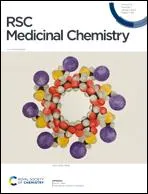
Conotoxins are peptides found in the venoms of marine cone snails. They are typically highly structured and stable and have potent activities at nicotinic acetylcholine receptors, which make them valuable research tools and promising lead molecules for drug development. Many conotoxins are also highly modified with posttranslational modifications such as proline hydroxylation, glutamic acid gamma-carboxylation, tyrosine sulfation and C-terminal amidation, amongst others. The role of these posttranslational modifications is poorly understood, and it is unclear whether the modifications interact directly with the binding site, alter conotoxin structure, or both. Here we synthesised a set of twelve conotoxin variants bearing posttranslational modifications in the form of native sulfotyrosine and C-terminal amidation and show that these two modifications in combination increase their activity at nicotinic acetylcholine receptors and binding to soluble acetylcholine binding proteins, respectively. We then rationalise how these functional differences between variants might arise from stabilization of the three-dimensional structures and interactions with the binding sites, using high-resolution nuclear magnetic resonance data. This study demonstrates that posttranslational modifications can modulate interactions between a ligand and receptor by a combination of structural and binding alterations. A deeper mechanistic understanding of the role of posttranslational modifications in structure–activity relationships is essential for understanding receptor biology and could help to guide structure-based drug design.
Leela Manohar Aeshala, Ramagopal Uppaluri, Anil Verma
DOI: 10.1039/C4CP02389G
Javier Navarro-Ruiz, Mariona Sodupe, Piero Ugliengo, Albert Rimola
DOI: 10.1039/C4CP00819G
Ashok Kumar Baral, Sumaletha Narayanan, Farshid Ramezanipour, Venkataraman Thangadurai
DOI: 10.1039/C4CP00418C
Jeff Armstrong, Fernando Bresme
DOI: 10.1039/C4CP00818A
Bogdan I. Costescu, Ilona B. Baldus
DOI: 10.1039/C3CP55340J
Martin Neukom, Dorothea Scheunemann, Emre Erdem, Stefan Weber, Holger Borchert
DOI: 10.1039/C4CP01566E
Chi Chen, Dengjie Chen, William C. Chueh
DOI: 10.1039/C4CP01285B
DOI: 10.1039/C4CP03939D
Kamilla Norregaard, Liselotte Jauffred, Kirstine Berg-Sørensen, Lene B. Oddershede
DOI: 10.1039/C4CP00208C
This compound is mainly used as an intermediate in the synthesis of antipsychoti...
Waste containing 1-(D-Ribofuranosyl)-1,4-dihydro-3-pyridinecarboxamide (CAS: 191...
2-Methyl-2-propanyl 3-bromo-3-(hydroxymethyl)-1-azetidinecarboxylate (CAS: 20079...
N-(4-Chloro-2-pyridinyl)acetamide (CAS: 245056-66-0) is a chemical compound with...
5-Chloro-2-hydroxybenzoic acid, also known as 5-chlorosalicylic acid, is an arom...
When handling 1,1-Dichloro-1-fluoroethane (CAS: 1717-00-6), it is important to u...
Fmoc-(2S,3R)-3-phenylpyrrolidine-2-carboxylic acid is a white crystalline solid ...
4-Amino-5-bromo-2-pyridinecarboxylic acid is primarily used as a precursor in th...
Handling this compound should be done with personal protective equipment (PPE) i...
When handling 8-bromo-2,2-dimethyl-3,4-dihydro-2H-1,4-benzoxazin-3-one, use prop...
![4-Chloro-3-(trifluoromethyl)-1H-pyrrolo[2,3-b]pyridine structure](https://static.chemtradehub.com/structs/869/869335-75-1-a9d0.webp "4-Chloro-3-(trifluoromethyl)-1H-pyrrolo[2,3-b]pyridine structure")
![5-Methyl-4,5,6,7-tetrahydropyrazolo[1,5-a]pyrazin-2-amine structure](https://static.chemtradehub.com/structs/122/1227210-33-4-8d64.webp "5-Methyl-4,5,6,7-tetrahydropyrazolo[1,5-a]pyrazin-2-amine structure")





