












Amperometric proton selective sensors utilizing ion transfer reactions across a microhole liquid/gel interface‡
Literature Information
Publication Date
2010-10-05
DOI
10.1039/C0CP00750A
Impact Factor
3.676
Authors
Shaikh Nayeem Faisal, Carlos M. Pereira, Sangchul Rho, Hye Jin Lee
View Original
Abstract
A new cost-effective amperometric proton selective sensor utilizing a single microhole interface between two immiscible electrolyte solutions (ITIES) is developed. The sensing methodology is based on measuring currents associated with proton transfer across the interface assisted by a proton selective ionophore. The ellipse shaped micro-interface was first fabricated by simple mechanical punching with a sharp needle on a thin PVC film (12 μm thick) commercially available as a food wrapping material. The microhole was then filled up with a gellified polyvinylchloride (PVC)-2-nitrophenyloctylether (NPOE) to create a single microhole liquid/liquid interface. Direct ion transfer reactions across the polarized interface serving as ion sensing platforms were studied using cyclic voltammetry. In order to enhance the selectivity of proton sensing, a proton selective ionophore, octadecyl isonicotinate (ETH1778), was incorporated into the organic gel layer and their electrochemical sensing characteristics were investigated using cyclic voltammetry and differential pulse stripping voltammetry. As an example, we employed the proton selective sensor for the determination of glucose concentrations. The detection scheme involves two steps: (i) protons are first generated by the oxidation of glucose with glucose oxidase in the aqueous phase; and (ii) the current associated with the proton transfer across the interface is then measured for correlating the concentration of glucose.
Related Literature
Oxidation of thioethers and sulfoxides with hydrogen peroxide using TS-1 as catalyst
Denis J. Robinson, Lucinda Davies, Neil McGuire, Darren F. Lee, Paul McMorn, David J. Willock, Graeme W. Watson, Philip C. Bulman Page, Donald Bethell
2000-03-14
Paper
DOI: 10.1039/A907605K
A detailed mechanistic study of bulk MADIX of styrene and its chain extension
Dries J. G. Devlaminck, Paul H. M. Van Steenberge, Lies De Keer, Marie-Françoise Reyniers
2017-10-16
Paper
DOI: 10.1039/C7PY00961E
Nucleation of solution convection channels as the first step in electro-hydrodynamic pattern formation
2000-02-28
Paper
DOI: 10.1039/A909729E
Homogeneous freezing nucleation rates and crystallization dynamics of single levitated sulfuric acid solution droplets
Hermann Vortisch, Benedikt Krämer, Inez Weidinger, Ludger Wöste, Thomas Leisner, Martin Schwell, Helmut Baumgärtel, Eckart Rühl
2000-03-10
Paper
DOI: 10.1039/A908225E
Thiol–ene polymerization of oligospiroketal rods
Pablo Wessig, Tanja Schulze, Alexandra Pfennig, Steffen M. Weidner, Sascha Prentzel, Helmut Schlaad
2017-10-18
Paper
DOI: 10.1039/C7PY01569K
Acrylate-macromonomers and telechelics of PBA by merging biphasic SET-LRP of BA, chain extension with MA and biphasic esterification
Tong Liu, Marina Galià, Virgil Percec
2018-03-14
Paper
DOI: 10.1039/C8PY00156A
Thermal stability of carbonyl radicals Part I. Straight-chain and branched C4 and C5 acyl radicals
S. Jagiella, H. G. Libuda, F. Zabel
2000-03-01
Paper
DOI: 10.1039/A909557H
Quantum scattering and quasi-classical trajectory calculations for the H2+OH⇌H2O+H reaction on a new potential surface
Julian Echave
2000-02-07
Paper
DOI: 10.1039/A908080E
Computational electrochemistry: aqueous one-electron oxidation potentials for substituted anilines
Paul Winget, Eric J. Weber, Christopher J. Cramer, Donald G. Truhlar
2000-03-02
Paper
DOI: 10.1039/A909076B
The anionic ring-opening polymerization of N-(methanesulfonyl)azetidine
Louis Reisman, Elizabeth A. Rowe, Qiaoli Liang, Paul A. Rupar
2018-02-26
Paper
DOI: 10.1039/C8PY00074C
You might also like
Compound Q&A
How is Ethyl 4-chlorothieno[2,3-b]pyridine-5-carboxylate (CAS: 59713-58-5) typically synthesized?
Ethyl 4-chlorothieno[2,3-b]pyridine-5-carboxylate (CAS: 59713-58-5) can be synth...
59713-58-5Ethyl 4-chlorothieno...
Compound Q&A
What regulatory guidelines apply to 5-Methyl-1H-indole-3-carbaldehyde (CAS: 52562-50-2)?
5-Methyl-1H-indole-3-carbaldehyde (CAS: 52562-50-2) is subject to various regula...
52562-50-25-Methyl-1H-indole-3...
Compound Q&A
What are the physical and chemical properties of (1,3-Dimethyl-2,4-dioxo-1,2,3,4-tetrahydro-5-pyrimidinyl)boronic acid (CAS: 223418-73-3)?
(1,3-Dimethyl-2,4-dioxo-1,2,3,4-tetrahydro-5-pyrimidinyl)boronic acid is a white...
223418-73-3(1,3-Dimethyl-2,4-di...
Compound Q&A
How should waste containing Sulfocostunolide A (CAS: 1016983-51-9) be handled?
Waste containing Sulfocostunolide A (CAS: 1016983-51-9) should be handled with c...
1016983-51-9Sulfocostunolide A
Compound Q&A
What precautions should be taken when handling Murraxocin (CAS: 88478-44-8)?
When handling Murraxocin (CAS: 88478-44-8), ensure proper personal protective eq...
88478-44-8Murraxocin
Compound Q&A
What are the physical and chemical properties of Formvar (CAS: 63148-64-1)?
Formvar (CAS: 63148-64-1) is an alkyd resin characterized by a high molecular we...
63148-64-1Formvar(R)
Compound Q&A
Is (S)-4-benzyl-2-((benzyloxy)methyl)morpholine (CAS: 205242-66-6) safe?
(S)-4-benzyl-2-((benzyloxy)methyl)morpholine is generally safe when handled with...
205242-66-6(S)-4-benzyl-2-((ben...
Compound Q&A
What industries use Methyl 1-(5-bromo-2-pyrimidinyl)cyclopropanecarboxylate (CAS: 1447607-69-3)?
Methyl 1-(5-bromo-2-pyrimidinyl)cyclopropanecarboxylate (CAS: 1447607-69-3) is p...
1447607-69-3Methyl 1-(5-bromo-2-...
Compound Q&A
Is 2-Methyl-1-phenyl-1-propanamine hydrochloride (CAS: 24290-47-9) safe?
2-Methyl-1-phenyl-1-propanamine hydrochloride (CAS: 24290-47-9) is generally con...
24290-47-92-Methyl-1-phenyl-1-...
Compound Q&A
How is 3-(4-Bromophenyl)-2-methylpropanoic acid (CAS: 66735-01-1) typically synthesized?
3-(4-Bromophenyl)-2-methylpropanoic acid is synthesized through a multi-step pro...
66735-01-13-(4-Bromophenyl)-2-...
Source Journal
Physical Chemistry Chemical Physics

CiteScore:
5.5
Self-citation Rate:
10.3%
Articles per Year:
3036
Physical Chemistry Chemical Physics (PCCP) is an international journal co-owned by 19 physical chemistry and physics societies from around the world. This journal publishes original, cutting-edge research in physical chemistry, chemical physics and biophysical chemistry. To be suitable for publication in PCCP, articles must include significant innovation and/or insight into physical chemistry; this is the most important criterion that reviewers and Editors will judge against when evaluating submissions. The journal has a broad scope and welcomes contributions spanning experiment, theory, computation and data science. Topical coverage includes spectroscopy, dynamics, kinetics, statistical mechanics, thermodynamics, electrochemistry, catalysis, surface science, quantum mechanics, quantum computing and machine learning. Interdisciplinary research areas such as polymers and soft matter, materials, nanoscience, energy, surfaces/interfaces, and biophysical chemistry are welcomed if they demonstrate significant innovation and/or insight into physical chemistry. Joined experimental/theoretical studies are particularly appreciated when complementary and based on up-to-date approaches.
Recommended Compounds
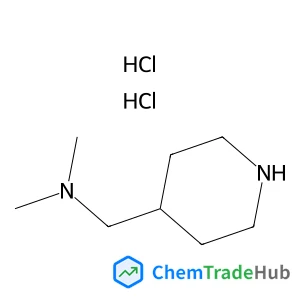
N,N-dimethyl(piperidin-4-yl)methanamine hydrochloride
CAS Number:
172281-72-0
Molecular Formula:
C8H20Cl2N2
![9H-Fluoren-9-ylmethyl [(2S)-1-hydroxy-3-(1H-indol-3-yl)-2-propanyl]carbamate structure](https://static.chemtradehub.com/structs/153/153815-60-2-a67d.webp "9H-Fluoren-9-ylmethyl [(2S)-1-hydroxy-3-(1H-indol-3-yl)-2-propanyl]carbamate structure")
9H-Fluoren-9-ylmethyl [(2S)-1-hydroxy-3-(1H-indol-3-yl)-2-propanyl]carbamate
CAS Number:
153815-60-2
Molecular Formula:
C26H24N2O3
Recommended Suppliers






Disclaimer
This page provides academic journal information for reference and research purposes only. We are not affiliated with any journal publishers and do not handle publication submissions. For publication-related inquiries, please contact the respective journal publishers directly.
If you notice any inaccuracies in the information displayed, please contact us at support@chemtradehub.com. We will promptly review and address your concerns.