












Thiol–ene polymerization of oligospiroketal rods
Literature Information
Publication Date
2017-10-18
DOI
10.1039/C7PY01569K
Impact Factor
5.582
Authors
Pablo Wessig, Tanja Schulze, Alexandra Pfennig, Steffen M. Weidner, Sascha Prentzel, Helmut Schlaad
View Original
Abstract
The nucleophilic thiol–ene (thia-Michael) reaction between molecular rods bearing terminal thiols and bis-maleimides was investigated. The molecular rods have oligospiroketal (OSK) and oligospirothioketal (OSTK) backbones. Contrary to the expectations, cyclic oligomers were always obtained instead of linear rigid-rod polymers. Replacing the OS(T)K rods with a flexible chain yielded polymeric products, suggesting that the OS(T)K structure is responsible for the formation of cyclic products. The reason for the preferred formation of cyclic products is due to the presence of folded conformations, which have already been described for articulated rods.
Related Literature
XPS enables visualization of electrode potential screening in an ionic liquid medium with temporal- and lateral-resolution
M. T. Camci, P. Aydogan, B. Ulgut, C. Kocabas, S. Suzer
2016-08-15
Paper
DOI: 10.1039/C6CP04933H
Spin-state energies of heme-related models from spin-flip TDDFT calculations
Hui Zhao, Changfeng Fang, Chengbu Liu
2016-09-30
Paper
DOI: 10.1039/C6CP04826A
Preparation and electrochemical properties of Li2MoO3/C composites for rechargeable Li-ion batteries
Yotaro Shirao, Kei Kubota, Shinichi Komaba
2016-09-26
Paper
DOI: 10.1039/C6CP05162F
Quantitative ionization energies and work functions of aqueous solutions
Giorgia Olivieri, Alok Goel, Armin Kleibert, Dean Cvetko, Matthew A. Brown
2016-10-05
Paper
DOI: 10.1039/C6CP05682B
On the wavelength dependence of UV induced thymine photolesions: a synchrotron radiation circular dichroism study
Nykola C. Jones, Steen Brøndsted Nielsen, Søren Vrønning Hoffmann
2016-10-17
Paper
DOI: 10.1039/C6CP05980E
Ultrafast ion migration in hybrid perovskite polycrystalline thin films under light and suppression in single crystals
Qi Wang, Qingfeng Dong, Yanjun Fang, Jinsong Huang
2016-10-13
Paper
DOI: 10.1039/C6CP06496E
Growth patterns and structural motifs of cadmium clusters with up to 60 atoms: disordered or not?
Stephan Kohaut
2016-09-13
Paper
DOI: 10.1039/C6CP04948F
Thermal oxidative and ozone oxidative stabilization effect of hybridized functional graphene oxide in a silica-filled solution styrene butadiene elastomer
Juqiao Su, Zhongguo Zhao, Yajiang Huang, Xia Liao, Qi Yang
2016-09-08
Paper
DOI: 10.1039/C6CP03916B
Investigation of the effect of cucurbit[7]uril complexation on the photophysical and acid–base properties of the antimalarial drug quinine
Suman Mallick, Kaushik Pal, Falguni Chandra, Apurba L. Koner
2016-10-07
Paper
DOI: 10.1039/C6CP04931A
Giant spin–orbit effects on 1H and 13C NMR shifts for uranium(vi) complexes revisited: role of the exchange–correlation response kernel, bonding analyses, and new predictions
Anja H. Greif, Peter Hrobárik, Jochen Autschbach, Martin Kaupp
2016-10-18
Paper
DOI: 10.1039/C6CP06129J
You might also like
Compound Q&A
How is Ethyl 4-chlorothieno[2,3-b]pyridine-5-carboxylate (CAS: 59713-58-5) typically synthesized?
Ethyl 4-chlorothieno[2,3-b]pyridine-5-carboxylate (CAS: 59713-58-5) can be synth...
59713-58-5Ethyl 4-chlorothieno...
Compound Q&A
What regulatory guidelines apply to 5-Methyl-1H-indole-3-carbaldehyde (CAS: 52562-50-2)?
5-Methyl-1H-indole-3-carbaldehyde (CAS: 52562-50-2) is subject to various regula...
52562-50-25-Methyl-1H-indole-3...
Compound Q&A
What are the physical and chemical properties of (1,3-Dimethyl-2,4-dioxo-1,2,3,4-tetrahydro-5-pyrimidinyl)boronic acid (CAS: 223418-73-3)?
(1,3-Dimethyl-2,4-dioxo-1,2,3,4-tetrahydro-5-pyrimidinyl)boronic acid is a white...
223418-73-3(1,3-Dimethyl-2,4-di...
Compound Q&A
How should waste containing Sulfocostunolide A (CAS: 1016983-51-9) be handled?
Waste containing Sulfocostunolide A (CAS: 1016983-51-9) should be handled with c...
1016983-51-9Sulfocostunolide A
Compound Q&A
What precautions should be taken when handling Murraxocin (CAS: 88478-44-8)?
When handling Murraxocin (CAS: 88478-44-8), ensure proper personal protective eq...
88478-44-8Murraxocin
Compound Q&A
What are the physical and chemical properties of Formvar (CAS: 63148-64-1)?
Formvar (CAS: 63148-64-1) is an alkyd resin characterized by a high molecular we...
63148-64-1Formvar(R)
Compound Q&A
Is (S)-4-benzyl-2-((benzyloxy)methyl)morpholine (CAS: 205242-66-6) safe?
(S)-4-benzyl-2-((benzyloxy)methyl)morpholine is generally safe when handled with...
205242-66-6(S)-4-benzyl-2-((ben...
Compound Q&A
What industries use Methyl 1-(5-bromo-2-pyrimidinyl)cyclopropanecarboxylate (CAS: 1447607-69-3)?
Methyl 1-(5-bromo-2-pyrimidinyl)cyclopropanecarboxylate (CAS: 1447607-69-3) is p...
1447607-69-3Methyl 1-(5-bromo-2-...
Compound Q&A
Is 2-Methyl-1-phenyl-1-propanamine hydrochloride (CAS: 24290-47-9) safe?
2-Methyl-1-phenyl-1-propanamine hydrochloride (CAS: 24290-47-9) is generally con...
24290-47-92-Methyl-1-phenyl-1-...
Compound Q&A
How is 3-(4-Bromophenyl)-2-methylpropanoic acid (CAS: 66735-01-1) typically synthesized?
3-(4-Bromophenyl)-2-methylpropanoic acid is synthesized through a multi-step pro...
66735-01-13-(4-Bromophenyl)-2-...
Source Journal
Polymer Chemistry

CiteScore:
8.6
Self-citation Rate:
7.3%
Articles per Year:
457
Polymer Chemistry welcomes submissions in all areas of polymer science that have a strong focus on macromolecular chemistry. Manuscripts may cover a broad range of fields, yet no direct application focus is required.
Recommended Compounds
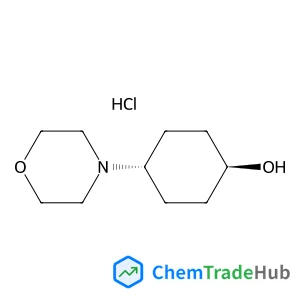
trans-4-(4-Morpholinyl)cyclohexanol hydrochloride (1:1)
CAS Number:
1588441-09-1
Molecular Formula:
C10H20ClNO2
![9H-Fluoren-9-ylmethyl [(2S)-1-hydroxy-3-(1H-indol-3-yl)-2-propanyl]carbamate structure](https://static.chemtradehub.com/structs/153/153815-60-2-a67d.webp "9H-Fluoren-9-ylmethyl [(2S)-1-hydroxy-3-(1H-indol-3-yl)-2-propanyl]carbamate structure")
9H-Fluoren-9-ylmethyl [(2S)-1-hydroxy-3-(1H-indol-3-yl)-2-propanyl]carbamate
CAS Number:
153815-60-2
Molecular Formula:
C26H24N2O3
Recommended Suppliers







Disclaimer
This page provides academic journal information for reference and research purposes only. We are not affiliated with any journal publishers and do not handle publication submissions. For publication-related inquiries, please contact the respective journal publishers directly.
If you notice any inaccuracies in the information displayed, please contact us at support@chemtradehub.com. We will promptly review and address your concerns.