












Thermal stability of carbonyl radicals Part I. Straight-chain and branched C4 and C5 acyl radicals
Literature Information
Publication Date
2000-03-01
DOI
10.1039/A909557H
Impact Factor
3.676
Authors
S. Jagiella, H. G. Libuda, F. Zabel
View Original
Abstract
The competition between thermal decomposition (kdis) and O2 addition (kO2) of linear and branched C4 and C5 alkanoyl (R-C(•)O, R=alkyl) radicals has been studied in a photochemical reaction chamber made from stainless steel (v=12 L). RCO radicals were prepared by continuous photolysis of Br2–RC(O)H–O2–NO2–N2 mixtures at wavelengths 420 nm. The products CO and RC(O)O2NO2 were analyzed by long-path IR absorption using an FT-IR spectrometer. Rate constant ratios kdis/kO2 were determined at 317 K for n-butyryl, n-pentanoyl, 3-methylbutyryl, 2-methylpropionyl and 2-methylbutyryl and at 6 temperatures between 293 and 317 K for 2,2-dimethylpropionyl (=pivaloyl, t-butyl-CO) radicals. Total pressures were 1 bar (M=N2+O2). Adopting the literature value of kO2 for acetyl, unimolecular decomposition rate constants kdis were derived from the measured ratios kdis/kO2. kdis at 298 K, 1 bar, M=O2+N2 increases by factors of 35, 54 and 24 for each H atom in CH3CO which is consecutively replaced by a methyl group (corresponding to increasing branching of R). For the unimolecular decomposition of 2,2-dimethylpropionyl radicals, the Arrhenius expression kdis(t-butyl-CO)=6.0×10¹² exp(−41.6 kJ mol−1/RT) s−1 (2σ) was derived for the temperature range 293–317 K and a total pressure of 1 bar (M=N2+O2). The results on kdis/kO2 show that even for the thermally most unstable of the carbonyl radicals studied in this work, i.e. 2,2-dimethylpropionyl, only 1.8% decompose rather than add O2 at 298 K and 1 bar in dry air.
Recommended Journals
Related Literature
Structural evidence of anomeric effects in the anesthetic isoflurane
Alberto Lesarri, Alicia Vega-Toribio, Richard D. Suenram, Dale J. Brugh, Davood Nori-Shargh, James E. Boggs, Jens-Uwe Grabow
2011-03-07
Paper
DOI: 10.1039/C0CP02465A
The experimental visualisation of molecular structural changes during both photochemical and thermal reactions by real-time vibrational spectroscopy
2011-02-28
Perspective
DOI: 10.1039/C0CP01588A
Unusual enhancement in electrical conductivity of tin oxide thin films with zinc doping
Wenping Sun, Bin Xu, Mi Yan, Naoufal Bahlawane
2011-02-14
Paper
DOI: 10.1039/C0CP00816H
Solid-state photoelectron transfer in powdery nanocomposites comprised of a sensitiser, photoacid generators and silicananoparticles
Shinji Horie, Shusaku Nagano
2011-02-21
Paper
DOI: 10.1039/C0CP00034E
Synthesis of octahedral Pt–Pd alloy nanoparticles for improved catalytic activity and stability in methanol electrooxidation
Young-Woo Lee, A-Ra Ko, Sang-Beom Han, Hyun-Su Kim, Kyung-Won Park
2011-02-16
Communication
DOI: 10.1039/C0CP02167A
Interactions of Schiff-base ligands with gold nanoparticles: structural, optical and electrocatalytic studies‡
Jose María Abad, Mónica Revenga-Parra, Tania García, Miriam Gamero, Encarnación Lorenzo, Félix Pariente
2011-02-10
Paper
DOI: 10.1039/C0CP02164D
Control of dynamics and molecular distribution in a self-spreading lipid bilayer using surface-modified metal nanoarchitectures
Hideki Nabika, Masahiro Oowada, Kei Murakoshi
2011-02-21
Communication
DOI: 10.1039/C0CP01790F
Why aggregated carbon nanotubes exhibit low quantum efficiency
Yu-Hsien Lin, Yao-Cheng Lai, Ching-Tung Hsu, Chia-Jung Hu, Wen-Kuang Hsu
2011-03-14
Paper
DOI: 10.1039/C0CP02691C
Analytical theory of ideal polydisperse polymers at interfaces
Clifford E. Woodward, Jan Forsman
2011-02-14
Paper
DOI: 10.1039/C0CP01239D
Theoretical studies on the electron capture properties of the H2SO4⋯HOO˙ complex and its implications as an alternative source of HOOH
Zhiying Ma, Weihua Wang, Rui Song, Yazhou Zhai, Siwei Bi, Haitao Sun, Yuxiang Bu
2011-02-19
Paper
DOI: 10.1039/C0CP02298E
You might also like
Compound Q&A
How is Ethyl 4-chlorothieno[2,3-b]pyridine-5-carboxylate (CAS: 59713-58-5) typically synthesized?
Ethyl 4-chlorothieno[2,3-b]pyridine-5-carboxylate (CAS: 59713-58-5) can be synth...
59713-58-5Ethyl 4-chlorothieno...
Compound Q&A
What regulatory guidelines apply to 5-Methyl-1H-indole-3-carbaldehyde (CAS: 52562-50-2)?
5-Methyl-1H-indole-3-carbaldehyde (CAS: 52562-50-2) is subject to various regula...
52562-50-25-Methyl-1H-indole-3...
Compound Q&A
What are the physical and chemical properties of (1,3-Dimethyl-2,4-dioxo-1,2,3,4-tetrahydro-5-pyrimidinyl)boronic acid (CAS: 223418-73-3)?
(1,3-Dimethyl-2,4-dioxo-1,2,3,4-tetrahydro-5-pyrimidinyl)boronic acid is a white...
223418-73-3(1,3-Dimethyl-2,4-di...
Compound Q&A
How should waste containing Sulfocostunolide A (CAS: 1016983-51-9) be handled?
Waste containing Sulfocostunolide A (CAS: 1016983-51-9) should be handled with c...
1016983-51-9Sulfocostunolide A
Compound Q&A
What precautions should be taken when handling Murraxocin (CAS: 88478-44-8)?
When handling Murraxocin (CAS: 88478-44-8), ensure proper personal protective eq...
88478-44-8Murraxocin
Compound Q&A
What are the physical and chemical properties of Formvar (CAS: 63148-64-1)?
Formvar (CAS: 63148-64-1) is an alkyd resin characterized by a high molecular we...
63148-64-1Formvar(R)
Compound Q&A
Is (S)-4-benzyl-2-((benzyloxy)methyl)morpholine (CAS: 205242-66-6) safe?
(S)-4-benzyl-2-((benzyloxy)methyl)morpholine is generally safe when handled with...
205242-66-6(S)-4-benzyl-2-((ben...
Compound Q&A
What industries use Methyl 1-(5-bromo-2-pyrimidinyl)cyclopropanecarboxylate (CAS: 1447607-69-3)?
Methyl 1-(5-bromo-2-pyrimidinyl)cyclopropanecarboxylate (CAS: 1447607-69-3) is p...
1447607-69-3Methyl 1-(5-bromo-2-...
Compound Q&A
Is 2-Methyl-1-phenyl-1-propanamine hydrochloride (CAS: 24290-47-9) safe?
2-Methyl-1-phenyl-1-propanamine hydrochloride (CAS: 24290-47-9) is generally con...
24290-47-92-Methyl-1-phenyl-1-...
Compound Q&A
How is 3-(4-Bromophenyl)-2-methylpropanoic acid (CAS: 66735-01-1) typically synthesized?
3-(4-Bromophenyl)-2-methylpropanoic acid is synthesized through a multi-step pro...
66735-01-13-(4-Bromophenyl)-2-...
Source Journal
Physical Chemistry Chemical Physics

CiteScore:
5.5
Self-citation Rate:
10.3%
Articles per Year:
3036
Physical Chemistry Chemical Physics (PCCP) is an international journal co-owned by 19 physical chemistry and physics societies from around the world. This journal publishes original, cutting-edge research in physical chemistry, chemical physics and biophysical chemistry. To be suitable for publication in PCCP, articles must include significant innovation and/or insight into physical chemistry; this is the most important criterion that reviewers and Editors will judge against when evaluating submissions. The journal has a broad scope and welcomes contributions spanning experiment, theory, computation and data science. Topical coverage includes spectroscopy, dynamics, kinetics, statistical mechanics, thermodynamics, electrochemistry, catalysis, surface science, quantum mechanics, quantum computing and machine learning. Interdisciplinary research areas such as polymers and soft matter, materials, nanoscience, energy, surfaces/interfaces, and biophysical chemistry are welcomed if they demonstrate significant innovation and/or insight into physical chemistry. Joined experimental/theoretical studies are particularly appreciated when complementary and based on up-to-date approaches.
Recommended Compounds
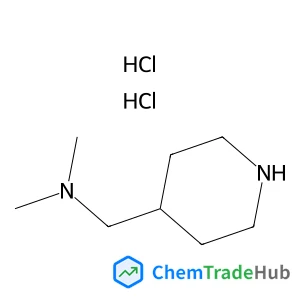
N,N-dimethyl(piperidin-4-yl)methanamine hydrochloride
CAS Number:
172281-72-0
Molecular Formula:
C8H20Cl2N2
Recommended Suppliers




Disclaimer
This page provides academic journal information for reference and research purposes only. We are not affiliated with any journal publishers and do not handle publication submissions. For publication-related inquiries, please contact the respective journal publishers directly.
If you notice any inaccuracies in the information displayed, please contact us at support@chemtradehub.com. We will promptly review and address your concerns.